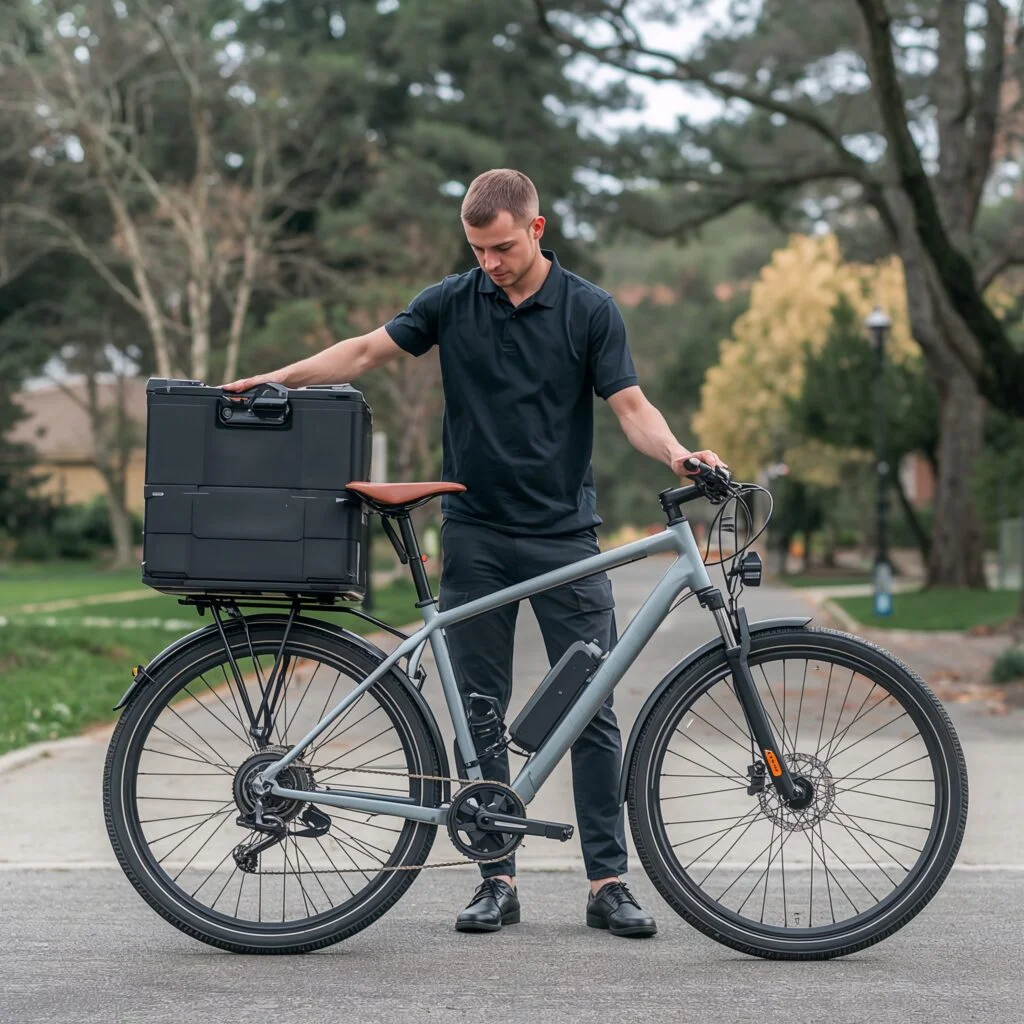
Can an ebike battery be repaired? Sometimes, yes — but not every battery should be repaired.
A loose connector, bad charger, blown fuse, dirty contact, or minor external wiring issue may be repairable without opening the battery case. A weak or aging pack may sometimes be rebuilt or recelled by a qualified battery specialist. But swollen, leaking, burned, water-damaged, crash-damaged, smoking, or overheated lithium-ion batteries should not be DIY repaired or charged again.
The safest answer is this: diagnose the simple external causes first, stop immediately if there are warning signs, and only let trained professionals handle internal lithium-ion pack work.
Can an E-Bike Battery Be Repaired? Quick Safety-First Answer

Yes, an e-bike battery can sometimes be repaired, but repairability depends on what failed.
A charger problem, connector issue, fuse issue, mounting problem, or corroded contact may be a relatively simple repair. Internal battery work is different. Once the case must be opened, the job may involve live cells, high current, a battery management system, insulation, spot welding, cell matching, and thermal safety.
Verdict box:
| Battery condition | Best next step |
|---|---|
| Dirty contacts, loose mount, wrong charger, blown external fuse | Safe external diagnosis first |
| Battery will not charge, but no heat, swelling, smell, crash, or water damage | Dealer or battery specialist diagnosis |
| Weak range on an older pack | Compare rebuild, recelling, and replacement |
| Deep discharge after storage | Professional assessment; do not force-charge |
| Swollen, leaking, smoking, burned, melted, hot, wet, or crash-damaged pack | Stop using, do not charge, recycle through proper hazardous battery handling |
| Modified, uncertified, unknown, or poorly documented battery | Treat as higher risk; ask a qualified professional before use |
The short answer: repairable sometimes, replace or recycle in risky cases
Repair makes sense only when the battery is physically safe, the fault is clear, and the repair does not create more risk than replacement.
Replace or recycle the battery when the pack shows damage, has an unknown repair history, has poor-quality or mismatched cells, or cannot be serviced with compatible parts.
What counts as repair, rebuild, recelling, BMS repair, revival, and replacement
Repair usually means fixing an external or limited fault, such as a connector, fuse, contact, case latch, or wiring issue.
Rebuild means the pack is opened and major internal components are replaced or restored.
Recelling means replacing the internal cells while keeping the original battery case, connector, and sometimes the battery management system.
BMS repair or replacement means diagnosing or replacing the battery management system, which controls charging, discharging, balancing, and protection functions.
Revival usually refers to attempting to recover a battery that has entered low-voltage protection or deep discharge. This should not be done by forcing a charger onto the pack.
Replacement means buying a compatible new battery, ideally from the e-bike manufacturer or an approved supplier.
When you should stop troubleshooting and avoid charging the battery
Do not keep troubleshooting if the battery is hot, swollen, leaking, smoking, hissing, melted, cracked, dented, waterlogged, or smells burnt.
Do not open the battery pack. Internal lithium-ion work is not beginner DIY repair. A mistake can cause short circuits, fire, burns, toxic smoke, or damage to the bike’s controller and charger.
Is Your E-Bike Battery Unsafe to Charge or Repair?

Before testing voltage or comparing repair costs, ask one question: is this battery safe to handle right now?
Lithium-ion batteries can become dangerous when damaged, misused, charged with incompatible equipment, stored incorrectly, or repaired by unqualified people. CPSC and NFPA guidance both emphasize correct chargers, manufacturer instructions, and caution around damaged packs.
Warning signs you should never ignore
Stop using the battery if you notice:
- Swelling or bulging
- Heat while not charging
- Burning, chemical, or sweet solvent-like odor
- Smoke, hissing, popping, or sparks
- Melted plastic or scorch marks
- Liquid leakage
- Cracked, crushed, or dented case
- Water inside the case or charging port
- Battery dropped hard or involved in a crash
- Charger or connector discoloration
- Battery that repeatedly shuts off, overheats, or behaves unpredictably
A battery with these signs should not be tested casually, opened, or charged again.
Can you safely charge it one more time?
If the battery has any warning sign, the safest answer is no.
Do not charge it “just to check.” Charging is one of the moments when a damaged lithium-ion pack can become more dangerous, especially if the wrong charger is used or the pack has internal cell damage.
If there are no danger signs and the issue looks external, charge only with the manufacturer-approved charger, on a nonflammable surface, while awake and present. Do not charge while sleeping or away from home.
What to do if the battery is hot, swollen, smoking, leaking, or smells burnt
If safe to do so, move away from the battery and keep people, pets, and flammable items away. Do not touch a hot or smoking pack. Do not bring it indoors to inspect it.
If there is smoke, flame, popping, or active overheating, contact local emergency services. Lithium-ion battery fires can be difficult to extinguish and can reignite.
After the immediate risk is handled, contact your e-bike manufacturer, local hazardous waste program, or a battery recycling program that accepts damaged, defective, or recalled lithium-ion batteries.
Why water-damaged or crash-damaged batteries should not be DIY repaired
Water and crash damage can create hidden internal problems. The battery may look normal outside while corrosion, insulation damage, crushed cells, or BMS failure develops inside.
Do not dry it with heat, force-charge it, or open the case. A qualified technician may still reject the pack if the structure, cell group, or electronics are unsafe.
Symptoms of a Bad E-Bike Battery and What They Usually Mean

Battery symptoms can point to different causes. A “dead battery” may actually be a bad charger, dirty contact, loose mount, failed display, controller issue, blown fuse, BMS lockout, or degraded cells.
Use the table below as a triage guide, not a final diagnosis.
| Symptom | Possible cause | Risk level | Safe next step |
| Battery won’t charge | Bad outlet, bad charger, wrong charger, dirty contacts, BMS lockout, deep discharge | Medium to high | Check outlet/charger/contact first; stop if heat, odor, swelling, or damage |
| Charger light stays green | Charger not detecting battery, full battery, broken charger, open circuit, BMS protection | Medium | Try safe external checks; confirm charger compatibility |
| E-bike powers on but cuts out under load | Weak cells, voltage sag, poor connection, BMS shutdown, controller issue | Medium | Avoid heavy load; get diagnosis if repeated |
| Range is suddenly much shorter | Aging cells, cold weather, low tire pressure, brake drag, charger issue, cell imbalance | Low to medium | Check bike condition and charger; compare range over several rides |
| Battery charges too fast | Reduced usable capacity, cell imbalance, BMS issue | Medium | Do not assume it is healthy; get professional testing |
| Battery drains too fast | Cell degradation, parasitic draw, controller issue, poor storage history | Medium | Check bike and battery separately where possible |
| Battery gets hot or smells odd | Internal fault, wrong charger, cell damage, wiring issue | High | Stop using and do not charge |
| Visible swelling, leakage, smoke, or melting | Serious lithium-ion battery failure | Critical | Stop using; arrange safe disposal or emergency help if active |
Battery won’t charge
Start with the simple causes: outlet, charger, charging cable, battery seating, and charging port. If the charger is not original or manufacturer-approved, stop and verify compatibility before using it again.
A battery that has been stored for months may be deeply discharged. Do not try risky “jump start” methods from forums or videos.
E-bike powers on but cuts out under load
Cutouts on hills or during acceleration often suggest voltage sag, weak cell groups, loose contacts, or BMS protection. The battery may show acceptable voltage at rest but fail under load.
This is one reason voltage alone does not prove the pack is healthy.
Range is suddenly much shorter
Range loss can come from battery aging, cold weather, low tire pressure, brake rub, heavier loads, higher assist levels, or route changes. But a sharp drop after normal use may point to cell degradation or imbalance.
If the battery is old and range is poor, compare repair cost, replacement cost, safety status, and warranty before rebuilding.
Battery charges too fast or drains too fast
A battery that charges unusually fast may have lost usable capacity. A battery that drains unusually fast may have weak cells or a bike-side electrical problem.
Do not judge health by the display bars alone. E-bike displays can be imprecise.
Charger light stays green, red, or flashes strangely
A green light may mean full charge, no connection, or no output depending on the charger design. A red light may mean active charging or a fault. Flashing lights vary by brand.
Check the charger manual before assuming the battery is bad.
Battery gets hot, smells odd, or shows visible damage
Heat, odor, smoke, swelling, or visible damage changes the decision. Stop troubleshooting and do not charge the pack.
Diagnose Before You Repair: Safe Checks You Can Do Without Opening the Battery

Many e-bike battery problems can be checked safely without opening the battery. These checks help you avoid paying for unnecessary recelling when the real issue is a charger, fuse, contact, or mounting problem.
Check the charger, outlet, and charging cable first
Use a known working outlet. Inspect the charger cable for cuts, kinks, loose plugs, scorch marks, or melted plastic.
Use only the charger supplied with the bike or approved by the manufacturer. A charger can physically fit and still be electrically wrong.
Inspect battery contacts, mount, fuse, key switch, and connector pins
Look for:
- Green or white corrosion
- Bent pins
- Loose charging port
- Burn marks
- Dirt or moisture
- Broken latch
- Damaged case rails
- Blown accessible fuse, if your model has one
- Key switch not fully turned on
Clean only external contacts according to the manufacturer’s instructions. Do not scrape, bend, or spray liquid into ports.
Confirm the battery is seated correctly on the bike
A battery that is not fully locked into the mount can power on, then cut out over bumps or under load.
Remove and reseat the battery. Check whether the latch clicks firmly and the battery does not wobble. If the mount is loose, the repair may be bike-side rather than battery-side.
Check whether the charger is original, compatible, or unsafe
Do not use a random “universal” charger just because the plug fits. Voltage, current, connector polarity, charging profile, and battery chemistry matter.
Wrong chargers can damage the pack, bypass expected protection behavior, or increase fire risk.
When to stop DIY checks and call a dealer or battery specialist
Stop DIY checks when:
- You need to open the battery case
- You see swelling, heat, smoke, leakage, or odor
- The battery was submerged or crash-damaged
- The charger or port is melted
- The pack repeatedly shuts off
- The battery is still under warranty
- The bike uses a proprietary or smart battery system
- You do not know the battery’s brand, chemistry, voltage, or repair history
A good next step is to contact the e-bike manufacturer, the selling dealer, or a qualified battery specialist before spending money on parts.
How to Check E-Bike Battery Health and Test Voltage With a Multimeter

A multimeter can help with basic diagnosis, but it does not tell the whole story. A weak battery can show normal resting voltage and still fail under load.
What battery health means: age, cycles, capacity, voltage, and range
Battery health is not one number. It includes:
- Age of the pack
- Charge cycles
- Usable capacity
- Cell balance
- Voltage under load
- Range compared with when new
- Storage history
- Charging behavior
- Physical condition
- BMS behavior
A battery that has lost a lot of range may still work, but it may no longer be worth rebuilding if it is old, uncertified, proprietary, or expensive to test safely.
How to test basic voltage with a multimeter
Only test if the battery has no swelling, odor, heat, leakage, crash damage, or water damage.
Basic steps:
- Confirm the battery voltage rating on the label.
- Set the multimeter to DC voltage.
- Use the correct probe positions.
- Avoid shorting the terminals.
- Touch probes only to the intended positive and negative output terminals.
- Compare the reading with the battery’s expected voltage range.
- Stop if you see sparks, heat, unstable readings, or damaged terminals.
Do not insert probes deeply into unfamiliar connectors. Do not bridge pins.
How to think about 36V, 48V, and 52V battery readings
Nominal voltage is not the same as full-charge voltage.
Common lithium-ion e-bike packs are often around:
| Battery label | Common full-charge reading | What it means |
| 36V | About 42V when full | Much lower readings may suggest low charge, BMS cutoff, or cell problems |
| 48V | About 54.6V when full | Resting voltage can look normal even if the pack sags under load |
| 52V | About 58.8V when full | Check the manufacturer’s battery specs before judging health |
These values are common for many lithium-ion packs, but your battery design may differ. Always check the manufacturer label and manual.
Why voltage alone does not prove the battery is healthy
Voltage shows electrical pressure at that moment. It does not prove usable capacity, cell balance, internal resistance, or performance under load.
A tired battery can show decent voltage on the bench, then cut out on a hill. A professional may need to test voltage sag, capacity, BMS function, cell balance, and charger behavior.
When load testing or professional diagnosis is needed
Professional diagnosis is useful when:
- The battery cuts out under load
- Range has dropped sharply
- The charger behaves oddly
- Voltage looks normal but performance is poor
- The battery is expensive to replace
- The pack may need recelling
- The bike uses a proprietary smart system
- The battery is still under warranty
Do not attempt load testing with improvised wires, bulbs, heaters, or homemade rigs.
Can an E-Bike Battery Be Rebuilt, Recelled, or Brought Back to Life?

Yes, some e-bike batteries can be rebuilt, recelled, or recovered from low-voltage protection. But these are specialist jobs, not casual DIY repairs.
What rebuilding an e-bike battery means
Rebuilding usually means opening the battery case, removing or replacing internal parts, testing cell groups, checking wiring, evaluating the BMS, and rebuilding the pack so it works safely with the bike and charger.
A rebuild may not be worthwhile if the case is damaged, the connector is proprietary, the BMS is unavailable, the pack lacks documentation, or the replacement battery is safer and more economical.
What recelling means and when cell replacement makes sense
Recelling means replacing the internal lithium-ion cells while keeping some original battery components.
It may make sense when:
- The battery case and connector are in good condition
- The pack is from a reputable brand
- A new OEM battery is unavailable or very expensive
- A qualified rebuilder can use quality matched cells
- The rebuilder can test and document the finished pack
- The repair does not create certification, warranty, or insurance problems
It does not make sense for swollen, wet, burned, melted, crushed, or unknown packs.
What BMS repair or replacement means
The battery management system helps manage charge, discharge, balancing, and protection. A BMS fault can stop a battery from charging or discharging even when some cells still hold energy.
BMS repair is not just swapping a board. Compatibility, wiring, current rating, cell count, temperature sensors, communication protocols, and charger behavior all matter.
Can a dead e-bike battery be revived after deep discharge or winter storage?
Sometimes a battery that died after winter storage may be in low-voltage protection. A qualified technician may be able to evaluate it.
Do not force-charge it, bypass the BMS, or use a charger that was not approved for the battery. A deeply discharged lithium-ion pack can be unstable or permanently damaged.
Why cell replacement, spot welding, and BMS swaps are professional-only work
Internal battery work can involve high current even when the pack looks dead. Shorting cell groups, overheating cells, using mismatched cells, damaging insulation, or poor spot welding can create serious risk.
What DIY users should not attempt:
- Opening the battery case
- Replacing individual cells
- Mixing old and new cells
- Spot welding cells
- Soldering directly to cells
- Bypassing the BMS
- Resetting protection without diagnosis
- Using repurposed cells
- Using a random charger to “wake up” the pack
- Repairing swollen, burned, wet, or crash-damaged batteries
When an E-Bike Battery Should Be Replaced or Recycled Instead of Repaired

Some batteries are not worth repairing because the safety risk, uncertainty, or long-term cost is too high.
Swollen, leaking, burned, melted, or smoking batteries
These batteries should not be repaired for normal use. Stop using them, keep them away from flammable materials if safe, and follow local hazardous battery handling instructions.
Do not place lithium-ion batteries in household trash or general recycling.
Water-damaged or crash-damaged batteries
Water and impact damage can cause hidden internal failures. Even if the battery turns on, it may not be safe.
A crash-damaged pack should be evaluated by the manufacturer, dealer, or qualified specialist. If there is any sign of heat, odor, swelling, or casing damage, stop use.
Very old batteries with poor range and high safety uncertainty
A very old battery with poor range may be technically rebuildable but not financially smart. If the pack is near end of life, lacks parts support, or has unknown cell condition, replacement is often cleaner and safer.
Discontinued or proprietary batteries with no safe parts support
Some e-bike systems use proprietary battery cases, connectors, BMS communication, mounts, and chargers. A generic replacement may not work safely or may damage the bike.
If the brand no longer supports the battery, compare certified replacement options, professional recelling, and responsible recycling.
What to do with damaged, defective, recalled, or old batteries
For normal end-of-life batteries, use a battery recycler, participating e-bike retailer, manufacturer take-back program, or local hazardous waste facility.
For damaged, defective, or recalled lithium-ion batteries, ask first. These batteries may require special handling and should not be placed into regular collection boxes.
How Much Does E-Bike Battery Repair, Rebuilding, Recelling, or Replacement Cost?

E-bike battery cost depends on the fault, battery size, brand, voltage, watt-hours, cell quality, BMS, labor, testing, and whether the system is proprietary.
Avoid fixed cost assumptions unless you have a quote from a qualified provider.
Why minor external repair usually costs less than internal pack work
External issues are usually cheaper because the battery may not need to be opened. Examples include contacts, accessible fuse issues, mount problems, charging port inspection, or charger replacement.
Internal pack work requires more labor, safety controls, testing, parts matching, and documentation.
Why rebuild and recelling costs depend on voltage, Wh, cell count, BMS, labor, and testing
A larger battery usually has more cells and more labor. A higher-capacity pack may need more matched cells. A smart BMS may be harder to replace or configure.
Ask the repair provider what is included in the quote:
- Diagnosis
- Cell brand and model
- Cell matching process
- BMS testing or replacement
- Wiring and insulation work
- Capacity test
- Load test
- Charger compatibility check
- Warranty on the repair
- Safety documentation
- Disposal of old cells
Why OEM replacement batteries may cost more but reduce compatibility risk
OEM batteries are usually designed for the bike’s mount, charger, controller, voltage, BMS communication, and warranty path. They may cost more, but they reduce guesswork.
For commuters, families, apartment residents, delivery riders, and anyone charging indoors, compatibility and safety should weigh heavily in the decision.
Why cheap aftermarket batteries can create safety, fit, warranty, or charger problems
A cheap aftermarket battery may seem attractive, but risk increases if the seller cannot prove compatibility, cell quality, BMS quality, charger compatibility, and safety certification.
Avoid batteries with vague specs, suspicious certification claims, no brand support, no warranty, poor documentation, or pressure to use a non-approved charger.
Questions to ask before approving a repair quote
Ask:
- What failed?
- Is the battery safe to repair?
- Will the case be opened?
- What cells will be used?
- Will the BMS be tested or replaced?
- Will the finished pack be capacity-tested?
- Will the pack be load-tested?
- Will you confirm charger compatibility?
- Will repair affect warranty or certification status?
- What documentation will I receive?
- What warranty covers the repair?
- What happens if the battery is rejected as unsafe?
A good repair quote should explain risk, not just price.
Repairing an E-Bike Battery vs Replacing It: Which Option Is Smarter?

The smarter option depends on safety first, then value.
Do not choose repair only because it is cheaper. Choose the option that gives you a safe, compatible, reliable battery for the way you use the bike.
Choose repair when the issue is external, minor, and safely diagnosable
Repair may be smart when:
- The battery case is undamaged
- There is no heat, swelling, smoke, leakage, odor, water damage, or crash damage
- The fault is external or clearly limited
- The battery is not under a warranty path that requires dealer service
- The repair provider can document the fix
Example: your bike cuts out over bumps, and the dealer finds a loose battery mount or contact issue.
Choose professional rebuild or recelling when the pack is valuable, compatible, and structurally safe
Rebuild or recelling may make sense when the original battery is expensive, unavailable, or proprietary, and the pack is physically safe.
Example: a quality commuter e-bike uses a battery case that is no longer sold, but the case, mount, connector, and electronics are still structurally sound. A qualified rebuilder may evaluate whether recelling is viable.
Choose OEM replacement when warranty, safety, certification, or reliability matters most
OEM replacement is often the best choice when:
- The bike is still under warranty
- You charge indoors
- You rely on the bike daily
- You live in an apartment or shared building
- Your workplace has battery rules
- The bike has a smart battery system
- You want the simplest compatibility path
Example: a delivery rider using the bike every day may be better served by a reliable approved replacement than by a questionable repair with limited documentation.
Choose recycling when the pack is damaged, unsafe, too old, or not worth the risk
Recycle instead of repair when the battery is swollen, wet, burned, melted, leaking, smoking, crash-damaged, recalled, or too poorly documented to trust.
Example: a battery stored in a damp garage for months now smells odd and will not charge. That is not a battery to experiment with.
Example decisions: commuter battery, delivery rider battery, winter-storage battery, discontinued-brand battery
| Situation | Smarter path |
| Commuter battery with dirty contacts | External diagnosis and minor repair |
| Delivery rider battery with heavy daily use and poor range | OEM replacement or documented professional rebuild |
| Battery died after winter storage | Professional diagnosis before any revival attempt |
| Discontinued brand with good case but dead cells | Consider qualified recelling if safe and documented |
| Swollen or water-damaged battery | Stop use and recycle through proper handling |
| Unknown online battery with no documentation | Replacement from a reputable, compatible source |
Warranty, UL Certification, Insurance, and Resale: What Changes After Battery Repair?

Battery repair can affect more than whether the bike turns on. It may affect warranty, certification status, apartment rules, workplace charging rules, resale value, and insurance comfort.
Can repairing or rebuilding void your battery or e-bike warranty?
Yes, it can. Many manufacturers limit warranty coverage if the battery is opened, modified, repaired by an unauthorized party, used with a non-approved charger, or paired with non-approved parts.
Before repair, check the warranty terms and contact the manufacturer or dealer.
Is a repaired battery still UL-certified?
Do not assume it is.
UL 2849 evaluates the e-bike electrical system as a combination, including the drive system, battery system, and charger system. UL 2271 applies to batteries for light electric vehicle applications.
If a certified battery is opened, recelled, rebuilt, or modified outside the original certified production process, the original certification claim may no longer apply in the same way. Ask the manufacturer, certifying body, or repair provider for written clarification.
Why UL 2849 and UL 2271 matter for e-bike battery decisions
UL 2849 matters because an e-bike is not just a battery. The charger, battery, BMS, wiring, and drive system work together.
UL 2271 matters because the battery pack itself has safety requirements for light electric vehicle use.
For owners, the practical lesson is simple: do not treat batteries, chargers, and controllers as interchangeable parts unless the manufacturer or qualified technician confirms compatibility.
What documentation to ask a repair shop for
Ask for:
- Written diagnosis
- Safety inspection result
- Parts replaced
- Cell brand and specifications
- BMS status
- Charger compatibility note
- Capacity test result
- Load test result
- Repair warranty
- Statement about certification or limitations
- Disposal record for old cells, if applicable
Documentation matters if you later sell the bike, file a warranty claim, charge at work, or need to explain the repair to a building manager or insurer.
Why resale, apartment rules, workplace rules, and insurance may matter
Some apartments, workplaces, campuses, and delivery platforms may restrict charging or storing uncertified, modified, or damaged micromobility batteries.
A repaired battery with no documentation may be harder to resell and harder to justify in shared spaces.
How to Find a Qualified E-Bike Battery Repair or Recelling Service Near You

A qualified repair provider should reduce risk, not just promise a cheap fix.
Dealer, bike shop, battery specialist, or OEM: who should you contact first?
Start with the original seller or manufacturer if:
- The bike is under warranty
- The battery is proprietary
- The charger is proprietary
- The system uses smart communication
- The battery may be recalled
- You need approved replacement parts
Use a battery specialist when the manufacturer cannot help, the battery is out of warranty, and the pack is structurally safe enough to evaluate.
A regular bike shop may refuse internal battery work, especially on uncertified, modified, unknown-brand, or online-marketplace e-bikes.
Questions to ask before handing over your battery
Ask:
- Do you work on lithium-ion e-bike packs?
- Do you open packs, recell packs, or only diagnose external faults?
- What brands and voltages do you support?
- Do you use new matched cells?
- Do you test capacity and voltage sag?
- Do you check BMS and charger compatibility?
- Do you reject swollen, wet, burned, or crash-damaged batteries?
- What documentation do you provide?
- What repair warranty do you offer?
- How do you handle old or damaged cells?
Signs a repair shop may not be qualified
Be cautious if the shop:
- Promises repair before diagnosis
- Encourages charging a swollen or wet battery
- Uses repurposed cells
- Cannot explain cell matching
- Cannot explain BMS compatibility
- Offers no testing documentation
- Offers no warranty
- Dismisses charger compatibility
- Makes vague certification claims
- Suggests bypassing safety systems
What a professional diagnosis should include
A professional diagnosis may include:
- Visual safety inspection
- Charger output check
- Battery output check
- Connector and contact inspection
- BMS behavior check
- Cell group evaluation
- Capacity test
- Load test
- Compatibility review
- Repair-or-replace recommendation
The technician should also tell you when repair is unsafe or uneconomical.
When a bike shop may refuse to work on uncertified or modified batteries
A shop may refuse if the bike is uncertified, modified, overpowered, poorly documented, previously repaired, or equipped with an unknown battery/charger combination.
That refusal is not always bad service. It may be a safety and liability decision.
How to Make Your E-Bike Battery Last Longer After Repair or Replacement
Once you repair or replace the battery, protect the new value. Most battery failures are not fully preventable, but good habits can reduce stress and catch problems early.
Use the correct charger and avoid incompatible replacements
Use the charger supplied with or recommended by the manufacturer. Label your charger if you own multiple e-bikes or batteries.
Do not share chargers between bikes unless the manufacturer confirms compatibility.
Avoid deep discharge, overcharging, and extreme temperatures
Avoid running the battery completely empty when possible. Do not store it fully drained. Avoid charging or storing in extreme heat or freezing conditions unless the manufacturer specifically allows it.
Unplug after charging is complete, unless your manufacturer provides different instructions.
Store the battery properly during winter or long breaks
For winter or long storage, follow the manufacturer’s storage charge guidance. Many lithium-ion batteries are best stored partially charged in a cool, dry place, away from flammable materials.
Check the battery periodically so it does not fall into deep discharge.
Inspect contacts, casing, and charging behavior regularly
Look for:
- Loose mount
- Corroded contacts
- Damaged charging port
- Wobbling battery
- New heat during charging
- New odor
- Cracks or swelling
- Charger behavior changes
Small external issues are easier to fix before they become bigger failures.
Keep proof of purchase, repair records, and battery specs
Keep:
- Battery model
- Voltage and Wh rating
- Charger model
- Serial number
- Purchase receipt
- Warranty terms
- Repair documentation
- Recycling records, if applicable
These records help with warranty claims, replacement matching, resale, and safe servicing.
FAQ
Can an e-bike battery be repaired without opening the case?
Yes, some e-bike battery problems can be repaired or resolved without opening the case. Examples include charger replacement, dirty contacts, loose mounting, accessible fuse issues, connector problems, or a bad outlet.
If the repair requires opening the battery pack, it should be handled by a qualified battery specialist.
Can e-bike batteries be tested before repair?
Yes, e-bike batteries can often be tested before repair. Safe checks include inspecting the charger, outlet, contacts, mount, fuse, and basic voltage if the pack has no danger signs.
Professional testing may include capacity testing, load testing, BMS diagnosis, and charger compatibility checks.
How do I know if my e-bike battery is still good?
A good battery should charge normally, hold charge, deliver stable power under load, provide reasonable range, stay cool during normal use, and show no swelling, odor, leakage, smoke, or case damage.
If range drops sharply or the bike cuts out under load, the battery may need professional testing.
What voltage should I check on an e-bike battery?
Check DC voltage at the correct output terminals only if the battery is physically safe. A 36V pack may read around 42V when full, a 48V pack around 54.6V, and a 52V pack around 58.8V, depending on chemistry and design.
Always compare readings with the manufacturer’s battery specifications.
How do you test a 36V e-bike battery with a multimeter?
Set the multimeter to DC voltage, identify the correct positive and negative output terminals, avoid shorting pins, and compare the reading with the battery’s expected range. Many 36V lithium-ion e-bike packs read about 42V when fully charged.
Do not test swollen, wet, burned, leaking, hot, or damaged batteries.
Does repairing or rebuilding an e-bike battery void the warranty or UL certification?
Yes, it may void the warranty, and the original certification status may not remain the same after the battery is opened, recelled, rebuilt, or modified.
Ask the manufacturer and repair provider for written clarification before approving the repair.
Is it cheaper to rebuild a 36V, 48V, or 52V battery or replace it?
It depends on the battery size, Wh rating, cell count, brand, BMS, charger compatibility, labor, and testing. A rebuild may be cheaper for some high-value or discontinued batteries, while replacement may be smarter for common, old, unsafe, or poorly documented packs.
Get a written repair quote and compare it with an OEM replacement before deciding.
What should I do with a swollen, water-damaged, or crash-damaged e-bike battery?
Stop using it and do not charge it. Keep it away from flammable materials if safe, contact the manufacturer or local hazardous waste authority, and use a battery recycling path that accepts damaged lithium-ion batteries.
Do not put it in household trash or regular recycling.
Can a dead e-bike battery be revived after months in storage?
Sometimes, but it needs careful diagnosis. A battery stored too long may be deeply discharged or in BMS protection.
Do not force-charge it, bypass the BMS, or use a random charger. Ask a qualified technician to evaluate whether recovery is safe.
How do I find a qualified e-bike battery repair shop in the U.S.?
Start with the manufacturer or selling dealer, then look for a battery specialist experienced with lithium-ion e-bike packs. Ask about cell quality, BMS testing, capacity testing, load testing, charger compatibility, warranty, and documentation.
Avoid any shop that encourages unsafe charging, uses repurposed cells, bypasses protection systems, or cannot explain its testing process.
Pingback: Are Electric Bikes Eco-Friendly? When They Are—and What Changes the Answer - electricscootercar.com
Pingback: Solid-State E-Bike Batteries in 2026: What’s Real and Should You Wait? - electricscootercar.com
Pingback: E-Bike Battery Fire Risk: Causes, Warning Signs & How to Stay Safe - electricscootercar.com
Comments are closed.