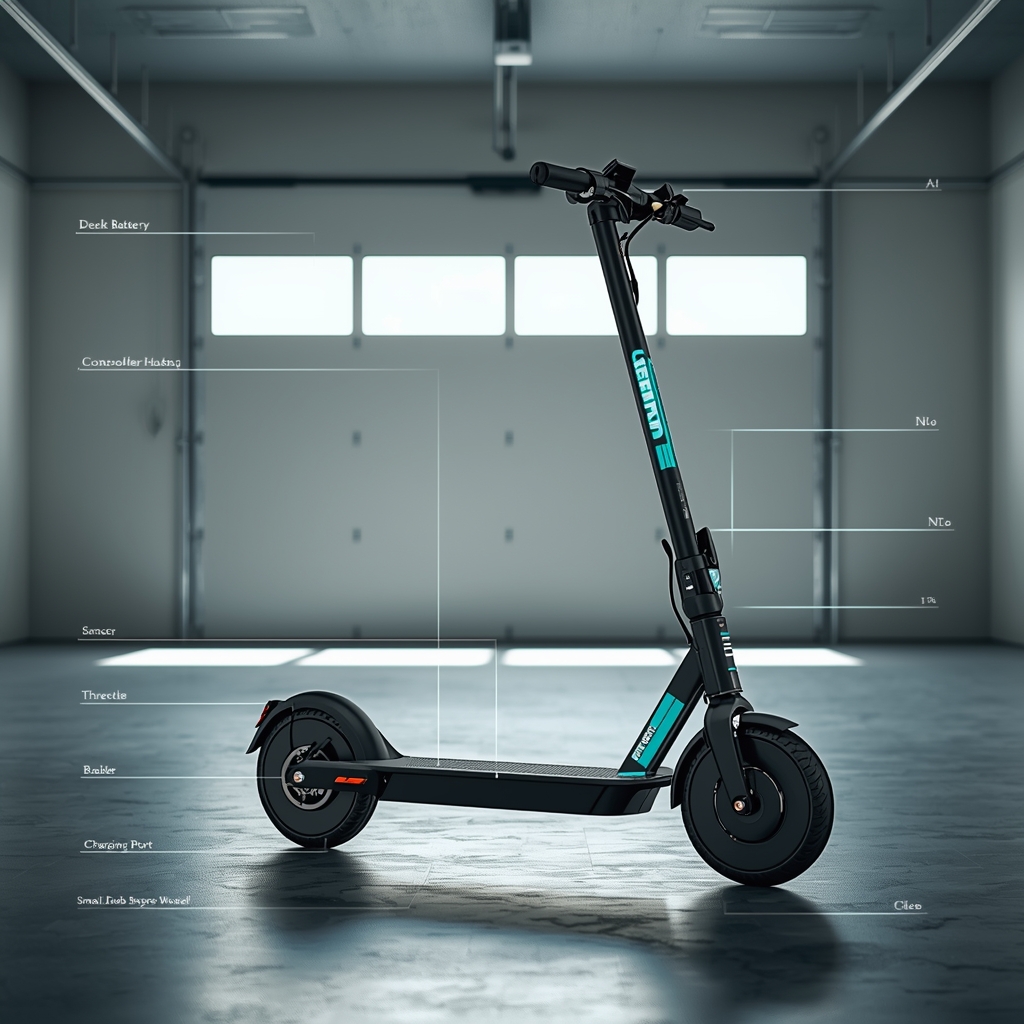
Most everyday electric scooters have advertised top speeds of around 15–25 mph, although some premium commuters can reach 28–32 mph and specialized performance scooters can exceed 60 mph. Your actual speed depends on the scooter, riding mode, battery level, rider weight and road conditions.
There’s another important distinction: the speed your scooter can reach isn’t necessarily the speed you’re legally allowed to ride.
For example, a scooter advertised at 28 mph may be limited to 20 mph in its default settings. Even after activating a higher-speed mode, you might be restricted to 15 mph on public roads in certain U.S. locations.
This guide explains typical electric scooter speeds, compares actual models, shows why riding speeds vary and helps you decide how much speed you really need.
How Fast Do Electric Scooters Usually Go?

Electric scooter speed depends primarily on the type of scooter and how it’s designed to be used.
A lightweight scooter intended for short neighborhood trips has different performance requirements from a powerful dual-motor scooter designed for demanding terrain.
The table below provides a practical overview.
| Electric scooter category | Approximate advertised top speed | Typical purpose |
|---|---|---|
| Kids’ and basic low-speed models | 8–15 mph | Age-appropriate recreational riding |
| Entry-level adult commuters | 15–20 mph | Short trips and everyday transportation |
| Higher-performance commuters | 20–30 mph | Longer commutes and more demanding routes |
| Performance scooters | 30–45+ mph | Higher-power recreational use |
| Extreme-performance scooters | 50–60+ mph | Specialized riding environments |
These categories are illustrative rather than standardized industry classifications. Not every scooter fits neatly into one category, and advertised speeds don’t establish whether a scooter is legal for a particular road.
For most people buying a scooter for everyday travel, a model designed around 15–25 mph is a practical starting point. But speed should never be the only buying consideration.
Brakes, tire quality, battery range, stability and applicable local rules matter just as much.
Real Electric Scooter Top Speeds: Manufacturer Examples

Looking at actual scooter specifications is more useful than relying on broad speed categories alone.
Here are five examples from manufacturers’ published specifications, checked in October 2026.
| Electric scooter | Advertised maximum speed | Category |
|---|---|---|
| NIU KQi 100P | 17.4 mph | Entry-level commuter |
| NIU KQi 300X | Up to 23.6 mph | Higher-performance commuter |
| Segway MAX G3 | Up to 28 mph | Premium commuter |
| Apollo City 2.0 | Up to 32 mph | Performance commuter |
| Kaabo King GT Pro | Up to 62 mph | Extreme-performance scooter |
Important: These are manufacturer-advertised maximum speeds, not measurements from our own testing. Specifications, software settings and available speeds may differ by version or market.
What these examples tell us
The NIU KQi 100P reaches a stated 17.4 mph with a 300W rated motor. It’s designed for everyday commuting rather than maximum performance.
The NIU KQi 300X has a 500W rated motor and a maximum speed of 23.6 mph in the applicable setting. Its speed can be subject to on-road and off-road mode restrictions.
Segway’s MAX G3 provides an interesting example of software-controlled performance. Its published specifications describe a factory-default maximum of approximately 20 mph, with up to 28 mph available through a supported higher-speed setting in the Segway Mobility app.
Apollo’s City 2.0 is rated for up to 32 mph, while the Kaabo King GT Pro is advertised at 62 mph.
That final example demonstrates what’s technically possible. It does not mean a 62 mph standing scooter is suitable or legally permitted for ordinary city commuting.
For a broader comparison involving acceleration, braking, range and ride quality, see our electric scooter performance guide.
Average Electric Scooter Speed vs. Top Speed

A scooter’s advertised maximum speed and its average speed during a trip are two different measurements.
Top speed describes the highest speed the scooter can achieve under specified conditions.
Moving average speed measures your average while the scooter is in motion.
Whole-trip average speed accounts for the entire journey, including time stopped at intersections or crossings.
This distinction matters because a scooter capable of 20 mph doesn’t automatically average 20 mph during a commute.
A simple commuting example
Imagine riding three miles on an electric scooter.
You spend ten minutes moving at an average of 18 mph, then another five minutes waiting at traffic lights and crossings.
Your total journey takes 15 minutes.
Average trip speed = 3 miles ÷ 0.25 hours = 12 mph.
Your scooter traveled at 18 mph while moving, yet your whole-trip average was only 12 mph.
Nothing is wrong with its performance.
This is an illustrative calculation, not a claim about the average speed of all U.S. scooter commuters.
What does real-world research show?
Research on shared electric scooters also demonstrates why average speeds should not be treated as universal.
A study published in the International Journal of Sustainable Transportation, using shared-micromobility data from Austin, Texas, between December 2018 and May 2019, reported average e-scooter trip speeds of approximately 2.19–2.78 meters per second.
That’s roughly 4.9–6.2 mph.
Those findings describe a historical shared-scooter dataset, not the maximum capabilities of modern privately owned electric scooters.
The lesson is that averages depend heavily on the type of trip, traffic environment, measurement method and riding conditions.
You can read the published Austin micromobility research for the original findings.
What Is the Legal Speed Limit for Electric Scooters in the USA?

There is no single electric scooter speed limit that applies to every location in the United States.
State laws, municipal ordinances and the legal classification of the vehicle determine where and how it can be used.
A manufacturer may advertise a scooter capable of 30 mph, but that doesn’t automatically make 30 mph legal on a public street.
California: 15 mph
California limits the operation of vehicles classified as motorized scooters under its applicable law to 15 mph.
The California Highway Patrol’s official scooter guidance explains operating rules, licensing requirements and relevant roadway restrictions.
California’s rules also distinguish motorized scooters from other vehicle types. It’s important to confirm that your particular device falls within the applicable definition.
New York City: 15 mph
New York City’s Department of Transportation states that electric scooters must not be operated above 15 mph.
The city’s rules also allow qualifying e-scooters in bike lanes and on streets with speed limits no greater than 30 mph. Sidewalk riding is prohibited.
Consult the official NYC DOT electric scooter rules before riding.
How to check the rules where you live
Before riding, verify the applicable rules using your state’s DMV or transportation department, state vehicle laws and your city transportation authority.
Check both your maximum permitted speed and where scooter operation is allowed. Age, licensing, helmet and equipment requirements may also apply.
Our electric scooter road-use guide explains the broader roadway considerations, while our electric scooter licensing guide covers licensing questions.
Remember: A scooter’s advertised top speed, its factory speed limit and the legal operating limit are three separate things.
What Determines an Electric Scooter’s Maximum Speed?

Electric scooter speed is influenced by the complete electrical and mechanical system, not just the motor wattage printed on the product page.
1. Motor power
The electric motor provides the force that moves the scooter.
Higher motor power can help a scooter accelerate, carry heavier loads and maintain performance on inclines. However, more watts don’t automatically mean a higher top speed.
Motor design, gearing, voltage and controller settings also determine performance.
A 500W scooter can have a lower maximum speed than another model with similar rated power if its controller or software restricts output.
2. Battery voltage and available power
The battery supplies electrical energy to the motor and controller.
Voltage affects motor operation, while the battery’s current-delivery capability helps determine how much power the system can provide.
As the battery discharges, its voltage and available output can change.
If charging seems ineffective, consult our electric scooter charging troubleshooting guide.
Some scooters reduce acceleration or maximum speed at lower charge levels to protect the battery or electrical components.
3. Controller and software settings
The controller determines how electrical power is delivered to the motor.
It may enforce operating limits involving current, acceleration or maximum speed.
Manufacturers can also create different riding profiles through software.
That’s why changing from Eco to Sport mode may produce a noticeable improvement without changing any physical components.
4. Rider weight and cargo
The scooter must move the combined weight of the rider, the scooter and anything being carried.
More weight generally increases the effort required to accelerate and climb hills.
On flat roads, extra weight doesn’t always produce a large reduction in maximum speed, but it can significantly affect acceleration and hill performance.
Always remain within the manufacturer’s stated load limit.
5. Hills, wind and road surfaces
A scooter that reaches 20 mph on level pavement may travel noticeably slower uphill.
Steep gradients require additional motor power. Headwinds increase aerodynamic resistance, while rough pavement can reduce traction, comfort and the speed you can safely maintain.
Weather also matters. Cold conditions may reduce battery performance, particularly when the battery is already partly discharged.
6. Tire condition and maintenance
Underinflated pneumatic tires increase rolling resistance and may affect steering stability.
Dragging brakes, worn bearings or other mechanical faults can also reduce performance.
Follow the manufacturer’s tire-pressure and maintenance recommendations rather than attempting to compensate for mechanical problems with higher power settings.
To budget for tires, brakes and routine servicing, see our electric scooter maintenance-cost guide.
Why Is My Electric Scooter Slower Than Advertised?

If your scooter is rated for 20 mph but only reaches 14 mph, the difference may have a straightforward explanation.
Start by checking the conditions under which you’re riding.
| Possible cause | What to check |
|---|---|
| Eco or low-speed mode | Confirm the selected riding mode |
| Low battery level | Check charge level and any battery warning |
| Heavy rider or cargo load | Compare total load with the manufacturer’s rating |
| Uphill route or strong headwind | Compare with normal performance on a suitable level route |
| Incorrect tire pressure | Check the manufacturer’s pressure specification |
| Brake drag | Have the brakes inspected if a wheel is rubbing |
| Temperature or thermal protection | Check for warnings and let the scooter cool when required |
| Firmware or app settings | Review supported settings in the official app |
When slower speed is normal
Suppose your scooter normally reaches 18 mph on a flat commute.
On a cold morning, with a lower battery charge and a strong headwind, its performance may feel weaker.
This doesn’t necessarily mean the motor is damaged.
Likewise, many scooters have speed restrictions that vary by riding mode.
Always check your dashboard and official app before assuming something is broken.
When slower speed may indicate a problem
Consider professional inspection if the speed reduction is sudden, persistent or accompanied by unusual noises, vibration, excessive heat, electrical warnings or poor braking.
Avoid riding or charging a scooter with a damaged or swollen battery, and don’t open a lithium-ion battery pack to investigate.
If the battery refuses to accept a charge, use our battery-not-charging safety checks before attempting repairs.
For more help diagnosing electrical and mechanical problems, see our electric scooter troubleshooting guide.
If the scooter no longer powers on at all, follow our electric scooter won’t-turn-on checklist.
How to Change Speed on an Electric Scooter Safely

Many modern electric scooters offer several factory-supported riding modes.
The exact names and functions depend on the manufacturer.
| Ride mode | Common purpose | General behavior |
|---|---|---|
| Eco or E-Save | Efficiency and easy control | Lower speed and gentler acceleration |
| Standard or Drive | Everyday transportation | Balanced speed and response |
| Sport | Higher performance | Stronger acceleration and higher allowed speed |
| Walk or Pedestrian | Moving at walking pace | Very low-speed operation |
| Custom | User-selectable behavior | Settings within manufacturer-supported limits |
Not every scooter includes all five modes.
Changing speed through official controls
The safest approach is to use features the manufacturer provides.
First, check your scooter’s operating manual to identify the supported riding modes.
Then use the dashboard controls or official companion app to select the appropriate setting.
For example, NIU’s KQi 100P offers E-Save, Sport, Custom and Pedestrian modes. NIU also describes supported app-based settings for riding behavior.
Apollo provides official instructions for changing supported speed settings on compatible models.
Any higher-speed setting must still be used within local legal limits and the manufacturer’s operating instructions.
Should you remove an electric scooter speed limiter?
Generally, removing or bypassing a factory restriction isn’t a sensible way to improve a commuter scooter.
Unsupported modifications may change how the controller, motor and battery operate together.
Potential consequences include overheating, shorter range, reduced component life, warranty problems and unsafe operation at speeds the scooter’s brakes or tires were not designed to handle.
Instead, check the official riding modes and correct any maintenance issues.
If your scooter genuinely isn’t powerful enough for your route, choosing a model designed for the required performance is usually a better long-term solution.
Does Riding Faster Reduce Electric Scooter Range?
Yes. Sustained high-speed riding generally uses more battery energy per mile.
As speed increases, aerodynamic drag becomes more important. The motor needs additional power to overcome that resistance.
This means faster riding can shorten the distance available from a charge, even if your scooter feels more powerful in Sport mode.
How large is the difference?
The exact loss depends on the scooter, riding conditions and test method.
As an illustration, Kaabo advertises up to 112 miles for its King GT Pro in an economical single-motor riding scenario, compared with approximately 55 miles when ridden aggressively.
These are manufacturer-stated figures under different operating conditions, not a universal prediction for other scooters.
The broader takeaway is straightforward: maximum speed and maximum range usually cannot be achieved at the same time.
For more practical advice on estimating mileage, battery capacity and real-world conditions, read our electric scooter range guide.
Is a Faster Electric Scooter Always Better?

Not necessarily.
A scooter that travels 30 mph isn’t automatically a better choice than one that tops out at 18 mph.
The right speed depends on where you ride, the condition of the roads, your experience and local regulations.
For short urban commutes
A lower-speed commuter scooter may be sufficient for journeys involving intersections, pedestrians, bike lanes and frequent stops.
Good brakes, manageable weight and predictable handling can be more valuable than a higher advertised speed.
For a fuller look at short-trip trade-offs, see our electric scooter commuter benefits guide.
For longer commutes
If you travel longer distances on permitted routes, look beyond top speed.
Battery capacity, tested range, ride comfort and reliability can make a bigger difference to your daily experience.
Long-term battery aging is a separate consideration; our electric scooter battery-life guide explains the basics.
A scooter with a moderate top speed but dependable range may be preferable to a faster model that requires frequent charging.
For electricity expenses, consult our cost-to-charge-an-electric-scooter guide.
For hilly routes
Prioritize hill-climbing performance, suitable motor torque, thermal management and braking capability.
Maximum speed on a flat road tells you little about how confidently the scooter will climb a steep hill.
For experienced performance riders
Higher-speed scooters demand greater attention to protective equipment, braking performance, stability, road conditions and the legal environment.
Extreme-performance models should not be treated as automatically suitable for ordinary public-road use.
Before buying, consider the scooter’s overall design rather than choosing whichever model advertises the highest mph.
Before buying a faster model, review available electric scooter insurance options and learn what the UL 2272 testing standard covers.
Electric Scooter Speed and Safety: What Riders Should Know
Higher speed increases the potential consequences of a collision.
The relationship isn’t linear. For the same combined rider-and-scooter mass, doubling speed increases kinetic energy by a factor of four.
This is one reason brakes, tires, protective equipment and stopping distance become increasingly important as speeds rise.
Before riding, make sure:
- Your helmet and protective equipment are appropriate for your riding conditions.
- Your brakes function properly.
- Your tires are correctly inflated and free from visible damage.
- Your lights and reflectors are working.
- Your route is legally permitted and suitable for the scooter.
- Your battery has sufficient charge for the journey.
- Your speed allows you to stop safely when conditions change.
Avoid trying to reach maximum speed in crowded areas, near pedestrians or on unfamiliar or slippery surfaces.
If you’re a new rider, begin in a lower-speed mode and become comfortable with braking and handling before using faster settings.
Frequently Asked Questions About Electric Scooter Speed
How fast do electric scooters normally go?
Many adult commuter electric scooters have advertised maximum speeds around 15–25 mph. Premium models can travel faster, with some reaching 28–32 mph. Actual riding speed depends on the model, settings, rider weight, battery condition and route. Whole-trip averages are often lower than maximum speed because of stops and changing road conditions.
Is 15 mph fast enough for an electric scooter?
For many short urban trips, 15 mph can be sufficient. It allows practical travel without requiring a high-performance scooter, although safe speed always depends on the surrounding environment. In locations such as California and New York City, 15 mph is also the legal operating limit for relevant electric scooter categories.
Can an electric scooter go 30 mph?
Yes. Some premium and performance electric scooters are designed to reach 30 mph or more. Apollo, for example, advertises a 32 mph maximum for its City 2.0. That does not mean riding at 30 mph is permitted on every public road, so check local rules before using higher-speed modes.
How fast can a 500W electric scooter go?
There is no universal maximum speed for a 500W electric scooter. Speed depends on motor design, voltage, controller settings, gearing and operating conditions. The NIU KQi 300X, for example, has a 500W rated motor and an advertised maximum of 23.6 mph in the relevant setting. Another 500W model may perform differently.
Why won’t my electric scooter reach its advertised top speed?
Common reasons include Eco mode, a low battery, higher rider weight, hills, strong headwinds, cold conditions or incorrect tire pressure. Manufacturers usually establish performance specifications under particular test conditions. If the reduction is sudden or accompanied by unusual sounds, warning indicators or excessive heat, arrange an appropriate inspection.
Can electric scooters go over 60 mph?
Some specialized high-performance models have advertised maximum speeds above 60 mph. Kaabo lists 62 mph for its King GT Pro. These machines are substantially different from ordinary commuter scooters. Their speed capabilities do not automatically make them legal or appropriate for use on public roads.
How do I safely increase my scooter’s speed?
Check whether your scooter offers an official Sport mode, Custom mode or manufacturer-supported speed setting in its companion app. Also make sure the battery is adequately charged and that the scooter is properly maintained. Avoid unsupported firmware, wiring or controller modifications, and remain within local speed restrictions.
Is electric scooter top speed more important than motor power?
Neither number should be judged in isolation. Top speed describes maximum capability, while motor power contributes to acceleration, hill climbing and performance under load. A good scooter needs an appropriate combination of motor, battery, controller, brakes, tires and frame design. Choose based on your intended journey rather than a single specification.
Final Thoughts: What Electric Scooter Speed Do You Actually Need?
For most everyday riders, a scooter designed for roughly 15–25 mph offers a useful starting point, but the best choice depends on your route and legal operating environment.
Don’t confuse an advertised top speed with the speed you’ll maintain during a normal commute. Traffic, hills, battery charge, weather and riding modes all make a difference.
Before buying or increasing your scooter’s speed, check three things: what the manufacturer says the scooter can do, what your local rules allow, and whether the scooter’s overall design is suitable for the conditions you’ll encounter.
The best electric scooter isn’t necessarily the fastest one. It’s the one that delivers dependable performance, appropriate safety and enough usable range for the way you actually ride.
Pingback: - electricscootercar.com
Pingback: Electric Scooter Not Charging? 7 Safe Checks & Fixes - electricscootercar.com
Comments are closed.