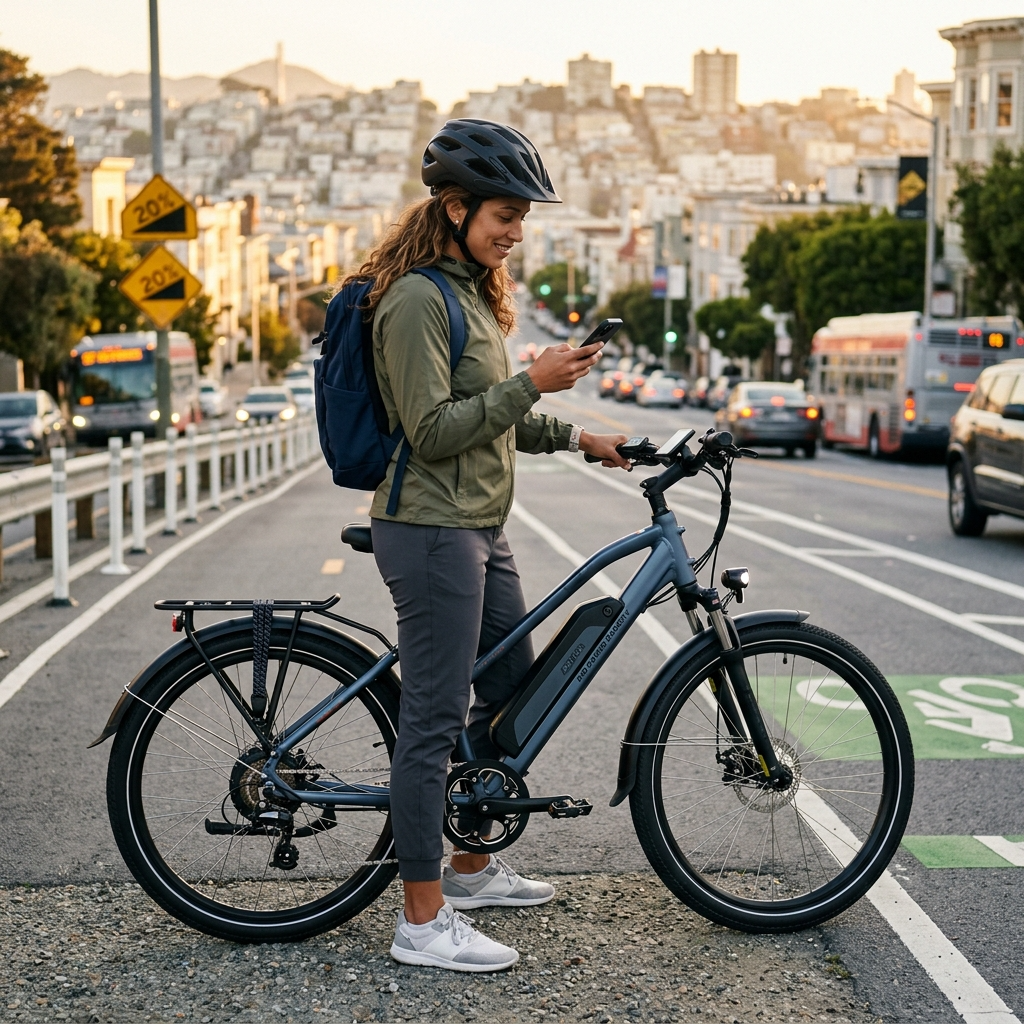
Determines E-Bike Range Most e-bike range numbers sound simple until you actually ride.
A bike may advertise “up to 60 miles,” but your real ride might be 28 miles, 40 miles, or even more than the estimate. That does not always mean the battery is bad. It usually means the conditions changed.
So, what determines the range of an e-bike?
Real-world e-bike range depends on battery size, riding speed, pedal assist level, rider weight, terrain, weather, tire pressure, and how often the motor has to work hard. The easiest way to understand it is this:
E-bike range = how much energy your battery stores ÷ how much energy your ride uses per mile.
That is the whole idea. Everything else affects one side of that equation.
Understanding Electric Bike Range

Electric bike range means how far your e-bike can travel on one full battery charge.
But range is not one fixed number. It changes from ride to ride.
A flat 12-mile commute in Phoenix is not the same as a hilly 12-mile ride in San Francisco. A relaxed rider using low pedal assist will usually go much farther than a rider using throttle and high assist the whole way.
That is why advertised range should be treated as a best-case estimate, not a promise.
A better way to think about range is:
- Best-case range: flat roads, low assist, steady pedaling, mild weather
- Normal range: mixed roads, moderate assist, real stops, some wind or hills
- Worst-case range: high speed, throttle use, heavy load, hills, cold weather, soft tires
For most USA riders, the useful question is not “What is the maximum range?”
It is:
How far will this e-bike go in my actual riding conditions?
Typical Range Expectations for USA Riders

For everyday use, many e-bikes fall somewhere between 20 and 60 miles per charge, depending heavily on the battery and riding style.
A short city commuter may only need 10–20 miles of dependable range. A suburban rider, delivery rider, or trail rider may need much more.
Here is a practical way to think about it:
| Riding Situation | What Usually Happens to Range |
|---|---|
| Short flat commute | Range is usually strong if you use low or medium assist |
| Stop-and-go city riding | Range drops because acceleration uses more energy |
| Hilly neighborhood riding | Range drops quickly on climbs |
| Cargo or child seat riding | Range drops because the motor works harder |
| Fast Class 3-style riding | Range drops because higher speed demands more power |
| Throttle-heavy riding | Range drops faster than pedal-assist riding |
In the U.S., many states use the Class 1, Class 2, and Class 3 e-bike system. Class 1 generally means pedal assist up to 20 mph, Class 2 includes throttle assistance up to 20 mph, and Class 3 pedal assist can go up to 28 mph, though local access rules vary. PeopleForBikes notes that U.S. policy commonly separates low-speed e-bikes from more powerful devices, so riders should check local rules if buying a high-power model.
This matters for range because faster bikes can drain the battery faster, especially when ridden near their top assisted speed.
The Simple Range Formula Every Rider Should Know

Before looking at any e-bike range calculator, learn this simple formula:
Battery watt-hours ÷ energy used per mile = estimated range
Example:
A 672Wh battery used at 20Wh per mile:
672 ÷ 20 = about 33 miles
But you should not plan to use every last bit of battery. A smart real-world estimate would be closer to 25–30 miles if you want a safe reserve.
How Battery Size Affects E-Bike Range

Battery size is one of the biggest electric bike range factors.
The most useful number is watt-hours, often written as Wh.
Watt-hours tell you how much energy the battery can store. More watt-hours usually means more possible range, assuming the bike, rider, and route are similar.
You can calculate it like this:
Volts × amp-hours = watt-hours
Examples:
| Battery Label | Battery Capacity |
|---|---|
| 36V 10Ah | 360Wh |
| 48V 14Ah | 672Wh |
| 48V 20Ah | 960Wh |
| 52V 20Ah | 1,040Wh |
So, a 48V battery is not automatically long-range. A 48V 10Ah battery has much less stored energy than a 48V 20Ah battery.
This is where many riders get confused.
What About a 48V 1000W E-Bike?
A “48V 1000W e-bike” description usually tells you more about the motor power than the battery capacity.
That does not tell you the true range by itself.
A 1000W motor can pull energy quickly when climbing, accelerating, or riding fast. If the battery capacity is small, the bike may feel powerful but lose charge quickly.
For range, look for the Wh rating or calculate it from volts and amp-hours.
Also, be careful with very high-powered bikes. In many U.S. contexts, devices that exceed common low-speed e-bike power or speed limits may be treated differently from standard Class 1, 2, or 3 e-bikes. PeopleForBikes specifically separates the three-class low-speed e-bike framework from devices that exceed speed or power limits.
Key Factors That Affect E-Bike Range

1. Battery Capacity
Bigger batteries usually go farther.
But bigger does not always mean better for every rider. Larger batteries can add weight and cost. For a short flat commute, a smaller battery may be enough. For hills, cargo, longer commutes, or throttle use, a larger battery gives more breathing room.
A good buying rule:
- 300–400Wh: short rides, light assist, flatter routes
- 500–700Wh: everyday commuting and mixed riding
- 750Wh+: longer rides, hills, cargo, or higher assist use
Do not buy based only on the highest advertised range. Buy based on your worst normal ride.
2. Rider Weight and Cargo Load
Rider weight affects range most during:
- Starts from a stop
- Hill climbs
- Soft surfaces
- Cargo riding
- High-speed acceleration
On flat ground at steady speed, weight matters less than many people think. But in stop-and-go riding or hilly areas, extra weight makes the motor work harder over and over again.
A rider carrying groceries, a backpack, tools, or a child seat should expect lower range than a lightweight rider on the same bike.
This does not mean heavier riders cannot get good range. It just means they should choose a battery with more reserve and avoid relying on best-case range claims.
How Speed Affects Electric Bike Range

Speed is one of the most underestimated range killers.
Riding a little faster can use much more energy, especially above normal bike speeds. That is because the motor must fight more wind resistance.
In simple terms:
The faster you ride, the harder the motor works.
A rider cruising at 15–18 mph may get much better range than a rider staying near 25–28 mph.
This is especially important for Class 3-style commuting. A faster e-bike can be useful for longer roads and car-heavy areas, but if you ride near top assist speed all the time, expect the battery to drain faster.
Real-World Example
Two riders have the same 672Wh battery:
- Rider A cruises at 16 mph on medium assist
- Rider B cruises at 26 mph on high assist
Rider B may arrive sooner, but Rider A will usually travel farther on the same charge.
If range matters more than speed, slow down slightly and ride smoothly. Even dropping a few mph can make a noticeable difference.
How Pedal Assist Affects E-Bike Range

Pedal assist level controls how much help the motor gives you.
Lower assist means you do more of the work. Higher assist means the motor does more of the work.
That directly affects range.
| Assist Style | Battery Use | Best For |
|---|---|---|
| Low/Eco assist | Lowest drain | Long rides, flat commutes |
| Medium assist | Balanced drain | Everyday riding |
| High/Turbo assist | Heavy drain | Hills, fast starts, strong headwinds |
| Throttle-heavy riding | Highest drain | Short bursts, limited pedaling, stop-and-go riding |
Pedal assist does not magically double range by itself. It improves range when you actually contribute meaningful pedaling effort and avoid using maximum assist all the time.
A good habit is to use high assist only when needed, such as:
- Starting from a stop
- Climbing a hill
- Fighting strong wind
- Merging through a tricky traffic area
Then switch back to lower assist once the ride becomes easier.
Terrain and Elevation

Hills can cut e-bike range quickly.
Climbing uses much more energy than cruising on flat roads. The steeper and longer the climb, the more battery the motor needs.
Terrain also matters:
- Smooth pavement gives better range
- Gravel roads reduce range
- Dirt trails reduce range more
- Sand, mud, grass, and rough paths drain the battery quickly
If you ride in places like Seattle, San Francisco, Pittsburgh, Denver suburbs, or hilly trail areas, do not rely on flat-road range estimates.
Choose a larger battery or plan a bigger battery reserve.
Weather Conditions

Weather affects range more than many new riders expect.
Cold temperatures can reduce usable battery performance. Strong headwinds can feel like climbing a hill, even on flat ground. Extreme heat can also be hard on battery health over time.
Bosch recommends charging and storing e-bike batteries at room temperature in winter conditions and avoiding excessive heat or direct sunlight. It also recommends storing batteries at 30–60% charge for longer storage.
For riders, the practical takeaway is simple:
- Expect less range in cold weather
- Expect less range in strong wind
- Avoid leaving batteries baking in direct sun
- Store the battery indoors when possible
- Do not judge your bike’s full range from one cold or windy ride
Tire Pressure and Rolling Resistance
Soft tires make the motor work harder.
If your tires are underinflated, more rubber contacts the road. That feels comfortable, but it increases rolling resistance and reduces range.
Check tire pressure regularly and follow the pressure range printed on the tire sidewall or in the bike manual.
Other range reducers include:
- Knobby tires on pavement
- Rubbing brakes
- Dirty or dry chain
- Poor shifting habits
- Misaligned wheels
- Heavy accessories you do not need
A well-maintained e-bike simply wastes less energy.
Motor Type, Bike Design, and Riding Position

Two e-bikes with the same battery can still get different range.
Why?
Because the whole system matters.
A lightweight commuter e-bike with efficient tires may go farther than a heavy fat-tire e-bike using the same battery capacity.
Range can also change based on:
- Hub motor vs. mid-drive motor
- Tire width
- Bike weight
- Riding posture
- Controller tuning
- Sensor quality
- Drivetrain efficiency
- Cargo rack or basket drag
A fat-tire e-bike may be comfortable and stable, but it often needs more energy than a narrow-tire city e-bike.
That does not make one better than the other. It just means they are built for different jobs.
Quick Reference Table: Battery Size vs. Real-World Range
These are practical estimates, not guarantees.
| Battery Size | Efficient Flat Riding | Normal Mixed Riding | High Assist / Hills / Throttle |
|---|---|---|---|
| 360Wh | 24–35 miles | 14–24 miles | 9–14 miles |
| 500Wh | 33–50 miles | 20–33 miles | 12–20 miles |
| 672Wh | 45–67 miles | 27–45 miles | 17–27 miles |
| 750Wh | 50–75 miles | 30–50 miles | 19–30 miles |
| 960Wh | 64–96 miles | 38–64 miles | 24–38 miles |
Use the lower end if your ride includes hills, wind, cargo, fast speeds, or throttle use.
Use the higher end only if you ride smoothly, pedal consistently, and stay in lower assist modes.
Assist Level vs. Range Estimate
| Riding Mode | Typical Energy Use | What It Means |
|---|---|---|
| Eco / low assist | 8–15 Wh per mile | Best for maximum range |
| Medium assist | 15–25 Wh per mile | Good everyday balance |
| High assist | 25–35 Wh per mile | Faster but drains quicker |
| Throttle-heavy riding | 30–45+ Wh per mile | Shortest range |
A rider using 15Wh per mile from a 750Wh battery could estimate:
750 ÷ 15 = 50 miles
A rider using 35Wh per mile from the same battery could estimate:
750 ÷ 35 = about 21 miles
Same battery. Very different ride.
That is why “what affects electric bike range” is not answered by battery size alone.
Tools to Estimate Your E-Bike Range

Using an E-Bike Range Calculator
An e-bike range calculator helps estimate how far you can ride based on your setup.
A good calculator should consider:
- Battery watt-hours
- Rider and cargo weight
- Average speed
- Pedal assist level
- Terrain
- Wind
- Tire type
- Surface
- Temperature
- Stop frequency
Bosch’s e-bike range tools, for example, include variables such as average speed, total weight, cadence, terrain, wind, surface, tire tread, riding mode, and season; Bosch also notes that calculator results are estimates and can vary from real riding conditions.
That is exactly how riders should treat any range calculator: useful for planning, not perfect prediction.
How to Estimate Range Yourself
Use this simple process:
Step 1: Find your battery capacity.
Look for watt-hours. If not listed, calculate:
Volts × amp-hours = watt-hours
Step 2: Pick a realistic energy-use number.
Use:
- 12Wh/mile for efficient flat riding
- 20Wh/mile for normal commuting
- 30Wh/mile for hills, speed, or high assist
- 40Wh/mile for heavy throttle, cargo, or tough terrain
Step 3: Divide battery Wh by Wh per mile.
Example:
A 48V 14Ah battery:
48 × 14 = 672Wh
Normal commuting:
672 ÷ 20 = about 33 miles
With a safe reserve:
Plan around 25–30 miles.
That is much more useful than trusting a single advertised number.
Onboard Displays and Apps
Many e-bikes show estimated remaining range on the display.
This can be helpful, but do not treat it as exact.
The display estimate can change when you:
- Switch assist levels
- Start climbing
- Ride into wind
- Accelerate hard
- Add cargo
- Ride in cold weather
A display might show 35 miles at the start of a flat ride, then drop quickly during a long climb.
That is normal. The bike is recalculating based on battery use.
Over time, you will learn your own e-bike’s real range better than any advertised estimate.
Practical Tips to Maximize Your E-Bike Range

You do not need advanced technical knowledge to improve range. Small riding habits make a big difference.
Ride Smoothly
Hard acceleration drains the battery.
Instead:
- Start gently
- Pedal during takeoff
- Avoid repeated sprints
- Keep a steady speed
- Coast when safe
Stop-and-go riding uses more battery than smooth cruising.
Use Lower Assist When You Can
Use high assist for hard moments, not the whole ride.
Try this:
- Low assist on flat roads
- Medium assist for normal riding
- High assist only for hills, wind, or traffic gaps
This gives you strong support when you need it without wasting battery when you do not.
Shift Before Hills
If your e-bike has gears, use them.
Shift into an easier gear before climbing. This helps the motor work more efficiently and reduces strain on the battery.
Do not attack every hill in the hardest gear with maximum assist. That uses more energy and can stress the drivetrain.
Keep Tires Properly Inflated
Check tire pressure at least every week or two.
Low tire pressure makes the bike feel sluggish and reduces range. Proper pressure helps the bike roll easier.
Reduce Unnecessary Weight
Remove heavy items you do not need.
Cargo, locks, bags, child seats, and accessories all add load. Some are necessary, but extra weight should be intentional.
Plan Smarter Routes
The shortest route is not always the most efficient route.
A slightly longer but flatter route may use less battery than a short route with steep climbs and many stops.
For commuting, test two or three routes and compare battery use.
Maintaining Battery Health Safely

Good battery care helps preserve range over time.
Lithium-ion batteries slowly lose capacity as they age. That is normal. But poor charging habits, heat, damage, and unsafe chargers can make things worse.
The CPSC advises riders to follow manufacturer charging instructions, unplug devices when charging is done, avoid charging while asleep or away from home, use only manufacturer-provided or recommended chargers, avoid modified or reworked battery packs, and recycle lithium batteries properly rather than throwing them in the trash.
For safer long-term use:
- Use the original charger or an approved replacement
- Do not use random “universal” chargers
- Do not charge overnight
- Do not charge near exits or flammable materials
- Stop using a swollen, damaged, hot, leaking, or strange-smelling battery
- Do not open or rebuild the battery yourself
- Store the battery in a dry, moderate-temperature place
UL 2849 certification is also worth looking for when buying an e-bike because it evaluates the e-bike electrical drive train, battery system, and charger system for electrical and fire safety.
Battery safety is not just about range. It is about protecting your home, bike, and rider.
What Size Battery Do You Actually Need?
Use your real ride, not the best-case range claim.
Choose 300–400Wh if:
- Your rides are short
- Roads are mostly flat
- You pedal consistently
- You can charge often
- You do not use much throttle
Choose 500–700Wh if:
- You commute regularly
- Your route has some hills
- You want a comfortable reserve
- You use medium assist often
- You ride 15–35 miles per trip
Choose 750Wh or more if:
- You ride long distances
- You carry cargo
- You ride fast
- You use throttle often
- Your area is hilly
- You do not want range anxiety
The best battery is not always the biggest one. It is the one that covers your normal ride with a healthy reserve.
A good rule:
Buy enough battery for your hardest common ride, not your easiest ride.
FAQs

What determines the range of an e-bike the most?
The biggest factors are battery watt-hours, speed, pedal assist level, rider and cargo weight, terrain, wind, temperature, tire pressure, and throttle use.
Battery size sets the potential range. Riding conditions decide how quickly that energy gets used.
Can I double the range with pedal assist?
Sometimes you can get much more range with low pedal assist compared with throttle-heavy riding, but it depends on how much effort you add.
If you pedal lightly while using high assist, range may not improve much. If you pedal consistently in low or medium assist, range can improve significantly.
Does a heavier rider reduce range significantly?
A heavier rider can reduce range, especially on hills, during acceleration, and in stop-and-go traffic.
On flat ground at steady speed, the difference may be less dramatic. But heavier riders should usually choose more battery reserve instead of relying on maximum advertised range.
How often should I recharge to preserve battery health?
Recharge when needed, but avoid regularly draining the battery to zero. For longer storage, many battery manufacturers recommend storing at a partial charge rather than full or empty.
Bosch recommends avoiding regular full depletion and storing batteries around 30–60% charge for longer storage.
Does a bigger motor mean more range?
No.
A bigger motor can provide stronger acceleration and hill-climbing power, but it can also use energy faster. For range, battery watt-hours and riding efficiency matter more than motor watt rating alone.
Why does my e-bike display range change while riding?
The display adjusts based on how much energy the bike is currently using.
If you climb a hill, increase assist, ride faster, or hit headwind, the estimated range may drop. If you return to flat roads and lower assist, the estimate may improve.
Is throttle bad for range?
Throttle is convenient, but it usually drains the battery faster than pedal assist because the motor does more of the work.
Using throttle for short starts or difficult moments is fine. Holding throttle for long stretches will reduce range.
Quick Summary / Checklist
Before buying or planning a ride, check these:
- Find the battery capacity in Wh
- Do not judge range by voltage alone
- Do not confuse motor watts with battery size
- Estimate range using: Wh ÷ Wh per mile
- Use 15–25Wh/mile for normal commuting estimates
- Use 30Wh/mile or more for hills, throttle, speed, or cargo
- Keep a 20–30% battery reserve
- Ride slower if you need more range
- Use low or medium assist when possible
- Keep tires properly inflated
- Store and charge the battery safely
- Check local rules for high-speed or high-power e-bikes
Pingback: Electric Bike Battery Charging Guide: Safe Steps, Time, Cost & Battery Care - electricscootercar.com
Pingback: Electric Bike vs Bicycle: Which One Is Right for You? - electricscootercar.com
Pingback: How Do Electric Bikes Work? A Simple 6-Step Guide - electricscootercar.com
Pingback: SEO title: E-Bike Motor Efficiency Factors: Load, RPM, Heat & Gearing - electricscootercar.com
Comments are closed.