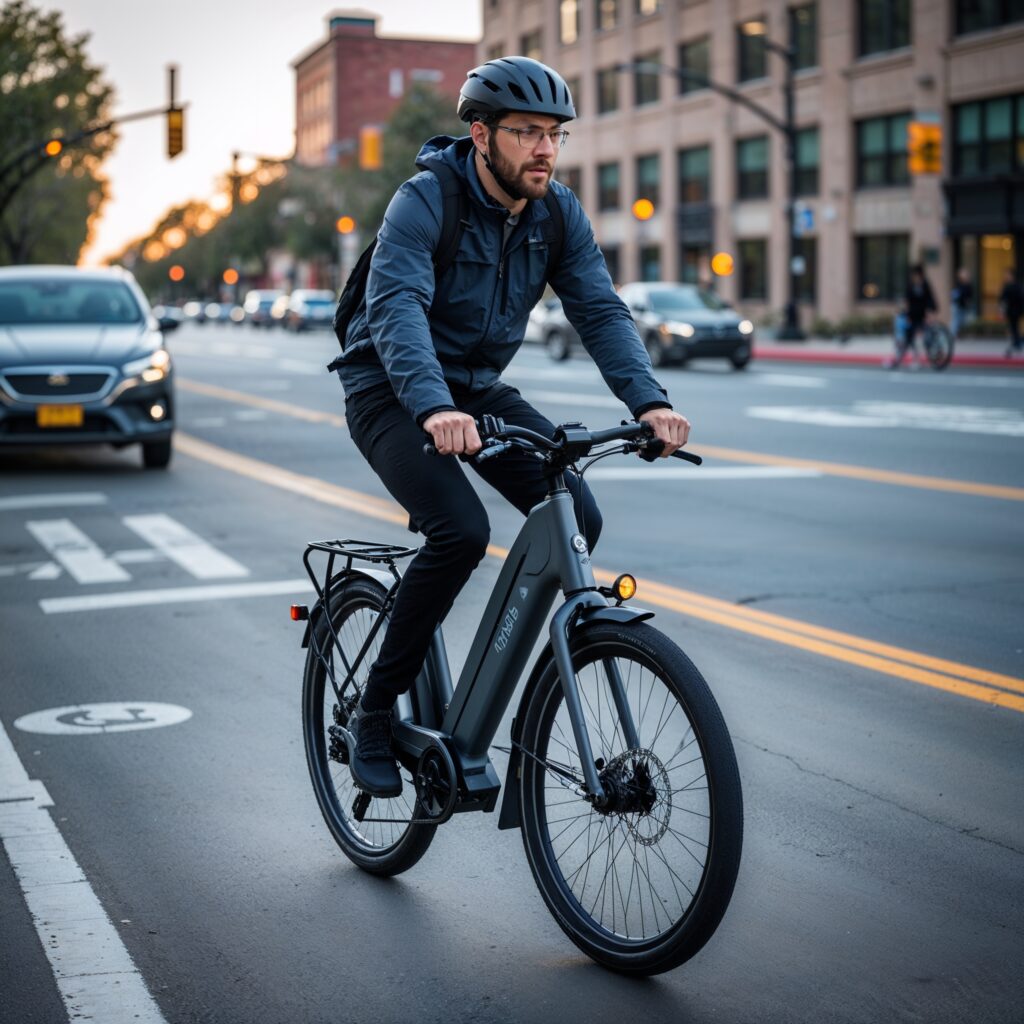
Most electric bikes in the commonly used U.S. three-class system provide motor assistance up to 20 mph or 28 mph, depending on the bike’s class. Class 1 and Class 2 bikes typically stop assisting at 20 mph, while Class 3 bikes provide pedal assistance up to 28 mph.
However, an e-bike’s top speed is not always the same as its motor-assisted speed. You may be able to pedal faster or travel faster downhill after the motor stops helping. Whether you can legally ride at a particular speed also depends on the applicable state, local and route-specific rules.
Understanding these differences helps you compare e-bike specifications, set realistic expectations and choose a bike that suits your daily rides.
Electric Bike Top Speed by Class
The common U.S. three-class framework distinguishes e-bikes by how their motors operate and when motor assistance ends.
| E-bike class | How the motor assists | Usual assisted-speed cutoff | Approximate km/h |
|---|---|---|---|
| Class 1 | Pedal assist only | 20 mph | 32 km/h |
| Class 2 | Throttle-capable; the motor can propel the bike without pedaling | 20 mph | 32 km/h |
| Class 3 | Pedal assist up to the higher class cutoff | 28 mph | 45 km/h |
These are the commonly used class definitions, not a guarantee that every e-bike is legal at these speeds everywhere. State laws and local rules may differ, particularly for Class 3 bikes, throttles, bike paths and shared-use trails.
For public-land access, PeopleForBikes’ federal e-bike rulemaking overview explains how federal agencies approach e-bike access. As one state-specific example, the California Highway Patrol’s electric-bicycle classification summary lists class cutoffs alongside California-specific requirements.
For a detailed breakdown of the regulations, see the Electric Bike Speed Limit USA guide.
What happens when an e-bike reaches its speed cutoff?
When a correctly configured e-bike reaches its assisted-speed cutoff, the motor stops providing assistance according to the applicable class definition. The bicycle does not automatically brake or stop moving.
You may still gain speed through pedaling or gravity, depending on the gearing, terrain and riding conditions. The distinction matters because a bike’s assistance cutoff is not necessarily its absolute physical maximum speed.
Assisted Speed vs. Actual Top Speed vs. Average Speed

The term top speed can describe several different measurements. Understanding which one a manufacturer is quoting makes it easier to compare bikes fairly.
| Speed measurement | What it means |
|---|---|
| Motor-assisted speed | The speed up to which the motor provides assistance under the bike’s configuration or class. |
| Throttle-only speed | The speed attainable using the throttle without pedaling, if the bike has one. |
| Physical top speed | The maximum speed the bike can reach through motor power, pedaling and momentum under the conditions of a particular ride. |
| Cruising speed | The speed a rider can maintain for a period on a suitable stretch of road. |
| Average trip speed | Distance divided by the full trip time, including stops and slowdowns. |
These numbers should not be treated as interchangeable.
For example, a Class 3 bike may stop providing assistance at 28 mph. The rider might travel faster downhill, but that does not mean the motor continues helping beyond the cutoff or that the higher speed is permitted on every route.
Average speed is a separate question. Traffic lights, intersections, turns and pedestrians can reduce a trip’s average substantially, even when the bike is capable of much higher speeds between stops. For a detailed comparison, see the Electric Bike Average Speed guide.
Can an Electric Bike Reach 40 MPH or 50 MPH?

Yes, some high-powered or modified electric bikes can physically reach speeds of 40 mph or even 50 mph. But those speeds are well beyond the usual assisted-speed cutoffs of the common Class 1, Class 2 and Class 3 framework.
The important question is how the bike reaches that speed.
- Motor assistance above the usual class cutoff: The bike may fall outside the ordinary e-bike classification under applicable law.
- Pedaling or coasting above the cutoff: The motor may already have stopped assisting. The legality of riding at that speed still depends on the location and applicable rules.
- Modified or high-powered bikes: Registration, licensing, insurance or other vehicle requirements may apply, depending on how the vehicle is classified under state and local law.
Do not assume that a bike advertised as reaching 40–50 mph is automatically legal on public roads, bike lanes or trails.
Before buying or modifying a high-speed electric bike, check the vehicle’s specifications and the rules that apply where you intend to ride.
Does Motor Wattage Determine Electric Bike Top Speed?

Not by itself. Motor wattage is an important specification, but it cannot reliably predict an e-bike’s top speed without considering the entire drive system and its configuration.
A higher-powered motor may improve acceleration, hill climbing or the ability to maintain speed under load. However, two bikes with different wattage ratings may have the same assisted-speed cutoff if they are configured for the same class.
For example, Bosch’s Performance Line Speed drive unit is specified to provide assistance up to 28 mph, illustrating why the system’s configuration and assisted-speed cutoff matter alongside its power rating.
What do 250W, 500W and 750W actually tell you?
These numbers describe power ratings, but manufacturers may use different definitions for rated, continuous, nominal and peak power. Those figures are not necessarily directly comparable.
When comparing e-bikes, check:
- The motor’s stated rating and the manufacturer’s definition of that rating.
- The bike’s class and specified assisted-speed cutoff.
- Whether the bike uses pedal assist, a throttle or both.
- The controller’s configuration and the motor’s ability to sustain performance.
- The bike’s gearing, tires, total weight and intended use.
The federal definition of a low-speed electric bicycle includes fully operable pedals, a motor of less than 750 watts and a motor-only maximum speed below 20 mph under specified test conditions. This is a federal product definition, not a universal nationwide road-use speed limit or a substitute for checking state and local e-bike laws. The CPSC’s bicycle requirements guidance outlines related federal bicycle safety requirements, including braking and structural integrity.
For a deeper explanation, read E-Bike Watts vs Power and How Does an Electric Bike Motor Work?.
Motor performance also depends on motor efficiency factors, including load, RPM, heat and gearing.
What Affects an E-Bike’s Real-World Top Speed?

Even when an e-bike is capable of reaching its specified assisted-speed cutoff, it may not reach or maintain that speed in every situation.
1. Rider weight and cargo
The total load includes the rider, the bike, bags, accessories and any cargo. The combined rider weight and cargo generally increases the effort needed for acceleration and climbing.
A heavier load may have a greater effect on a steep hill than on a flat road. It can also increase energy consumption and reduce battery range.
2. Hills and road surface
A bike may reach its assisted-speed cutoff more easily on smooth, level pavement than on a steep climb or rough trail.
Hills, gravel, loose surfaces and rolling resistance can affect how quickly the bike accelerates and how much speed it maintains. The terrain and road conditions can also influence energy use. The motor’s class cutoff remains a separate consideration from the speed the bike can physically reach.
3. Wind and aerodynamic drag
Wind resistance becomes increasingly important as riding speed rises. A strong headwind can make it harder to maintain speed, while a faster riding pace generally requires more power to overcome aerodynamic drag.
This is also why riding at a higher speed can reduce the distance you travel per charge. Your actual range depends on the battery, motor system, terrain, rider effort and other conditions. See Electric Bike Range Explained for more details.
4. Battery condition and temperature
Battery charge, temperature, battery health and the bike’s control system can affect performance. Some systems reduce available power under certain conditions to protect components.
If your bike feels noticeably slower than usual, check the manufacturer’s guidance and look for other symptoms before assuming the motor needs replacement.
5. Tires, gearing and mechanical condition
Tire pressure should be within the manufacturer’s recommended range. Underinflated tires can increase rolling resistance, and tire pressure and tire suitability both affect how easily the bike maintains speed.
Gearing also affects how effectively you can contribute pedal power. A bike’s motor, controller, drivetrain and tires work together; a single specification cannot describe the whole system.
6. Traffic and riding conditions
Intersections, turns, traffic congestion, pedestrians and poor visibility often determine the speed you can safely maintain on an actual journey.
A bike that reaches 28 mph on an open stretch will not necessarily make a city commute proportionally faster than a bike with a lower assisted-speed cutoff.
Why Does My E-Bike Display Show a Different Speed From GPS?

An e-bike display and a GPS device may report slightly different speeds because they calculate speed differently.
Many e-bike displays estimate speed using wheel or motor sensor data and configured wheel-size information. If the settings do not match the actual wheel or tire configuration, the displayed speed may be inaccurate.
GPS devices estimate speed from changes in position over time. Their readings can also fluctuate or lag when the signal is poor; Garmin’s explanation of GPS speed accuracy describes how signal quality can affect recorded speed and distance.
If you want to check your bike’s speed:
- Review the manufacturer’s instructions for the display and speed settings.
- Check that the wheel-size configuration is correct, where applicable.
- Use a GPS cycling computer or suitable GPS app on a safe, legal route.
- Compare readings over a reasonably steady stretch rather than relying on a single instant.
- Repeat under similar conditions if the readings differ significantly.
Do not operate a phone while riding to check your speed. Set up your equipment before moving and review the results afterward.
If the display remains inaccurate, consult the manufacturer’s documentation or a qualified technician. See the E-Bike Sensor Types guide and E-Bike Display System guide for related troubleshooting information.
How to Check Your E-Bike’s Top Speed Safely
If you want to understand your bike’s performance, use a repeatable approach rather than attempting to reach the highest possible speed in traffic.
- Identify the bike’s configuration. Check its class label, motor specifications and manufacturer documentation, such as Trek’s e-bike owner’s manual.
- Check the bike’s condition. Inspect tire pressure, brakes, wheel alignment, handlebar security and battery mounting before riding.
- Use appropriate measuring equipment. A properly configured display or GPS device can help you record speed.
- Choose a suitable test location. Use a controlled, safe and legally permitted area away from pedestrians and traffic. Do not conduct risky public-road speed tests.
- Record the conditions. Note battery charge, rider and cargo load, terrain, wind and riding mode. These details help explain differences between runs.
- Distinguish assistance from physical speed. Record when motor assistance stops separately from any speed reached through pedaling or downhill momentum.
Never disable a speed limiter or modify a motor controller simply to chase a higher speed. Such changes can affect the bike’s legal classification and place demands on components that may not be designed for the resulting performance.
Is a 28 MPH E-Bike Better Than a 20 MPH E-Bike?

Not necessarily. The better choice depends on where you ride, how far you travel and which features matter to you.
A 20 mph Class 1 or Class 2 bike may suit casual riding, stop-and-go commuting or routes where a higher assisted-speed cutoff provides little practical benefit. A Class 3 bike can be useful for longer paved commutes where higher assisted speeds are appropriate and permitted.
Before choosing, consider:
- Your route: A faster bike may offer little time savings on a journey dominated by stops and intersections.
- Access rules: Class 3 bikes may be restricted on certain paths or trails.
- Battery range: Higher-speed riding can use more energy.
- Comfort and control: Braking performance, tires, handling and rider experience matter at higher speeds.
- Your actual needs: A higher specification is not automatically better value if you rarely use the additional capability.
Compare the expected journey, not just the number on the specification sheet. For commuting, a realistic average speed may be more useful than a theoretical maximum.
E-Bike Speed: Legal and Safety Checks
Before riding near your bike’s maximum assisted speed, confirm the rules that apply to your location.
- Check the bike’s class and manufacturer specifications.
- Review Electric Bike Laws in the USA and check state and local requirements for roads, bike lanes, sidewalks, parks and trails.
- Check applicable electric bike helmet laws and age requirements.
- Wear a properly fitted helmet and use appropriate lights and reflective equipment.
- Keep tires, brakes and other safety-critical components in good condition.
- Reduce speed around intersections, parked vehicles, pedestrians, wet surfaces and areas with limited visibility, following the practices in E-Bike Road Safety Tips.
Requirements differ by state. For example, Utah’s e-bike requirements outline that state’s power, pedal and class criteria. Always check the rules that apply to your own location rather than assuming that another state’s requirements are identical.
Trail access can also be site-specific. The Bureau of Land Management’s e-bike FAQ explains that access to certain public-land roads and trails depends on applicable restrictions and land-management decisions.
For helmet fit and safety-standard checks, see NHTSA’s bicycle helmet selection guide. The CDC’s bicycle and e-bicycle safety guidance also emphasizes helmet use.
Electrical safety matters as well as mechanical condition. UL Solutions’ UL 2849 certification overview explains how e-bike drive, battery and charger systems are evaluated. The CPSC’s micromobility safety standards notice discusses the importance of applicable electrical-safety standards.
The PeopleForBikes electric-bike policy resources explain the common class framework and related policy issues. The NHTSA bicycle safety guidance provides additional advice on helmets and safer road use.
Remember that an assisted-speed cutoff does not establish the speed you may ride everywhere. Follow the rules for the specific road, path or facility.
Frequently Asked Questions
What is the top speed of a normal electric bike?
In the common U.S. three-class system, Class 1 and Class 2 e-bikes typically provide assistance up to 20 mph, while Class 3 bikes provide pedal assistance up to 28 mph. Actual physical speed and permitted riding speed are separate questions.
Can an electric bike go faster than 20 mph?
Yes. A rider may continue pedaling or coast downhill after the motor stops assisting at 20 mph. Whether riding faster is permitted depends on the bike’s classification and the applicable rules.
Does a 750W motor mean an e-bike can reach 28 mph?
No. Wattage alone does not establish top speed. The motor system, controller configuration, class and other specifications matter, and the applicable legal requirements must also be considered.
Why is my electric bike slower than advertised?
Possible explanations include hills, headwinds, low battery charge, temperature, rider or cargo weight, tire pressure, mechanical drag and the bike’s configured speed cutoff. Check the manufacturer’s specifications and investigate any sudden or unexplained change in performance.
Can I ride a Class 3 e-bike on any bike path?
No universal answer applies to every path. Access rules differ by state, locality and facility. Check the specific rules before riding.
Is top speed the same as average speed?
No. Top speed is the maximum speed reached under particular conditions. Average trip speed includes the time spent stopping, turning and slowing down, so it is usually lower.
Conclusion
The most useful way to understand electric bike top speed is to separate three things: the speed at which the motor stops assisting, the maximum physical speed the bike can reach and the speed you can realistically maintain on your route.
For the common U.S. class framework, the usual assisted-speed cutoffs are 20 mph for Class 1 and Class 2 and 28 mph for Class 3. These figures do not replace local legal requirements, and motor wattage alone cannot tell you how fast a bike will travel.
Compare the bike’s class, real-world performance, battery demands and intended use before making a decision. If you already own an e-bike, use its specifications and safe measurements to understand its performance rather than relying on a single advertised number.
Pingback: Electric Bike Battery Range Explained: Real Miles, 48V Batteries, and Range Tips - electricscootercar.com
Pingback: Electric Bike Battery Problems: Safe Troubleshooting Guide for USA Riders - electricscootercar.com
Pingback: Electric Bike Motors Explained: Types, Specs, Problems & Safety Tips - electricscootercar.com
Pingback: What Is RPM on an E-Bike? Motor vs Wheel vs Cadence Explained - electricscootercar.com
Pingback: SEO title: Electric Bike Lifecycle Impact: What Actually Changes the Result - electricscootercar.com
Pingback: Electric Bike Import Rules USA (2026): CPSC, Customs & Duties - electricscootercar.com
Pingback: Electric Bike Speed Limits in the USA: 20 vs 28 MPH, Classes & Local Rules - electricscootercar.com
Pingback: SEO Title: Electric Bike Tire Types: Choose the Right Size, Tread & Fit - electricscootercar.com
Pingback: Do Electric Bikes Need a License? 2026 U.S. Rules by State - electricscootercar.com
Comments are closed.