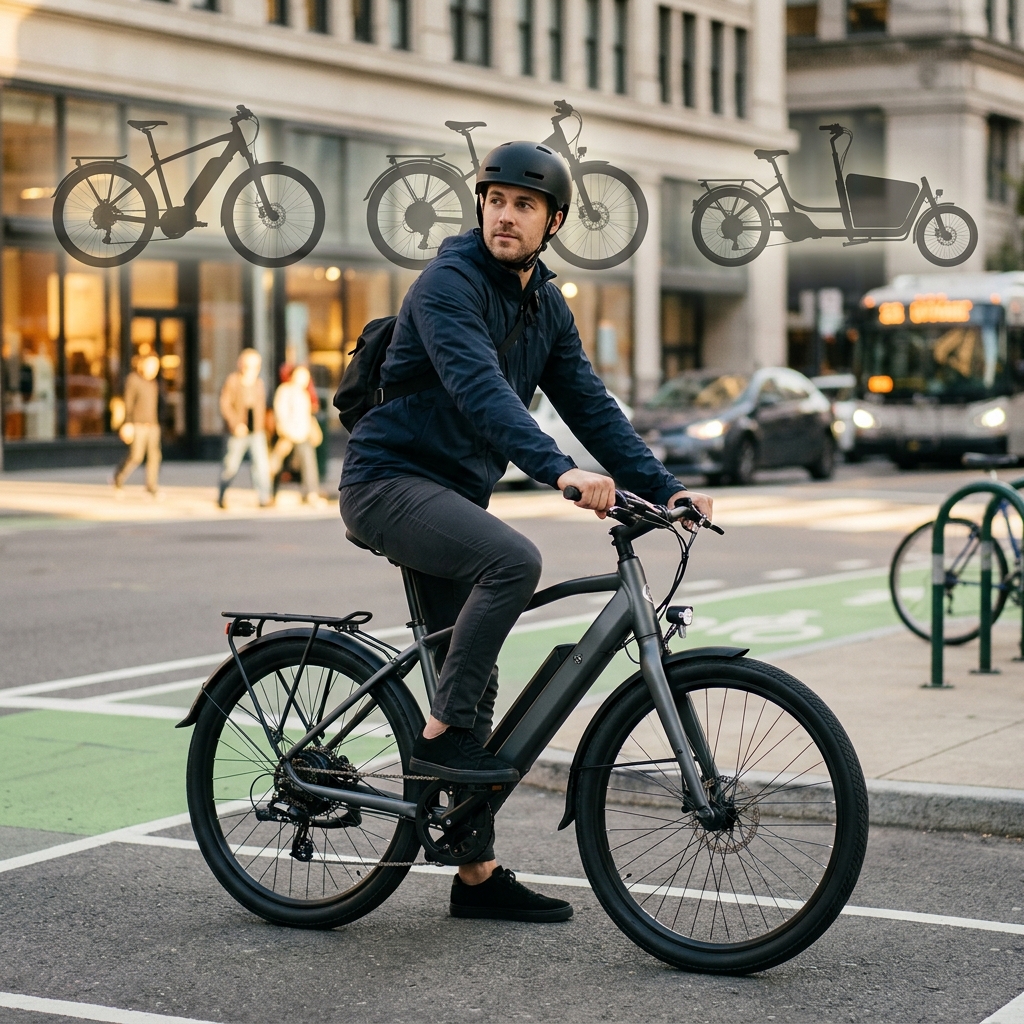
For most flat city commutes, a rear hub motor is the simplest and most affordable choice. For hills, cargo, heavier riders or longer mixed-terrain rides, a mid-drive motor usually feels stronger, more balanced and more efficient because it works through the bike’s gears. This electric bike motor comparison explains hub vs mid-drive motors, geared vs gearless hubs, watts, torque, sensors, range impact, USA class rules and safety checks so you can choose the right motor without relying only on the biggest watt number.
Understanding Electric Bike Motors

What an E-Bike Motor Does
An e-bike motor helps turn electrical energy from the battery into movement at the wheel or drivetrain. It does not replace the basic bicycle completely. Instead, it supports your pedaling or, on some bikes, moves the bike with throttle assistance.
The motor affects how the bike feels when you:
- Start from a stop
- Climb hills
- Carry groceries or cargo
- Ride against wind
- Maintain speed
- Use battery power
- Handle the bike in traffic
A stronger motor is not always the better motor. The right motor is the one that matches your terrain, rider weight, riding style, comfort level, and local e-bike rules.
Which E-Bike Motor Should You Choose?
| Rider situation | Best motor choice | Why |
|---|---|---|
| Flat city commute | 250W–350W rear hub motor | Simple, affordable and enough for normal roads |
| Stop-and-go traffic | Geared rear hub or mid-drive | Better launch from traffic lights and intersections |
| Hilly suburb | Mid-drive motor with strong torque | Uses the bike’s gears better on climbs |
| Cargo or child seat | Mid-drive or high-torque rear hub | Handles extra weight more confidently |
| Heavier rider | 500W setup with good torque | Better acceleration and hill support |
| Quiet cruising | Gearless hub or refined rear hub | Smooth ride with less mechanical noise |
| Long range rides | Efficient mid-drive + larger battery | Better energy use on mixed terrain |
| Lowest maintenance | Rear hub motor | Less drivetrain stress and simpler repair path |
Key Performance Metrics: Torque, Wattage, and Efficiency
Three specs matter most when comparing e-bike motors: torque, wattage, and efficiency.
Wattage tells you how much electrical power the motor is rated to use. Common e-bike motor ratings include 250W, 350W, 500W, and sometimes 750W.
Torque tells you how much pulling or twisting force the motor can produce. Higher torque usually helps more on hills, quick starts, and heavier loads.
Efficiency tells you how well the motor turns battery energy into useful movement. A more efficient motor may deliver better range even if it has lower wattage.
For beginners, think of it this way:
- Wattage = power capacity
- Torque = climbing and pulling strength
- Efficiency = how wisely the motor uses battery energy
One important buying note: advertised wattage does not tell the full story. Some brands highlight peak power, while real-world performance depends on torque, controller tuning, battery voltage, bike weight, tire size, and terrain.
Types of Electric Bike Motors

Hub Motors vs. Mid-Drive Motors
The biggest electric bike motor types comparison usually starts with hub motors vs. mid-drive motors.
A hub motor sits inside the front or rear wheel hub. Most common commuter and budget e-bikes use rear hub motors because they are simple, affordable, and dependable for flat or moderate terrain.
A mid-drive motor sits near the pedals and sends power through the bike’s chain and gears. This lets the motor take advantage of the bike’s gearing, which helps on hills and uneven terrain.
| Motor Type | Best For | Main Advantage | Main Trade-Off |
|---|---|---|---|
| Rear Hub Motor | City riding, flat commutes, casual use | Simple and affordable | Less efficient on steep hills |
| Front Hub Motor | Basic low-cost e-bikes | Easy installation | Can affect steering feel |
| Mid-Drive Motor | Hills, longer rides, performance commuting | Better climbing and balance | Usually more expensive |
For most casual city riders, a rear hub motor is enough. For riders who face steep hills, heavier cargo, or longer mixed-terrain routes, a mid-drive motor often feels more natural and capable.
Geared vs. Gearless Hub Motors
Hub motors come in two common forms: geared and gearless.
A geared hub motor uses internal gears to multiply torque. This helps with acceleration and hill starts. Geared hubs are common on commuter e-bikes because they feel responsive at lower speeds.
A gearless hub motor, also called a direct-drive hub motor, has fewer internal moving parts and can be very quiet. However, it is usually heavier and may feel slower from a stop unless it has enough power.
| Hub Motor Type | Strength | Weakness |
|---|---|---|
| Geared Hub Motor | Better low-speed torque and acceleration | Slight gear noise possible |
| Gearless Hub Motor | Smooth and quiet operation | Heavier and weaker at low-speed climbing |
| Rear Geared Hub | Great for commuters | Not ideal for very steep hills |
| Front Hub | Simple and affordable | Can feel less stable on loose roads |
Pros and Cons in Real-World Riding
A hub motor feels simple. You press the pedal assist or throttle, and the motor pushes the wheel. This works well for paved streets, bike lanes, campus riding, short errands, and relaxed commuting.
A mid-drive motor feels more like strong legs. Because it works through the pedals and gears, it responds well when you shift properly. This makes it better for hills, long suburban roads, gravel paths, and cargo loads.
Hub motor pros:
- Lower price
- Less drivetrain wear
- Good for flat city routes
- Simple maintenance
- Common on entry-level e-bikes
Hub motor cons:
- Less efficient on steep hills
- Rear-heavy or front-heavy feel
- Wheel repairs can be more involved
- Can drain battery faster under heavy load
Mid-drive motor pros:
- Better hill climbing
- More natural pedaling feel
- Better weight balance
- Efficient when used with gears
- Strong for cargo or heavier riders
Mid-drive motor cons:
- Higher cost
- More chain and drivetrain wear
- Requires better shifting habits
- Maintenance may cost more
Comparing Motor Performance

Torque and Acceleration Differences
An e bike motor torque comparison is often more useful than only comparing wattage.
Torque affects how quickly the bike moves from a stop and how confidently it climbs. This matters if you ride in stop-and-go traffic, cross intersections, carry groceries, or live in a hilly suburb.
A 350W motor with good torque can feel stronger than a weak 500W motor on real roads. This is why you should not judge performance by wattage alone.
General real-world feel:
| Riding Situation | Better Motor Choice |
|---|---|
| Flat city streets | 250W–350W hub motor |
| Frequent stop signs | Geared hub or mid-drive |
| Rolling suburbs | 350W–500W hub or mid-drive |
| Steep hills | Mid-drive with strong torque |
| Cargo or child seat | Mid-drive or higher-torque hub |
| Heavier rider | Higher-torque 500W setup |
If you want quick starts and hill confidence, compare torque ratings, not just motor watts.
Noise Levels During Operation
An e bike motor noise comparison depends on the motor design.
Most modern e-bike motors are fairly quiet, but they do not all sound the same.
Geared hub motors may produce a light whirring sound because of the internal gears. It is usually not loud, but you may notice it during acceleration.
Gearless hub motors are often very quiet because there are fewer mechanical gear sounds.
Mid-drive motors can make a mild mechanical hum, especially under load or while climbing. Noise also depends on the drivetrain, chain condition, and gear choice.
For quiet city streets, a gearless hub motor or a refined rear hub motor may feel the smoothest. For hills and performance, a mid-drive may make slightly more sound but usually delivers better control.
Climbing and Riding Scenarios in Urban and Suburban USA
For a practical e bike motor performance comparison, think about where the rider actually rides.
Urban USA commuting:
If the route is mostly flat with bike lanes, traffic lights, and short trips, a 350W rear hub motor is usually enough. It gives helpful acceleration without feeling excessive.
Suburban commuting:
For longer roads, rolling hills, heavier riders, or faster stretches, a 500W motor can feel more comfortable. It gives extra support when starting from intersections or riding into wind.
Hilly neighborhoods:
A mid-drive motor is usually the better choice. It uses the bike’s gears, which helps keep the motor in a more efficient range while climbing.
Campus or short errand riding:
A 250W or 350W hub motor can be practical, lighter, and more affordable.
Cargo and family use:
If the bike carries a child seat, trailer, delivery load, or groceries, prioritize torque and braking quality. A stronger motor is only useful if the bike also has safe brakes, tires, and frame stability.
Motor Specifications and User Impact

Wattage Differences: 250W, 350W, 500W
Many beginners ask: which is better, 350W or 500W?
The honest answer is: it depends on terrain and rider needs.
A 250W motor can work well for lightweight riders, flat routes, bike paths, and efficient pedal-assist riding. It is not ideal for steep hills or heavier loads.
A 350W motor is a strong middle ground for many USA commuters. It gives enough support for city riding, moderate hills, and daily errands without feeling too heavy or power-hungry.
A 500W motor gives more confidence for suburban roads, larger riders, cargo, headwinds, and hillier routes. It may use more battery if ridden aggressively.
| Wattage | Best Use | Practical Feel |
|---|---|---|
| 250W | Light commuting, flat streets, fitness-focused riding | Gentle assistance |
| 350W | Daily city commuting, moderate hills | Balanced and practical |
| 500W | Suburbs, hills, heavier riders, cargo | Stronger acceleration and support |
For most daily riders, 350W is enough on flat to moderate terrain. A 500W motor becomes more useful when weight, hills, wind, or longer routes are part of the ride.
Also check whether the brand lists nominal wattage or peak wattage. Nominal wattage is more useful for comparing everyday performance. Peak wattage may look impressive, but it does not always reflect how the motor performs during a full commute.
How Motor Choice Affects Battery Life and Range
Motor choice directly affects range, but not in a simple “bigger motor always means worse range” way.
A 500W motor can drain the battery faster if you use high assist all the time. But on hills, a stronger motor may work more comfortably than an underpowered motor struggling at full load.
Range depends on:
- Motor efficiency
- Battery size
- Rider weight
- Tire pressure
- Terrain
- Wind
- Assist level
- Stop-and-go riding
- Cargo load
- Speed
A mid-drive motor can be efficient on hills because it uses gears. A hub motor can be efficient on flat roads because it has a simpler power path.
For the best range, use lower assist on flat sections, shift properly if you ride a mid-drive, and avoid using full power for every start.
Weight and Handling Considerations
The motor changes how the bike feels.
A rear hub motor adds weight to the back wheel. This can feel stable on pavement, but the rear of the bike may feel heavier when lifting it onto a rack or carrying it upstairs.
A front hub motor adds weight to the front wheel. On dry pavement, this can be manageable, but on loose gravel or wet surfaces, front-wheel motor pull can feel less natural.
A mid-drive motor places weight near the center of the bike. This usually improves balance and handling, especially on hills or longer rides.
If you live in an apartment, use stairs, or load your e-bike onto a car rack, motor weight matters almost as much as power.
Practical Comparison Chart
Side-by-Side Metrics: Torque, Wattage, Noise, Efficiency
Here is a simple electric bike motor comparison chart for beginner buyers.
| Motor Type | Typical Wattage | Torque Feel | Noise Level | Efficiency | Best For |
|---|---|---|---|---|---|
| Front Hub Motor | 250W–350W | Mild | Low to moderate | Moderate | Budget flat-road riding |
| Rear Geared Hub Motor | 350W–500W | Good from stops | Low whir | Good on flat roads | City commuting |
| Rear Gearless Hub Motor | 500W+ common | Smooth but less punchy at low speed | Very quiet | Good at steady speed | Quiet cruising |
| Mid-Drive Motor | 250W–500W common | Strong and natural | Low to moderate | Very good when shifted properly | Hills, cargo, longer rides |
This chart is a practical guide, not a final rule. Motor tuning, controller quality, battery voltage, bike weight, tire size, and software settings can make two motors with the same wattage feel very different.
Recommended Usage Scenarios for Each Motor Type
Choose a 250W motor if:
You ride mostly flat routes, want a lighter bike, and prefer gentle pedal assistance.
Choose a 350W rear hub motor if:
You want a practical daily commuter for city streets, errands, and moderate hills.
Choose a 500W rear hub motor if:
You ride in suburbs, carry extra weight, face wind, or want stronger acceleration.
Choose a mid-drive motor if:
You climb hills often, ride longer distances, carry cargo, or want the most bicycle-like feel.
Choose a gearless hub motor if:
You value quiet cruising and smooth operation more than quick low-speed acceleration.
Common Mistakes When Choosing a Motor

Overlooking Local Speed Limits and Regulations in the USA
A powerful motor is not useful if the bike does not fit your local riding rules.
At thefederal level, a low-speed electric bicycle is defined as a two- or three-wheeled vehicle with fully operable pedals, an electric motor of less than 750 watts, and a maximum motor-powered speed of less than 20 mph on a paved level surface with a 170-pound rider. That federal definition is mainly about product classification and safety standards.
Where many riders get confused is operation. State and local rules can decide where e-bikes may be ridden, whether a throttle is allowed, whether helmets are required, whether Class 3 bikes are restricted on paths, and whether local trails allow e-bike access. NCSL notes that many states use a three-class system, but state rules still vary.
Common class definitions are:
- Class 1: Pedal assist only, assistance stops at 20 mph
- Class 2: Throttle-capable, assistance stops at 20 mph
- Class 3: Pedal assist only, assistance stops at 28 mph, usually equipped with a speedometer
Before buying, check:
- Your state e-bike class rules
- Local trail and bike path access
- Helmet requirements
- Age restrictions
- Whether throttles are allowed
- Whether Class 3 bikes are restricted in certain areas
- Whether the bike has a clear class label
A 500W or 750W e-bike may be legal in one setting but restricted in another, depending on speed capability, throttle setup, class labeling, rider age, and local rules.
Ignoring Terrain and Riding Style
Many riders buy based on the biggest number on the spec sheet. That can lead to the wrong bike.
A flat-city commuter does not always need a high-powered motor. A hilly-area rider may regret buying a low-torque hub motor just because it was cheaper.
Ask yourself:
- Do I ride mostly flat roads?
- Do I stop and start often?
- Are there steep hills?
- Will I carry cargo?
- Do I want exercise or effortless riding?
- How far is my daily route?
- Do I need to lift or store the bike indoors?
- Do I care more about quiet operation or hill climbing?
The best motor is not the most powerful one. It is the one that makes your normal ride easier without creating unnecessary weight, cost, range loss, or legal complications.
Quick Decision Checklist

Before choosing a motor, answer these seven questions:
- Is your route mostly flat, rolling or steep?
- Is your total rider + cargo weight light, average or heavy?
- Do you stop often at traffic lights or ride long steady roads?
- Do you want quiet cruising or strong hill climbing?
- Do you need to carry groceries, a child seat or delivery load?
- Can a local shop service the motor brand?
- Does the bike clearly show class, speed limit, battery size, torque and safety certification?
If most answers are flat, light and short-distance, choose a rear hub motor.
If most answers include hills, cargo, heavier weight or long distance, compare mid-drive motors first.
Matching Motor Type to Daily Commute and Leisure Use
Use this quick checklist before choosing an e-bike motor.
For flat city commuting:
A 350W rear hub motor is usually a smart choice.
For short neighborhood rides:
A 250W or 350W motor can be enough.
For suburban commutes:
A 500W hub motor or efficient mid-drive gives more comfort.
For hills:
Choose a mid-drive motor or a high-torque geared hub motor.
For quiet riding:
Look at gearless hub motors or well-tuned rear hub systems.
For cargo or heavier loads:
Prioritize torque, brake quality, frame strength, and battery capacity.
For longer range:
Do not only chase wattage. Look at battery size, efficiency, weight, tires, and assist levels.
Safety and Maintenance Considerations
Motor power should never be judged alone. A faster or stronger e-bike also needs safe handling, good brakes, reliable tires, and a quality battery system.
For normal USA riding:
- Wear a properly fitted helmet
- Follow local speed and class rules
- Use lights and reflectors
- Check brakes often
- Keep tires properly inflated
- Avoid modifying the motor to exceed legal limits
- Use the correct charger from the manufacturer
- Do not charge a damaged battery
- Store and charge the battery away from heat and flammable materials
- Buy from a brand with service support
Electrical system safety also matters. UL 2849 is a safety standard for e-bike electrical systems that evaluates the electrical drive train, battery system, and charger system together.
FAQs

What matters more on an e-bike motor: watts or torque?
Torque usually matters more for hill climbing, quick starts and heavier loads. Wattage tells you the motor’s power rating, but torque tells you how strong the bike may feel when starting, climbing or carrying cargo.
Is a torque sensor better than a cadence sensor?
A torque sensor usually feels smoother because it responds to how hard you pedal. A cadence sensor is simpler and cheaper, but it can feel more on/off in traffic or on hills.
Is 750W legal for an e-bike in the USA?
Federal product rules refer to an electric motor of less than 750 watts and a maximum motor-powered speed below 20 mph under specific test conditions. Riding rules still depend on your state, city, trail and e-bike class, so always check local rules before buying.
Which motor is best for heavier riders?
A heavier rider should compare torque, battery size, frame strength and brake quality, not just motor watts. A high-torque mid-drive or strong rear hub motor is usually better than a low-torque budget motor.
Do mid-drive motors get better range than hub motors?
A mid-drive motor can be more efficient on hills because it works through the bike’s gears. A hub motor can still be efficient on flat roads, especially when the rider uses lower assist and keeps tyres properly inflated.
Which e-bike motor is easiest to maintain?
A rear hub motor is usually the simplest for everyday riders because it creates less chain and cassette wear. A mid-drive motor may need more drivetrain care, but it usually performs better on hills and cargo rides.
Which motor is quieter for city streets?
A gearless hub motor is usually one of the quietest options because it has fewer internal gear sounds. Many rear hub motors are also quiet enough for normal city riding. Mid-drive motors may produce a light mechanical hum, especially under load, but higher-quality systems are still fairly quiet.
Is a 500W motor necessary for suburban commutes?
Not always. A 350W motor can work well for shorter suburban rides with mild hills. A 500W motor makes more sense if your route includes longer distances, headwinds, heavier rider weight, cargo, or repeated hills.
Are mid-drive motors better than hub motors?
Mid-drive motors are usually better for hills, cargo, and natural pedaling feel. Hub motors are usually better for affordability, simplicity, and flat-road commuting. Neither is automatically better for every rider.
Does higher wattage always mean faster speed?
No. Speed depends on the motor, controller, battery, bike class, software limits, rider input, terrain, and local regulations. A higher-wattage motor may mainly improve acceleration and hill support rather than top speed.
What is the best e-bike motor for beginners?
For most beginners riding on city streets or moderate suburban routes, a 350W rear hub motor is a practical starting point. It is simple, affordable, and powerful enough for everyday use without being excessive.
Quick Summary / Checklist

- Choose 250W for light, flat, efficient riding.
- Choose 350W for balanced daily commuting.
- Choose 500W for hills, suburbs, cargo, wind, or heavier riders.
- Choose a hub motor for simplicity and lower cost.
- Choose a mid-drive motor for hills, efficiency, and better balance.
- Compare torque, not just wattage.
- Check whether wattage is nominal or peak.
- Check local USA e-bike class rules before buying.
- Do not ignore brakes, battery quality, service support, and safe charging.
- The best motor is the one that matches your real route, not the biggest number on the label.
Pingback: Electric Bike Battery Range Explained: Real Miles, 48V Batteries, and Range Tips - electricscootercar.com
Pingback: How Does an Electric Bike Motor Work? Hub vs Mid-Drive Explained - electricscootercar.com
Pingback: How Terrain Affects Electric Bike Range: Hills, Gravel & Trails - electricscootercar.com
Pingback: SEO title: E-Bike Motor Efficiency Factors: Load, RPM, Heat & Gearing - electricscootercar.com
Pingback: SEO title: What Is Torque on an E-Bike? Nm, Watts & Spec Comparisons - electricscootercar.com
Pingback: SEO title: What Is a Hub Motor on an E-Bike? How It Works and What Changes on the Road - electricscootercar.com
Pingback: What Is RPM on an E-Bike? Motor vs Wheel vs Cadence Explained - electricscootercar.com
Comments are closed.