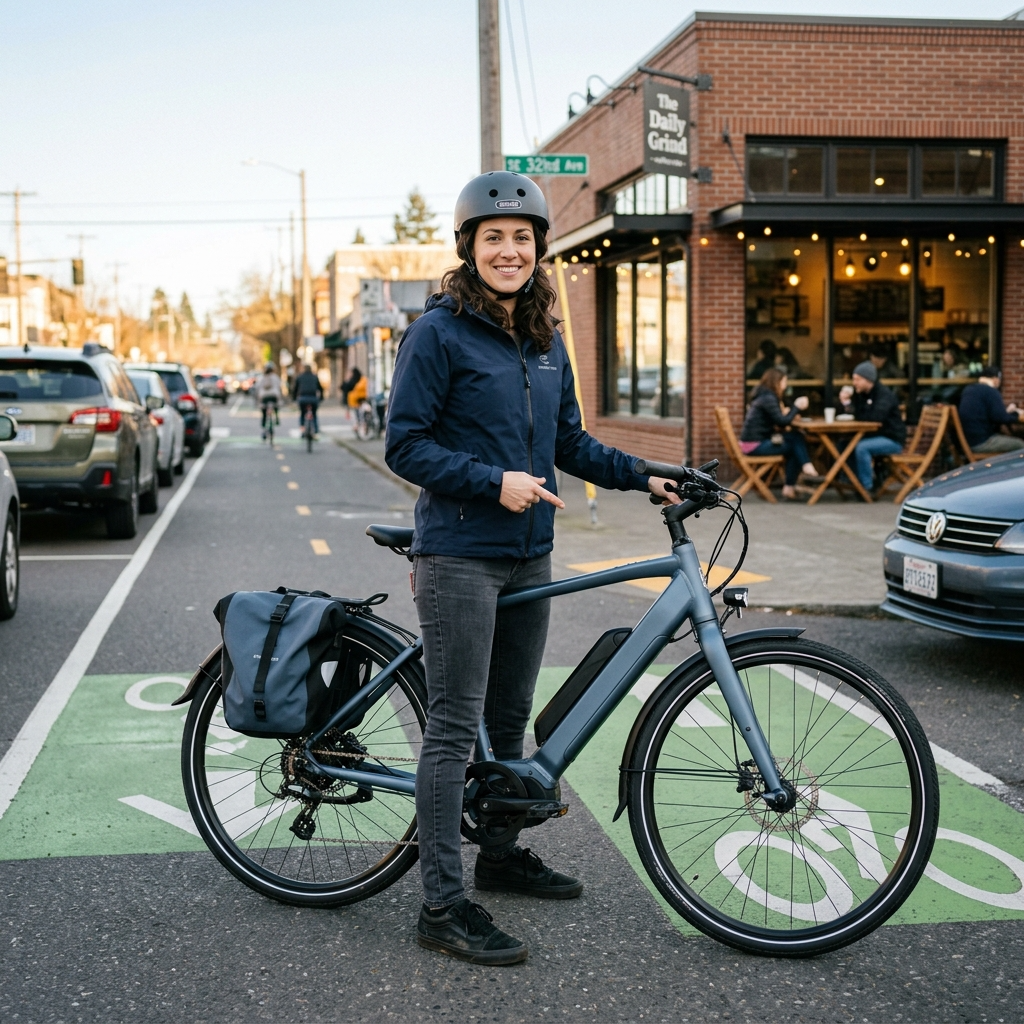
An electric bike combines the familiar parts of a bicycle with an electrical system that provides motor assistance. The main electric bike parts include the frame, fork, wheels, tires, brakes, drivetrain, battery, motor, controller, sensors, display, wiring, and charger.
Understanding these components helps you identify a part, maintain your bike, choose compatible replacements, and recognize when a problem requires professional repair. This guide to electric bike components explains how the mechanical and electrical systems work together.
Not every e-bike has the same equipment. A hub-motor commuter, a mid-drive mountain bike, and a cargo e-bike can use different motors, sensors, displays, brakes, and accessories. Some electrical functions are also integrated into larger assemblies rather than housed in separate visible components.
This guide explains the main e-bike parts, what they do, what to inspect, and which repairs need extra care.
Electric Bike Parts List: Main Components at a Glance

| Part | What it does | What to check |
|---|---|---|
| Frame | Supports the rider and the bike’s components | Cracks, damage, fit, and loose mounts |
| Fork | Holds the front wheel and supports steering | Damage, looseness, and suspension condition |
| Wheels and tires | Support the bike and provide traction | Tire pressure, tread, cracks, and wheel security |
| Brakes | Slow and stop the bike | Pad wear, rotor condition, and stopping performance |
| Drivetrain | Transfers pedaling force to the rear wheel | Chain wear, shifting, and damaged gears |
| Battery pack | Stores electrical energy | Damage, mounting security, and abnormal behavior |
| Battery management system (BMS) | Monitors and protects the battery pack according to its design | Battery warnings or charging problems |
| Motor | Converts electrical energy into mechanical assistance | Unusual noise, overheating, or loss of assistance |
| Controller or drive unit | Regulates motor operation in response to system inputs | Error messages, cutouts, and compatibility |
| Sensors | Detect pedaling, speed, braking, or other system conditions | Loose connections, damage, or inconsistent assistance |
| Display and controls | Show ride information and allow supported settings to be changed | Blank screens, incorrect readings, and error codes |
| Throttle, if fitted | Requests motor assistance without pedaling on equipped bikes | Sticking, damage, or failure to respond |
| Wiring and connectors | Carry power and system signals | Exposed wires, corrosion, moisture, or damaged connectors |
| Charger and charging port | Transfer energy into the battery system | Correct charger, connector condition, and abnormal heat |
| Lights and accessories | Improve visibility and add practical features | Working lights, secure mounts, and loose hardware |
The most important distinction is between the bicycle’s mechanical parts and its electrical-assistance system. Both matter: the electrical system provides assistance, while the mechanical parts support, steer, transfer force, and stop the bike.
How Do Electric Bike Parts Work Together?

An e-bike is a connected system, not simply a bicycle with a motor attached. Understanding the main power and control paths makes it easier to identify components and understand common problems.
1. Electrical energy flow
Battery → controller or drive unit → motor
The battery supplies electrical energy. The controller or drive electronics regulate motor operation, and the motor converts electrical input into mechanical assistance.
2. Control and signal flow
Rider inputs and sensors → controller or drive unit → motor response
Depending on the bike, inputs may include pedal movement, pedal force, wheel speed, brake signals, or throttle requests. The control system interprets these inputs and adjusts assistance according to the bike’s design and operating limits.
3. Mechanical force
Rider and motor → drivetrain and/or wheel → tire → road
The exact mechanical path depends on the motor arrangement. A hub motor delivers its output at the wheel, while a mid-drive motor transfers its output through the bicycle’s drivetrain.
4. Charging
Charger → charging port or connector → battery protection electronics → battery
Charging architecture varies by manufacturer and system. The battery, charger, and other electrical parts must be compatible.
For a more detailed explanation, read How Does an E-Bike Motor Work?.
What Each Major Electric Bike Part Does

1. Frame, fork, and steering components
The frame is the main structure of the bike. It supports the rider, wheels, motor, battery, and any fitted accessories.
The fork holds the front wheel and helps determine steering and front-end behavior. The headset connects the fork’s steering assembly to the frame. The stem and handlebars allow the rider to steer.
Common electric bike frame designs include step-through, step-over, folding, cargo, and mountain-bike frames.
When inspecting these parts, look for:
- Cracks or visible structural damage.
- A loose or damaged battery mount.
- Unusual movement in the steering assembly.
- A bent fork or damaged suspension.
- Handlebar or stem movement.
- Poor rider fit or an uncomfortable riding position.
Do not ride a bike with suspected frame damage or unreliable steering. Have it inspected by a qualified bicycle or e-bike technician.
2. Wheels, tires, and hubs
Each wheel includes several parts, such as the rim, spokes, hub, axle, and tire. Depending on the wheel design, it may also have an inner tube or a tubeless setup.
The tires influence grip, comfort, rolling resistance, and puncture protection. A suitable tire depends on the wheel size, rim, frame clearance, load, riding conditions, and manufacturer specifications. The Electric Bike Tire Types guide explains how to match tire size, tread, and fit to the bike.
Check these items regularly:
- Tire pressure against the manufacturer’s recommended range.
- Worn tread, cracks, cuts, or bulges.
- Loose spokes or a wheel that wobbles.
- Damage to the rim or axle.
- Tire clearance around the frame and fork.
Low tire pressure can increase rolling resistance and affect handling. The correct pressure is not necessarily the maximum pressure printed on the tire.
Before replacing a tire, confirm its size, fit, load capability, and intended use.
3. Brakes and brake cutoff sensors

Brakes are among the most important safety components on an e-bike. The bike’s total weight, speed, terrain, and carried load all affect braking demands.
Common brake components include:
- Brake levers.
- Mechanical cables or hydraulic hoses.
- Calipers.
- Brake pads.
- Brake rotors or other braking surfaces.
- Brake cutoff switches or sensors, when fitted.
Mechanical disc brakes use cables to actuate the caliper. Hydraulic disc brakes use fluid pressure. Both require compatible components and proper adjustment.
A brake cutoff sensor has a different job from the physical brake: on systems equipped with one, it signals the control system to stop motor assistance when braking.
Watch for weak stopping power, worn pads, grinding noises, damaged hoses, fluid leaks, or a motor that continues providing assistance when it should stop.
Do not ride with unreliable brakes. If braking performance changes unexpectedly, stop riding and have the fault checked. For replacement guidance, see E-Bike Brake Types Explained and Park Tool’s disc brake pad removal and installation guide. SRAM’s brake maintenance guide also explains routine pad and rotor inspections.
4. Battery pack and battery management system
The battery stores the energy used by the motor and other supported electrical components. Most modern e-bikes use rechargeable lithium-ion battery packs. The E-Bike Battery Guide explains how these batteries work and how their performance changes over time.
Battery specifications commonly include:
- Voltage: An important part of electrical-system compatibility.
- Amp-hours (Ah): A measure related to the amount of charge the battery can deliver.
- Watt-hours (Wh): A measure of stored energy that helps compare battery capacity. The relationship is explained in Battery Capacity Ah vs Wh.
- Mounting and connector design: Determine how the battery fits and connects to the bike.
The battery management system, or BMS, monitors and protects the battery pack according to its design. It may be built inside the battery rather than appearing as a separate external component. See What Is a BMS on an E-Bike? for more information.
The UK government’s statutory guidance on lithium-ion battery safety for e-bikes describes the protective role of a BMS or equivalent safeguards in battery safety. Its regulatory requirements apply to Great Britain, so riders elsewhere should also follow their own manufacturer’s instructions and applicable local requirements.
Do not choose a replacement battery based on voltage alone. The battery must be suitable for the exact bike and electrical system.
For additional model-specific charging, storage, and handling advice, consult Bosch eBike battery safety guidance or the documentation for your own battery system.
5. Charger and charging port

The charger supplies controlled electrical power to recharge the battery. The charging port or connector provides the interface between the charger and battery system.
A connector that physically fits does not establish that a charger is electrically compatible. The U.S. Consumer Product Safety Commission’s warning about unapproved universal chargers explains why using an incompatible charger can create a fire hazard.
Use the charger supplied with the bike or a replacement explicitly recommended or approved for that exact system. Follow the manufacturer’s charging instructions, including the model-specific SHIMANO battery-charger safety instructions where applicable. For a system-level overview, see E-Bike Charging System Components.
The U.S. Consumer Product Safety Commission recommends staying present while charging micromobility products, never charging while sleeping, using the supplied charger, and using only an approved replacement battery pack. Its micromobility safety guidance provides further advice.
Stop using and charging a battery that is swollen, leaking, physically damaged, or behaving abnormally. Do not open or attempt to rebuild a lithium-ion battery pack yourself. For further information on safe battery handling and warning signs, see the U.S. Fire Administration’s lithium-ion battery safety guidance. If a battery smokes or catches fire, move away and contact emergency services. The New York City Fire Department’s lithium-ion battery safety guidance offers additional fire-prevention information.
UL 2849 is a standard for e-bike electrical systems that covers the relevant drive, battery, and charging system combinations. It is not a substitute for checking the compatibility of an individual replacement part. See UL Solutions’ e-bike certification information.
6. Motor: hub drive or mid-drive
The motor supplies electric assistance. Two common arrangements are hub motors and mid-drive motors.
Hub motor: The motor is built into the front or rear wheel hub, commonly the rear wheel. Its output reaches the wheel without normally passing through the bicycle’s external chain and cassette.
Mid-drive motor: The motor sits around the crank or bottom-bracket area. Its output passes through the bicycle’s drivetrain, allowing the selected gear ratio to influence how motor torque reaches the wheel.
Neither arrangement is automatically best for every rider.
A hub motor may suit everyday commuting and relatively steady routes. A mid-drive may offer useful advantages on steep climbs or varied terrain because it works through the bicycle’s gears. The particular motor, bike design, total load, and intended use still matter.
Learn more in the Hub Motor vs Mid-Drive guide.
7. Controller, wiring, and electrical connectors
The controller manages motor operation by interpreting inputs and regulating electrical output. Depending on the bike, it may be mounted externally, integrated into another assembly, or concealed within the frame or drive system.
The wiring harness connects the battery, motor, display, sensors, and other electrical components. Individual connectors may carry power, signals, or both.
Possible signs of an electrical problem include:
- The display powers on but the motor does not assist.
- The motor cuts out unexpectedly.
- An error code appears.
- Assistance becomes intermittent.
- A connector is visibly damaged or corroded.
- The system behaves abnormally after water exposure.
These symptoms do not automatically identify the failed part. A battery, sensor, controller, connector, or motor fault can produce similar behavior. The E-Bike Sensor Troubleshooting guide provides a symptom-first approach to identifying possible causes.
Do not cut, splice, or modify unknown e-bike wiring. If a connector is melted, a cable is exposed, or a fault persists, stop riding and seek qualified service.
See What Does an E-Bike Controller Do? for a deeper explanation.
8. Sensors, display, and throttle
Sensors provide information about the rider and bike so the control system can respond appropriately. The E-Bike Sensors guide explains common sensor types and their roles.
Common sensor types include:
- Cadence or pedal-assist sensor: Detects pedal or crank movement.
- Torque sensor: Measures rider-applied force in systems designed to use it.
- Speed sensor: Provides wheel-speed or vehicle-speed information.
- Brake cutoff sensor: Signals braking state on equipped systems.
- Motor-position sensors: Help control motor operation on applicable designs.
Not every e-bike uses every sensor type. Some systems integrate sensors into the drive unit.
The display is the rider’s information interface. Depending on the model, it may show speed, battery status, assist level, trip distance, and error messages. It may also provide access to supported settings.
A throttle, if fitted, lets the rider request motor assistance without pedaling. Its availability and operation depend on the bike’s design and applicable local rules. Check PeopleForBikes’ e-bike policies and laws overview alongside the regulations applicable to your location.
For display problems, consult the E-Bike Display System guide.
9. Drivetrain, gears, and pedals
The drivetrain transfers pedaling force toward the rear wheel. Its main components may include:
- Pedals and crank arms.
- Chainring.
- Chain.
- Cassette or freewheel.
- Rear derailleur.
- Shifter and shift cable.
- Derailleur hanger.
A mid-drive motor also sends its output through the drivetrain, so chain and gear condition matter to both rider and motor-assisted power transfer.
Common problems include chain skipping, poor shifting, excessive chain wear, rust, unusual clicking, and a bent derailleur hanger. A Park Tool guide to checking chain wear explains how to recognize wear before it damages more expensive drivetrain components.
Keep the chain clean and lubricated according to the manufacturer’s recommendations. On a mid-drive bike, ease off pedal pressure while shifting when practical; heavy load during a shift can increase drivetrain stress.
10. Suspension, lights, and accessories
Some e-bikes have suspension, while others use a rigid fork and frame. The E-Bike Suspension guide explains common suspension types and setup considerations.
Suspension may include a front fork, rear shock, seals, bushings, and linkage hardware.
Suspension can help on rough surfaces and trails, but it adds components that may require inspection and service.
Other common accessories include:
- Front and rear lights.
- Reflectors.
- Fenders.
- Rear racks or front baskets.
- Kickstands.
- Bells or horns.
- Mirrors.
- Locks and mounting hardware.
These parts can improve visibility, utility, and comfort, but they must be installed securely and should not interfere with steering, braking, wheels, or wiring.
Which E-Bike Parts Wear Out or Need Regular Attention?

Wear depends on mileage, terrain, weather, total load, maintenance, and component design. The following are common inspection priorities rather than a universal replacement schedule.
| Component | Common signs of wear or problems | Practical response |
|---|---|---|
| Brake pads | Reduced thickness or declining braking performance | Inspect and replace with compatible parts |
| Tires and tubes | Worn tread, cracks, cuts, or repeated flats | Check condition, pressure, and correct fit |
| Chain and cassette | Skipping, poor shifting, or excessive wear | Inspect and measure wear using the appropriate method |
| Brake cables or hoses | Fraying, damage, leaks, or unusual lever feel | Have the system checked and repaired |
| Wheels and spokes | Wobble, looseness, or damaged spokes | Arrange adjustment or repair |
| Battery | Abnormal behavior, physical damage, or declining usable capacity | Follow manufacturer guidance and obtain qualified assessment |
| Suspension | Leaks, excessive play, or unusual movement | Service according to the suspension manufacturer’s instructions |
| Electrical connectors | Corrosion, melting, exposed conductors, or intermittent operation | Stop using a damaged system and seek qualified repair |
Battery replacement is not automatically the right response to reduced range. Tire pressure, temperature, terrain, rider load, and other operating conditions can also affect range.
How to Check Compatibility Before Replacing an E-Bike Part

Do not assume that a part will work simply because it looks similar to the original.
Before buying a replacement, check the following.
Identify the bike. Record its make, model, model year, and the original part number where available.
Check physical fit. Confirm dimensions, mounting points, axle standards, frame clearance, and the required installation method.
Verify electrical compatibility. For a battery, charger, motor, or controller, confirm the supported voltage range, connector arrangement, electrical requirements, and any system-specific communication requirements.
Check the rest of the system. A replacement display, sensor, or controller may need to work with the existing motor and software.
Match mechanical specifications. Confirm brake type, rotor and pad requirements, tire size, wheel fit, and drivetrain compatibility.
Use manufacturer documentation. When specifications are unclear, contact the bike or component manufacturer or a qualified e-bike technician.
Do not modify a battery, controller, or wiring harness merely to make an incompatible component fit. The correct replacement is the one approved for the system, not necessarily the cheapest or most powerful option.
Which E-Bike Parts Can You Replace Yourself?

The right repair depends on your skills, tools, bike design, warranty conditions, and manufacturer instructions.
| Repair or task | General guidance |
|---|---|
| Cleaning and visual inspection | Suitable for most owners when performed according to the manual |
| Tire pressure checks | Usually suitable for beginners |
| Grips, mirrors, and basic accessories | Often straightforward when correctly fitted |
| Tubes and tires | Possible for capable owners, but hub-motor wiring or wheel design can complicate removal |
| Chain cleaning and lubrication | Routine owner maintenance |
| Brake-pad replacement | Only when you understand the specific brake system and follow its instructions, such as the SHIMANO hydraulic disc-brake dealer manual |
| Hydraulic brake bleeding | Usually best left to someone with the correct tools and experience |
| Motor, controller, or wiring diagnosis | Use a qualified e-bike technician when the cause is unclear |
| Battery-pack opening or rebuilding | Do not attempt as a routine DIY repair |
Stop riding if you discover weak brakes, a cracked frame, an insecure wheel, exposed electrical conductors, a damaged battery, or motor assistance that does not stop as expected. Address safety-critical faults before riding again.
E-Bike Maintenance Checklist

Use this checklist as a practical starting point, not a substitute for the manufacturer’s maintenance schedule. The REI introductory bike-maintenance overview also covers pre-ride inspections, tire inflation, brakes, and drivetrain care.
Before every ride
- Check tire pressure and visible tire damage.
- Test the brakes.
- Confirm that the wheels are secure.
- Check that the battery is correctly mounted and secured.
- Make sure the throttle, if fitted, returns normally.
- Confirm that required lights work.
- Look for loose, exposed, or dragging cables.
Regularly during use
- Inspect brake-pad wear and braking performance.
- Check the chain, gears, and shifting.
- Inspect tires, spokes, and wheel security.
- Check racks, fenders, and accessories for loose hardware.
- Look for damage to the battery case and charging cable.
- Pay attention to new noises, error codes, or changes in assistance.
Periodically and after demanding rides
- Inspect the drivetrain for wear.
- Check wheel alignment and spoke condition.
- Review brake and suspension service requirements.
- Inspect accessible electrical connections for damage without dismantling sealed components.
- Arrange professional servicing when the manufacturer’s schedule requires it or a fault is suspected.
When cleaning the bike, avoid high-pressure cleaning and keep chain lubricant away from disc brakes. Bosch’s e-bike care guidance covers these precautions.
Daily commuting, carrying heavy loads, and riding in wet or rough conditions may require more frequent inspections.
For more detailed guidance, see the Electric Bike Repair & Maintenance guide.
Frequently Asked Questions

Are electric bike parts universal?
No. Some ordinary bicycle parts may fit multiple bikes, but fit and specifications still matter. Batteries, chargers, motors, controllers, displays, and sensors can be specific to a particular electrical system. Always verify compatibility before buying a replacement.
What are the most important electric bike parts to understand first?
Start with the battery, motor, controller, brakes, tires, and drivetrain. These components are central to electrical assistance, safe stopping, road contact, and power transfer.
Can I use any charger with my e-bike?
No. Use the supplied charger or a replacement confirmed compatible by the manufacturer. A connector that fits does not prove electrical compatibility. Follow the manufacturer’s charging instructions and CPSC battery-safety guidance.
Which e-bike parts commonly need replacement?
Brake pads, tires, tubes, chains, and some drivetrain components are common wear items. Other components may require replacement after damage or failure. Actual service life depends on usage, maintenance, environment, and component design.
What is the difference between a hub motor and a mid-drive motor?
A hub motor delivers its output at the wheel. A mid-drive motor sends its output through the bicycle’s drivetrain, allowing the selected gears to influence how its torque reaches the wheel. Neither design is universally better; the right choice depends on the bike and its intended use.
Can I repair an e-bike battery at home?
Do not open or rebuild a lithium-ion battery pack yourself. If the battery is damaged, swollen, leaking, unusually hot, or behaving abnormally, stop using and charging it and follow the manufacturer’s safety guidance.
Conclusion
Electric bike parts are easier to understand when you separate the bicycle’s mechanical components from its electrical-assistance system. The frame, wheels, tires, brakes, and drivetrain determine how the bike supports the rider, handles, and stops. The battery, motor, controller, sensors, display, wiring, and charger make electric assistance possible.
Before replacing a component, verify the exact specifications and compatibility requirements. Maintain wear parts regularly, follow the manufacturer’s instructions, and leave hazardous electrical or battery repairs to qualified professionals.
Knowing what each part does can help you maintain your e-bike.
Pingback: E-Bike Sensor Types Explained: Speed, Cadence, Torque & Hall Sensors - electricscootercar.com
Comments are closed.