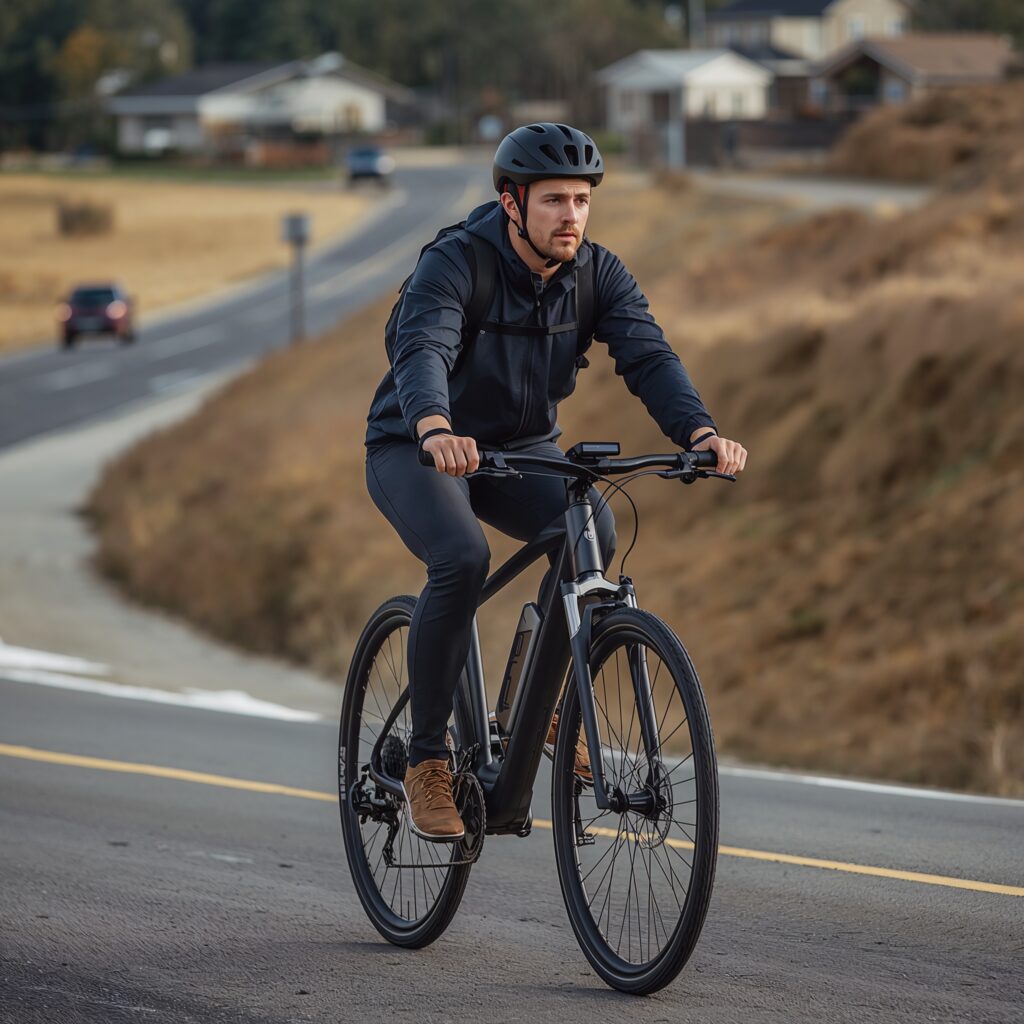
Terrain can make a significant difference to how far an electric bike travels on a charge. Smooth, flat pavement is generally the most energy-efficient surface, while steep climbs, loose gravel, sand, mud and rough trails can increase battery consumption.
The amount of range you lose depends on more than the surface beneath your tires. Elevation gain, total rider and cargo weight, speed, pedal assistance, tire setup and weather all influence how much energy your e-bike uses.
There is no single percentage that accurately describes the range loss on every hill or trail. The most reliable approach is to understand how each terrain type affects energy consumption, estimate your route’s demands and compare your bike’s performance under similar conditions.
Quick Answer: Which Terrain Uses the Most E-Bike Battery?

| Terrain | Typical effect on battery consumption | What to consider |
|---|---|---|
| Smooth, flat pavement | Generally lowest consumption | Maintain a steady speed and appropriate tire pressure. |
| Flat city streets with frequent stops | Higher than uninterrupted pavement | Repeated acceleration uses additional energy. |
| Rolling hills | Usually higher consumption | Repeated climbs increase the work required from the motor. |
| Long, steep climbs | Often high consumption | Consider elevation gain, total weight and assistance level. |
| Hard-packed dirt | Often relatively efficient compared with loose ground | Surface condition and tire choice still matter. |
| Gravel and loose dirt | Often higher consumption | Loose material and wheel slip can increase resistance. |
| Sand, mud and soft grass | Often high and variable consumption | Tires may sink or lose traction. |
| Rocky or root-covered trails | Highly variable, often demanding | Rough surfaces, traction changes and technical riding affect efficiency. |
These are qualitative comparisons, not guaranteed range-loss percentages. Two routes with the same surface can produce different results because their elevation profiles, riding conditions and bikes differ.
Why Does Terrain Change E-Bike Range?

An e-bike has a limited supply of usable battery energy. Terrain changes how quickly that energy is consumed.
Two effects are particularly important: the energy required to climb and the resistance encountered while moving across the ground.
1. Hills Require Energy to Climb
When you ride uphill, the bike must gain elevation. The motor helps move the combined weight of the bicycle, rider and cargo against gravity.
A short, gentle incline may have a relatively small effect on the overall ride. A long climb, repeated hills or a steep route can demand much more energy.
The important measurements are not just the distance traveled but also the route’s elevation gain and steepness.
For example, a 10% grade means the route rises approximately 10 feet for every 100 feet of horizontal distance. It does not mean the hill is 10 degrees.
A route with several climbs can consume more battery than a flat route of similar length. The exact difference depends on the total elevation gain, grade, bike, load and riding technique. For a closer look at uphill versus downhill battery use, see the related guide.
2. Loose Surfaces Increase Rolling Resistance
Rolling resistance describes the energy lost as the tires move over a surface.
On smooth pavement, tires generally roll with relatively little resistance. On loose gravel, sand or soft ground, the tires may sink, deform more or slip. The bike then needs additional energy to keep moving.
Surface condition matters as much as the general category.
Hard-packed dirt can be relatively easy to ride across, while deep sand or muddy ground can be considerably more demanding. A firm gravel path and a loose, rocky trail should not be treated as equivalent terrain.
3. Stops and Acceleration Can Make a Route More Demanding
A route is not defined by its surface alone.
Frequent stops, sharp changes in speed and repeated acceleration can increase energy consumption. A flat city route with traffic lights may therefore use more battery than an uninterrupted paved path.
This is one reason a shorter route is not always the most energy-efficient option.
A slightly longer route with fewer stops, less climbing and firmer surfaces may be easier on the battery.
How Different Terrain Types Affect E-Bike Range

Smooth Pavement and Flat Roads
Smooth, flat pavement is generally favorable for range because the motor does not need to overcome substantial climbing demands or the additional resistance of loose ground.
To make the most of these conditions:
- Maintain a comfortable, steady speed.
- Use the lowest assistance level that meets your needs.
- Avoid unnecessary hard acceleration.
- Keep tires within the pressure range specified by the tire manufacturer.
- Carry only the cargo you need.
Flat roads are not automatically efficient if you ride fast, face a strong headwind or repeatedly stop and accelerate.
Rolling Hills and Steep Climbs
Rolling terrain requires the bike to alternate between climbing and easier sections. Long or repeated climbs can increase battery consumption, especially when combined with heavy cargo, high assistance or a low remaining charge.
When approaching a climb, shift into an easier gear before the gradient becomes demanding if your bike has gears. Pedal smoothly and use assistance appropriate to the hill.
Avoid relying on motor power alone to compensate for an unsuitable gear or a riding pace that the bike cannot sustain comfortably.
For range planning, identify the steepest and longest climbs before setting off. Consider the elevation gain across the whole route rather than looking only at the distance on the map.
Hard-Packed Dirt and Gravel

Firm dirt paths can be reasonably efficient, particularly when the surface is dry and even. Loose gravel generally creates more resistance and may reduce traction.
The effect depends on several factors:
- How loose or deep the gravel is.
- Whether the route is flat or hilly.
- Tire width, tread and pressure.
- Rider speed and assistance level.
- How often the tires slip on climbs or corners.
If you regularly ride gravel, compare your battery consumption on a familiar paved route with that of a similar gravel route. Keep the other conditions as consistent as practical.
Sand, Mud and Soft Grass
Sand, mud and soft grass can make range much less predictable.
Tires may sink into the surface, deform more or struggle to maintain traction. The motor may need to supply additional energy to maintain forward movement.
Deep sand and muddy inclines can be particularly demanding. A route that is manageable in dry conditions may require more effort after rain or when the ground becomes soft.
If battery range is a priority, check the surface conditions before leaving. Use tires appropriate for the terrain and avoid assuming that a short off-road route will consume the same energy as an equally short paved route.
On public lands, the Bureau of Land Management’s e-bike FAQ advises riders to stay off trails during wet or muddy conditions.
Rocky and Root-Covered Trails

Rough trails introduce uneven ground, abrupt changes in traction and frequent adjustments in speed. These factors can make battery consumption vary substantially across a ride.
Suspension can improve comfort and control on suitable terrain, but it does not eliminate the energy demands of climbing, loose ground or repeated acceleration.
Choose a route that matches your bike, tires and riding ability. When planning a longer trail ride, allow for changes in conditions rather than relying entirely on the advertised maximum range.
How to Estimate E-Bike Range on Your Route

The most useful estimate is based on your bike’s actual energy consumption, not a universal range figure.
If your e-bike or compatible display provides energy-use data, you can calculate watt-hours per mile.
Wh/mi = watt-hours used ÷ miles traveled
You can then estimate range using:
Estimated range = usable battery energy in Wh ÷ average Wh/mi
For a broader explanation of battery capacity and range calculations, see Electric Bike Range Explained.
Example: How Terrain Changes the Estimate
Suppose your bike has an estimated 500 Wh of usable battery energy.
On a relatively easy route, suppose measured consumption is 15 Wh/mi. The calculated range is approximately 500 ÷ 15 = 33 miles.
On a more demanding route, suppose consumption is 22 Wh/mi. The calculated range is approximately 500 ÷ 22 = 23 miles.
These numbers are hypothetical examples, not typical consumption figures for every e-bike. They demonstrate how a change in energy consumption can change the estimated distance available from the same amount of usable battery energy.
The result also does not account for the reserve you should keep for unexpected conditions.
What If Your E-Bike Only Shows Battery Percentage?

You can make a rough estimate from the distance traveled and the battery percentage used.
Use:
Estimated full-charge range ≈ distance traveled ÷ fraction of battery used
For example, if you travel 10 miles and the battery indicator drops by approximately 25%, the calculation is:
10 ÷ 0.25 = 40 miles.
That is an approximate full-charge equivalent under comparable conditions, not a promise that you can safely ride 40 miles.
Battery percentage indicators do not necessarily correspond perfectly to usable energy. The estimate can also be distorted by changes in terrain, speed, assistance, temperature and load.
For that reason, repeat the test before relying on the result for a long trip. The Bosch eBike range calculator is another useful reference for exploring how different riding assumptions affect an estimate.
How to Compare Two Routes Fairly

If you want to know how much a particular hill or surface changes your e-bike’s range, conduct a repeatable comparison.
Step 1: Establish a Baseline
Choose a familiar route and begin with a fully charged battery. Record:
- Distance traveled.
- Starting and ending battery percentage or energy used.
- Assistance level and use of throttle, if fitted.
- Average speed, if available.
- Elevation gain and the steepest climbs.
- Tire pressure and tire setup.
- Rider and cargo weight.
- Wind and temperature.
- Number of stops.
You do not need laboratory equipment. The goal is to collect enough information to understand why two rides might differ.
Step 2: Compare Terrain Under Similar Conditions

First, ride a relatively flat route. Then test a hilly or mixed-terrain route.
Keep your assistance strategy, load, tire pressure and typical speed as consistent as practical. If the weather changes substantially, record that difference.
Avoid changing several variables at once. If you lower assistance, remove cargo, inflate the tires and take a different route simultaneously, you will not know which change affected consumption.
Step 3: Compare Energy Used per Mile

When reliable energy data is available, calculate Wh/mi for each ride.
A higher Wh/mi value means the bike used more battery energy per mile on that particular ride. Compare results only when the measurement method is consistent.
If you only have a battery percentage indicator, compare similar-distance rides and treat the difference as approximate. Repeat the test before drawing a firm conclusion.
The Wh/mi and Wh/km guide explains these measurements in more detail.
How to Plan a Route Without Running Out of Battery

Terrain-aware planning means identifying the most demanding parts of the ride before you leave.
- Check the elevation profile. Look for sustained climbs, repeated hills and significant elevation gain. Ride with GPS’s elevation profile guide explains how to inspect climbs and descents along a route.
- Review the surface. Identify gravel, sand, mud or other sections that may increase resistance.
- Consider the whole load. Rider weight, cargo and accessories contribute to the total mass the bike must move.
- Choose assistance deliberately. Use a comfortable setting on easier sections and adjust as the terrain changes.
- Think about the return trip. An easy outbound ride does not guarantee an equally easy return, particularly if the return includes climbing or a headwind.
- Keep a battery reserve. On unfamiliar or demanding routes, a conservative buffer—such as 20–30% when appropriate—is a planning suggestion, not a universal rule. Difficult conditions may require more.
- Identify alternatives. Know where you could shorten the ride, turn around or recharge if consumption is higher than expected.
Do not plan a trip around the maximum range printed in a product advertisement. Use your own experience under comparable conditions and allow for uncertainty.
Other Factors That Change Terrain-Related Range

Terrain interacts with several other variables.
- Assistance and rider input: Higher assistance generally increases the share of work supplied by the motor; motor efficiency and gearing also affect energy use.
- Speed and wind: Faster riding and headwinds can increase energy consumption.
- Tires and pressure: Tire construction, tread and pressure affect rolling resistance and traction. Follow the tire manufacturer’s pressure limits rather than using one pressure for every surface.
- Total weight: Additional cargo increases the load, particularly noticeable on climbs.
- Weather: Temperature and wind can change the amount of range available. Bosch’s winter e-biking guidance discusses cold-weather considerations. See How Weather Affects E-Bike Range and How Temperature Affects E-Bike Batteries.
- Battery condition: The usable energy available from an older or degraded battery may differ from that of a new battery. Follow the manufacturer’s battery-safety and care guidance for storage and inspection.
If you want to improve efficiency across all these conditions, read How to Increase E-Bike Range.
Trail Access and Riding Safety
Before taking an e-bike onto an off-road trail, check the rules for that particular location. Access can depend on the trail manager, jurisdiction and e-bike class; the National Park Service’s e-bike guidance explains that individual park superintendents may restrict access. PeopleForBikes provides a useful overview of federal e-bike trail policies, but riders should verify the current rules with the relevant land manager.
On steep or loose terrain, prioritize traction, controlled speed and adequate braking distance. If a climb is beyond your ability or the bike’s capabilities, dismount and walk rather than forcing the bike through an unsafe section.
A route that is technically rideable may still be a poor choice if it leaves too little battery for a safe return.
Frequently Asked Questions
How much range do e-bikes lose on hills?
There is no reliable universal percentage. The effect depends on the hill’s steepness and length, total elevation gain, rider and cargo weight, assistance level, battery condition and other conditions. A repeatable test on your own bike provides a more useful estimate than a generic percentage.
Does gravel reduce electric bike range?
Gravel often increases energy consumption compared with smooth pavement, particularly when it is loose or uneven. Hard-packed dirt may be less demanding than deep gravel, sand or mud. Tire choice, pressure, speed and elevation also influence the result.
Which terrain gives the best e-bike range?
Smooth, flat pavement generally offers favorable conditions because climbing and surface resistance are limited. A flat route with frequent stops or a strong headwind may still use more energy than expected.
How can I calculate range on a hilly route?
If your bike provides reliable energy data, divide usable battery energy in watt-hours by measured Wh/mi. If you only have a battery percentage indicator, estimate full-charge range from distance traveled and the fraction of battery used, but treat the result as approximate. Repeat the test under similar conditions and keep a reserve.
Is a shorter route always better for battery range?
No. A shorter route with steep climbs, loose ground and frequent stops may consume more energy than a slightly longer route on smooth pavement with fewer interruptions. Compare elevation, surface and expected riding conditions, not distance alone.
Conclusion: Plan Around Terrain, Not Just Miles
Terrain affects e-bike range by changing how much energy the motor needs to move the bike. Smooth pavement generally favors efficiency, while sustained climbs, loose gravel, sand, mud and rough trails can increase battery consumption.
The exact difference depends on the bike, rider, route and conditions. Instead of relying on a universal percentage, examine elevation gain, surface type and the most demanding parts of your trip. Measure your own energy consumption when possible, compare similar rides and leave enough battery reserve for the return journey.
The practical rule is simple: use real-world range data from your own bike, then adjust your plan for the terrain you intend to ride.
Pingback: Electric Bike Battery Range: Real Miles by Battery Size, Speed & 48V - electricscootercar.com
Pingback: Electric Bike Range Explained: Real Miles Per Charge + Calculator - electricscootercar.com
Pingback: What Affects Electric Bike Range? Why Your Mileage Changes - electricscootercar.com
Comments are closed.