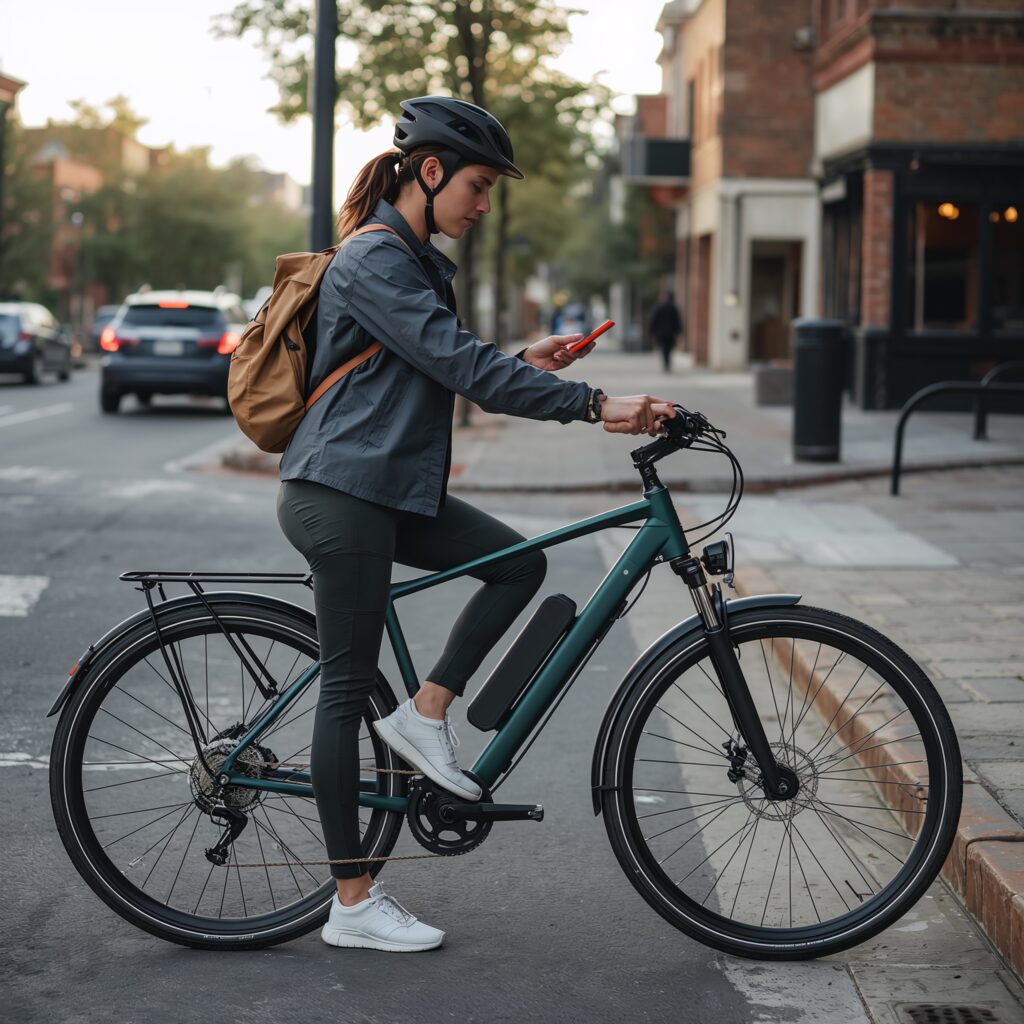
To improve e-bike range, start by reducing unnecessary battery use: choose an appropriate assist level, ride at a steady speed, maintain correct tire pressure, use your gears properly, and avoid mechanical drag. Planning around hills, wind, temperature and cargo can help, too.
The most useful step is to measure your current range before making changes. That way, you can find out which habits actually help your bike instead of relying on generic percentages or advertised maximum-range figures.
You do not necessarily need a larger battery. Start with the adjustments that cost little or nothing, test them on comparable rides, and consider additional battery capacity only if your usual trips still exceed your reliable range.
Start With a Baseline, Not a Guess

Before trying to increase your electric bike range, establish how much energy your normal rides use. Range is affected by a combination of battery capacity, assist settings, speed, load, terrain, weather and mechanical condition; REI’s overview of electric-bike range factors is a useful companion reference.
Choose a familiar route that represents the kind of riding you want to improve. It might be your daily commute, a regular trail loop or the journey to and from work.
Record the conditions that can influence battery consumption.
| What to record | Why it matters |
|---|---|
| Distance traveled | Gives you a consistent basis for comparison. |
| Battery energy used, if available | Allows you to calculate energy consumption per mile. |
| Starting and ending battery percentage | Provides a rough alternative when energy data is unavailable. |
| Assist level and throttle use | Helps explain differences in motor demand. |
| Average speed and traffic stops | Captures changes in riding behavior. |
| Terrain and elevation gain | Identifies the extra demand from climbing and rough surfaces. |
| Tire pressure | Helps identify avoidable rolling resistance. |
| Rider and cargo load | Makes comparisons between rides more meaningful. |
| Temperature and wind | Helps explain differences between otherwise similar trips. |
You do not need laboratory equipment. A ride log and a reasonably repeatable route are enough to get started.
The important thing is to avoid changing several variables at once. If you lower the assist level, inflate the tires, remove cargo and ride a different route on the same day, you will not know which change made the difference.
Calculate Wh/mi if Your E-Bike Provides Energy Data

Watt-hours per mile, written as Wh/mi, measures how much electrical energy your bike uses to travel one mile.
The formula is:
Wh/mi = watt-hours used ÷ miles traveled
For example, suppose a ride uses approximately 180 Wh over 12 miles.
180 Wh ÷ 12 miles = 15 Wh/mi.
On a later, comparable ride, suppose the bike uses approximately 156 Wh over the same 12 miles.
156 Wh ÷ 12 miles = 13 Wh/mi.
The second ride used less electrical energy per mile. If the conditions were sufficiently similar, that is evidence that something improved your efficiency.
These numbers are hypothetical, not a claim about what a particular e-bike should consume.
Use actual battery-energy data when your display or app provides it. Some displays report motor power, battery percentage or estimated remaining range rather than accumulated battery energy, and those measurements are not interchangeable.
For a more detailed explanation, see the e-bike Wh/mi and Wh/km guide.
A 2025 study of electric-bicycle energy efficiency also evaluates energy use using real riding variables such as speed, incline, wind and bicycle mass, reinforcing why comparable measurements matter.
Estimate Your Range if You Only Have Battery Percentage

You can still learn something useful if your display does not show watt-hours consumed.
Divide the distance traveled by the fraction of the battery used.
Estimated range = distance traveled ÷ fraction of battery consumed
For example, if you travel 15 miles and use approximately 40% of the battery:
15 miles ÷ 0.40 = 37.5 miles.
That suggests an estimated full-charge range of around 37.5 miles under similar conditions.
Treat the result as an approximation. Battery-percentage displays are not always perfectly linear, and the estimate can change with temperature, battery condition, load and riding style.
Repeat the calculation over several rides before relying on it for a long journey.
For a broader explanation of battery capacity in Ah and Wh and real-world range estimates, see the electric bike range guide.
Make the Riding Changes Most Likely to Help

Once you have a baseline, start with changes that require no new equipment.
1. Use Lower Pedal Assist When It Makes Sense
Pedal-assist settings influence how much work the motor contributes. In otherwise comparable conditions, reducing assistance generally reduces the battery energy needed from the motor.
Try using a lower assist level on flat roads or gentle sections where you can pedal comfortably.
For example:
- Use lower assistance on relatively flat roads.
- Increase assistance when a climb requires it.
- Adjust your setting when carrying a heavier load.
- Return to a lower setting when the terrain becomes easier.
You do not need to ride in the lowest mode all the time. The aim is to avoid using more assistance than you need for the conditions.
Assist labels also differ between manufacturers. Eco, Tour, Sport, Turbo and numbered pedal-assist settings are not universal measures of motor output. The Eco Mode vs Sport Mode guide explains why mode names and their effects vary by system.
Test one lower setting on a familiar route and compare the result. If you use less energy without making the ride impractical, you have found a useful adjustment.
For more detail, read what affects electric bike range.
2. Try a Steadier, Slightly Lower Speed

Speed can have a substantial effect on energy consumption because the bike must overcome increasing air resistance as it travels faster. Schwalbe’s explanation of bicycle rolling resistance and air resistance describes how air resistance rises disproportionately with speed.
If you regularly ride at high speeds, test a slightly lower, steady pace on a familiar route.
You do not need to slow down dramatically. A modest change may be useful, especially on longer rides where you spend much of the journey at a consistent speed.
Avoid accelerating hard only to brake a few seconds later. When traffic and road conditions allow:
- Accelerate progressively.
- Look ahead for junctions and traffic lights.
- Avoid unnecessary bursts of speed.
- Maintain a consistent pace where practical.
- Brake smoothly and early enough to ride safely.
Do not compromise safe positioning, traffic awareness or appropriate speed just to save battery energy.
There is no single speed that maximizes range on every e-bike. Rider position, wind, motor system, terrain and pedal contribution all matter.
3. Use Your Gears Properly

If your e-bike has gears, use them to keep pedaling comfortable and avoid forcing the motor to handle every difficult section.
Before a climb becomes steep, shift into an easier gear. This helps you maintain a workable cadence instead of grinding slowly in a high gear.
On flatter roads, select a gear that lets you contribute useful pedal power without excessive effort.
This is especially relevant to mid-drive e-bikes, where the motor works through the bicycle’s drivetrain. Hub motors interact with the gears differently, so the best approach depends on your particular system. See the hub-motor versus mid-drive comparison for more context.
Do not chase a universal cadence number. Follow your manufacturer’s guidance and aim for a comfortable rhythm that lets you pedal consistently. Shimano’s e-bike riding tips also cover shifting for terrain, tire pressure and the use of assist modes.
Motor design, load, rotational speed and gearing can interact, so the motor efficiency factors guide can help explain why one setting may not work equally well in every situation.
4. Set Tire Pressure Correctly

Underinflated tires can increase rolling resistance, making it harder to move the bike forward and potentially increasing battery consumption.
Check both tires regularly, especially before longer rides.
Use the pressure range specified on the tire sidewall or in your bike and tire manufacturer’s instructions. The appropriate pressure depends on factors such as tire construction, rider and cargo weight, surface and tire design. See Schwalbe’s tire-pressure guidance for an explanation of the trade-offs between pressure, comfort and rolling resistance. The electric bike tire types guide can also help when tire design or intended terrain is part of the problem.
Do not assume that maximum pressure produces the best range. Excessive pressure can compromise comfort and grip, particularly on rough surfaces.
A practical routine is to:
- Check the pressure with a suitable gauge.
- Inflate within the manufacturer’s recommended range.
- Recheck it before a long trip.
- Keep the setup consistent when comparing rides.
For additional routine checks, see Electra’s e-bike maintenance guidance.
If your e-bike suddenly feels sluggish, tire pressure is one of the simplest things to check before assuming that the battery has deteriorated.
5. Check for Mechanical Drag

Your battery should be helping you move forward, not compensating for a bicycle that has developed unnecessary resistance.
If the bike feels harder to pedal than usual, inspect the obvious external causes.
Look for:
- Brake pads rubbing continuously.
- Tires contacting a fender or another component.
- A dirty or poorly maintained drivetrain.
- Wheels that do not rotate normally.
- Damage or misalignment that appeared recently.
Clean and maintain the drivetrain according to the manufacturer’s instructions. If you suspect a brake, bearing or wheel problem that requires specialist adjustment, have it inspected by a qualified technician. REI’s e-bike maintenance guidance outlines routine checks for tires, brakes and the drivetrain.
Do not dismantle electrical components or attempt repairs beyond your skills.
After correcting an obvious problem, repeat your baseline ride. That will help you determine whether the change made a meaningful difference.
6. Choose Routes by Energy Demand, Not Just Distance

The shortest route is not necessarily the route that uses the least battery.
A short journey with steep climbs, rough surfaces and frequent stops can require more energy than a slightly longer route with gentler grades and smoother pavement.
When planning a route, consider:
- Total elevation gain and steep climbs.
- Road or trail surface.
- Traffic lights and repeated stops.
- Headwind exposure.
- Rider and cargo load.
- Conditions on the return journey.
For example, a 12-mile route with several sustained climbs may consume more energy than a longer route over relatively flat ground. The exact result depends on the bike and the rider’s contribution. A simulation and experimental study of electric-bicycle energy consumption also examined the effect of slope and air conditions on energy use.
If you regularly ride hills, compare your usual route with a practical alternative. A slightly longer route may be worthwhile if it reduces climbing or repeated acceleration.
For more guidance, see how terrain affects e-bike range.
7. Remove Unnecessary Cargo

Your e-bike has to move the combined weight of the bike, rider, accessories and cargo.
Extra load is particularly noticeable when accelerating repeatedly or climbing hills.
Before a recreational ride or commute, consider whether you need every item you are carrying. Removing unnecessary bags, accessories or equipment can help reduce the workload.
However, do not remove essential safety equipment, tools you reasonably need, or items required for your journey merely to save weight.
For cargo riders and delivery workers, load is part of the job. The practical response is to account for it when estimating range and planning the return trip. Learn more in the guide to how rider weight affects e-bike performance.
8. Account for Cold Weather and Wind

Your normal range can change when the weather changes.
Cold temperatures can temporarily reduce the performance available from a lithium-ion battery. Headwinds increase the energy needed to maintain speed, while snow, soft ground and rough surfaces can increase resistance. Bosch’s winter e-bike guidance recommends taking battery temperature and winter care into account.
Do not apply one universal percentage to every cold-weather ride. The effect depends on the battery, system, temperature, route and riding conditions.
Instead:
- Use your own previous rides as a baseline.
- Plan a larger reserve when conditions are worse than normal.
- Bring a removable battery indoors when practical and follow its manufacturer’s storage instructions.
- Observe the battery’s specified charging-temperature limits. Bosch’s eBike battery safety guidance gives model-specific handling and charging precautions.
- Consider the return journey, particularly if the wind may change direction.
A mild cold day on a sheltered path is not the same as a freezing ride into a strong headwind with additional cargo.
For a more detailed explanation, see how weather affects e-bike range.
Test One Change at a Time

Once you have made the basic checks, turn range improvement into a simple experiment.
You do not need to test every possible variable. Start with the changes that are easiest to make and most relevant to your usual riding.
Use this process:
- Record a baseline. Ride a familiar route and note your energy use or battery percentage, distance, assist setting, speed and conditions.
- Choose one change. For example, use one lower assist level on flat sections.
- Repeat the route. Keep the conditions as similar as reasonably possible.
- Compare the results. Look at Wh/mi if available, or compare battery use over the same distance.
- Repeat when practical. One ride can be affected by wind, traffic or temperature, so avoid drawing a strong conclusion from an isolated result.
- Keep useful changes. Once a change produces a repeatable improvement, retain it and test the next one.
Your ride log might look like this:
| Test | Assist setting | Distance | Energy used | Result |
|---|---|---|---|---|
| Baseline | Usual setting | 12 miles | 180 Wh | 15 Wh/mi |
| Test ride | One level lower on flats | 12 miles | 156 Wh | 13 Wh/mi |
Illustrative figures only. They are not measured results from a particular e-bike.
This method is more useful than promising that a specific habit will always add a fixed number of miles. It lets you discover what works for your own bike, route and riding style.
When Should You Suspect a Battery Problem?

There is an important difference between a bike that has always delivered less range than you expected and one that suddenly travels much less distance under similar conditions.
The first may need better range planning or riding adjustments. The second deserves troubleshooting.
If your range has deteriorated unexpectedly, first ask whether the conditions changed:
- Was the ride colder or windier?
- Did you use more assistance?
- Was the route hillier?
- Were the tires underinflated?
- Did you carry more weight?
- Did the bike develop brake drag or another mechanical problem?
If the drop remains unexplained, repeat a familiar ride only if the bike and battery appear safe to use. Check the manufacturer’s charging guidance and look for system warnings. For general device and battery precautions, consult the CPSC’s micromobility safety guidance.
Do not open or rebuild a lithium-ion battery yourself. If it is damaged, swollen, leaking, unusually hot, smoking or behaving abnormally, stop using it and follow the manufacturer’s safety instructions. The U.S. Fire Administration’s lithium-ion battery safety guidance explains common warning signs and safer handling practices.
For a structured diagnostic process, read what to check when e-bike range suddenly drops.
If the issue turns out to involve long-term battery deterioration rather than riding efficiency, the e-bike battery degradation guide covers that separate topic. You can also review how to increase e-bike battery life safely.
When Does Buying More Battery Capacity Make Sense?

A larger battery is not automatically the best solution to poor range.
First determine whether you are using more energy than necessary or whether your normal trip genuinely requires more energy than your current battery can reliably provide.
Use this simple distinction:
| Situation | Sensible next step |
|---|---|
| Consumption is unusually high | Test riding habits and check for mechanical resistance. |
| Range has suddenly deteriorated | Investigate the change before buying a battery. |
| Consumption is reasonable, but the trip still exceeds your range | Evaluate compatible additional battery capacity or a charging option. |
| You are unsure how much range your trip requires | Build a baseline and estimate consumption over comparable rides. |
If you have a reliable Wh/mi measurement, a basic estimate of trip energy is:
Expected trip energy ≈ Wh/mi × planned miles
For example, if a comparable ride normally uses 15 Wh/mi, a 30-mile trip would require approximately 450 Wh under similar conditions. Actual requirements can differ, so this is a planning estimate, not a guarantee that a battery labelled 450 Wh will complete the trip with a safe reserve.
You can also use the Bosch eBike range calculator to explore estimates for compatible Bosch systems. A manufacturer’s calculator is a planning aid, not a promise about every real-world ride.
Choose Battery Accessories Safely
If you decide that more capacity is necessary, use only a battery or range-extender system that the bike manufacturer has approved or confirmed as suitable for your exact model. For additional context on approved replacement packs and safe charging, review the CPSC’s micromobility battery charging safety guidance.
A matching connector or voltage label does not, by itself, establish compatibility. The CPSC’s warning about universal micromobility chargers explains why a charger can physically fit and still be unsafe or incompatible.
Do not improvise battery wiring, combine incompatible packs or modify battery-management systems. If your normal trips exceed your reliable range, compare manufacturer-supported options and their weight, charging and compatibility requirements. The electric bike battery safety guide provides additional guidance on charging, warning signs and safety checks.
Frequently Asked Questions

What is the fastest way to improve e-bike range?
Start by using an appropriate assist level, riding at a steady speed, checking tire pressure and removing unnecessary mechanical drag. Measure a familiar ride before and after each change to see what actually helps.
Does lower pedal assist always increase range?
Lower assistance generally reduces battery demand when the other riding conditions remain similar. However, the result depends on your speed, route, pedal contribution and motor system. Test the change rather than assuming every mode produces the same improvement on every bike.
What tire pressure is best for e-bike range?
Use the recommended pressure range for your particular tire and bike. The correct setting depends on tire design, load and riding surface. Maximum pressure is not automatically best because grip and comfort matter too.
Why does my e-bike have less range in winter?
Cold temperatures can temporarily reduce battery performance, while wind and winter surfaces can increase the energy needed to ride. Plan from your own experience in similar conditions and follow the manufacturer’s instructions for battery storage and charging temperatures.
Should I buy a second battery to increase range?
Consider one only after you have checked efficiency and established the energy your usual trips require. If the bike is operating normally but the trip exceeds its reliable range, an approved compatible battery or suitable charging option may make sense.
What should I do if my e-bike range suddenly drops?
Check whether weather, route, assist level, cargo, tire pressure or mechanical resistance changed. If the reduction persists under comparable conditions, investigate charging and battery-system behavior safely. Follow the manufacturer’s guidance and consult a qualified technician if necessary.
Conclusion
Improving e-bike range starts with understanding how your own bike uses energy. Lower assistance when appropriate, maintain correct tire pressure, ride smoothly, use your gears, remove unnecessary drag and plan around the conditions that make your usual routes demanding.
Most importantly, measure before and after making changes. A repeatable test gives you evidence about what works, helps you avoid unnecessary spending and makes it easier to distinguish an efficiency problem from a genuine need for more battery capacity.
You do not need to apply every tip at once. Start with one change, measure the result, and keep what works.
Pingback: Electric Bike Battery Problems: Safe Troubleshooting Guide for USA Riders - electricscootercar.com
Pingback: Electric Bike Range Explained: Real Miles Per Charge + Calculator - electricscootercar.com
Pingback: SEO title: E-Bike Battery Draining Fast? Find the Cause Before Replacing It - electricscootercar.com
Comments are closed.