Article Review Info
Written by: James Smith
Content Experience: 15 years of electric scooter content research
Last Updated: June 2026
Blog Upgraded: 26 June 2026
Reviewed for: Accuracy, safety, readability, and helpful advice
Electric bikes are not expensive to maintain compared with cars, but they do cost more to maintain than regular bicycles.
That is because an e-bike has all the normal bicycle parts — tires, brakes, chain, gears, cables, bearings — plus a battery, motor, controller, display, sensors, wiring, and charger.
For most USA riders, a realistic electric bike maintenance cost is:
- $150–$300 per year for light weekend riders
- $250–$600 per year for regular commuters
- $500–$1,000+ per year for heavy riders, delivery riders, cargo e-bike owners, or off-road riders
A basic e-bike tune-up often falls around the low hundreds, while more complete service can cost more depending on labor, bike type, and electrical checks. For example, one New York bike shop lists a basic tune-up at $100 and an annual service at $200, while another USA shop lists an e-bike annual tune at $179 and cargo/trike annual tune at $239.
The real cost depends on how much you ride, where you ride, how heavy the bike is, and whether your e-bike uses easy-to-find parts.
What Should You Budget?
Here is a simple planning guide.
| Rider Type | Expected Yearly Maintenance Budget |
|---|---|
| Occasional weekend rider | $150–$300 |
| Regular city commuter | $250–$600 |
| Hilly-area commuter | $300–$700 |
| Cargo e-bike rider | $350–$800+ |
| Trail or off-road rider | $400–$900+ |
| Delivery or high-mileage rider | $600–$1,000+ |
These ranges include normal service and common wear parts. They do not include major battery replacement, major motor failure, crash damage, or a full electrical system repair.
A normal year might include:
- One tune-up
- Brake pad replacement
- Tire or tube replacement
- Chain lubrication and adjustment
- Minor drivetrain adjustment
- Basic e-bike system check
A more expensive year might include:
- New battery
- Controller replacement
- Motor diagnosis
- Hydraulic brake service
- New tires
- New chain and cassette
- Damaged wiring repair
That is why two riders can own similar e-bikes but have very different yearly costs.
What Regular E-Bike Maintenance Includes

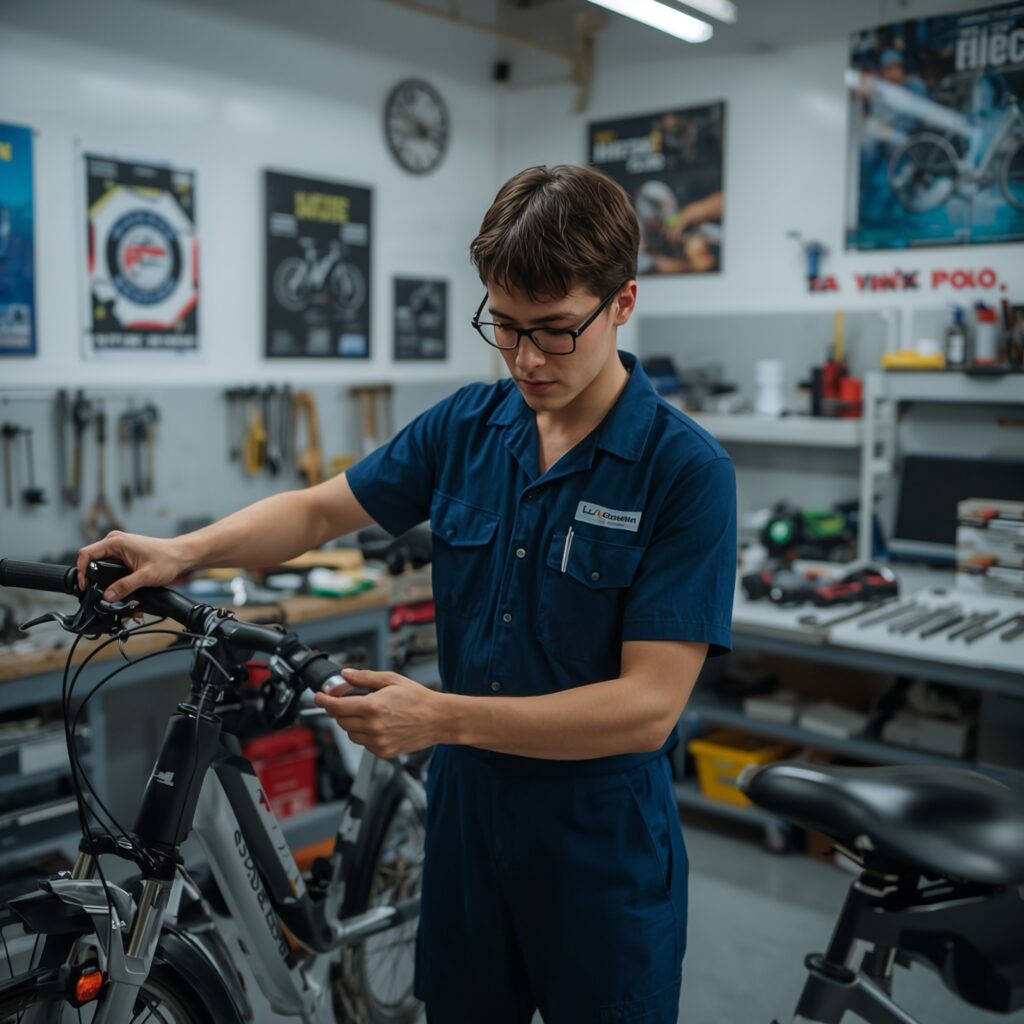
Regular e-bike maintenance is mostly about keeping the bike safe, smooth, and reliable.
A normal service usually includes the same work as a bicycle tune-up, plus basic electrical checks.
Mechanical maintenance
This includes:
- Brake inspection and adjustment
- Brake pad check
- Tire pressure check
- Tire wear inspection
- Chain cleaning and lubrication
- Gear and derailleur adjustment
- Wheel check
- Bolt tightening
- Bearing check
- Drivetrain inspection
These are the parts that wear out first because they deal with road impact, rider weight, braking force, weather, and mileage.
Electrical system check
This may include:
- Battery connection check
- Charger inspection
- Display check
- Pedal-assist sensor check
- Throttle check, if equipped
- Wiring inspection
- Error code check
- Firmware update, if supported
Not every bike shop services every e-bike brand. Some shops only work on brands they sell or brands with available parts and diagnostics.
That matters because a cheap online e-bike can become expensive later if local shops cannot get parts, diagnose the system, or safely work on the battery.
Electric Bike Service Cost Breakdown

The phrase electric bike service cost can mean many things. A simple brake adjustment is not the same as a full tune-up or electrical diagnosis.
Here is a realistic USA planning table.
| Service or Repair | Typical Cost Range |
|---|---|
| Basic safety check | $40–$100 |
| Basic e-bike tune-up | $100–$250 |
| Full annual service | $200–$500+ |
| Flat tire repair | $20–$70 labor, plus tube/tire |
| E-bike rear flat repair | Often higher because the wheel may be heavier |
| Tire replacement | $40–$120 per tire installed |
| Brake adjustment | $20–$60 |
| Brake pad replacement | $40–$120 per wheel |
| Hydraulic brake bleed | $50–$150 |
| Chain replacement | $40–$100 |
| Chain + cassette replacement | $100–$250+ |
| Electrical diagnosis | $50–$150+ |
| Battery replacement | $350–$900+ |
| Motor/controller/display repair | Usually quoted after diagnosis |
These are planning ranges, not guaranteed quotes. Big-city labor rates, cargo e-bikes, internal cable routing, hub motor wheels, hydraulic brakes, and proprietary parts can all raise the price.
Some shop menus also separate regular e-bike service from cargo or trike service because heavier bikes can take more labor.
Why E-Bikes Cost More to Maintain Than Regular Bikes

E-bikes usually cost more to maintain for five practical reasons.
1. They are heavier
More weight means more stress on:
- Tires
- Tubes
- Spokes
- Brake pads
- Rotors
- Wheels
This is especially true for cargo e-bikes, fat tire e-bikes, and commuter e-bikes carrying bags, groceries, or child seats.
2. They travel faster
Higher average speed means the brakes work harder.
Even if the motor is smooth, the bike still has to stop more weight from higher speed. That is why brake pads may wear faster than on a normal bicycle.
3. Riders use them more often
Many people ride e-bikes farther than they would ride a regular bike.
More miles means more tire wear, chain wear, brake wear, and tune-ups.
4. The electrical system adds complexity
A regular bicycle does not have a battery, controller, motor, display, wiring harness, charger, or sensors.
These parts do not need constant service, but when they fail, diagnosis and replacement can be expensive.
5. Some brands use proprietary parts
A standard tire or brake pad is easy to replace.
A brand-specific battery, display, controller, or wiring harness may need to come from the original manufacturer. That can increase cost and waiting time.
Common E-Bike Repair Costs Owners Should Expect

Not every repair is expensive. Most common repairs are still normal bicycle repairs.
The expensive repairs usually involve the battery, motor, controller, or electronics.
Tire and tube repairs
Tires are one of the most common e-bike expenses.
You may replace tires more often if you ride:
- Rough city streets
- Potholes
- Construction areas
- Gravel paths
- Wet roads
- Heavy cargo loads
- Low tire pressure
Rear tire repair can cost more on hub motor e-bikes because the wheel is heavier and more complicated to remove.
Brake repairs
Brakes are not the place to save money.
E-bikes are heavier than regular bikes, so weak brakes become a real safety issue.
Watch for:
- Squealing
- Grinding
- Weak stopping power
- Brake lever pulling too close to the handlebar
- Vibration while braking
- Visible thin brake pads
Brake pads are usually much cheaper than rotors, calipers, or accident damage. Replace them before they are fully worn.
Chain and drivetrain repairs
Mid-drive e-bikes often wear chains and cassettes faster because the motor sends power through the drivetrain.
You may see faster chain wear if you:
- Ride steep hills
- Use high assist all the time
- Shift under heavy motor load
- Carry cargo
- Ride in rain, sand, or dust
- Rarely clean or lubricate the chain
A worn chain can damage the cassette and chainring. Replacing the chain early is cheaper than replacing the full drivetrain.
Electrical diagnosis
Electrical problems are harder to estimate because the symptom does not always reveal the cause.
For example, a bike that will not power on could have:
- A dead battery
- A charger issue
- A loose connector
- A display fault
- A controller problem
- Damaged wiring
- A blown fuse, depending on design
That is why shops often charge a diagnostic fee before giving a final repair quote.
Battery Replacement: The Biggest Long-Term Cost

The battery is usually the most expensive replaceable part of an electric bike.
A replacement e-bike battery commonly costs several hundred dollars. Some batteries are less expensive, while larger or proprietary batteries can cost much more.
Budget around:
- $350–$600 for many common replacement batteries
- $600–$900+ for larger, premium, or proprietary batteries
- $1,000+ in some high-end or specialty cases
Battery cost depends on voltage, capacity, brand, certification, and availability.
The most important rule: do not replace your e-bike battery with a random cheap battery just because it fits the frame or connector.
UL explains that UL 2849 evaluates the e-bike electrical drive system, battery system, and charger system together for electrical and fire safety.
That means the battery and charger should be treated as a matched safety system, not random accessories.
Battery and Charger Safety: Do Not Skip This

Battery safety is not just a maintenance topic. It is a fire safety topic.
The U.S. Consumer Product Safety Commission advises riders to use only the supplied charger, avoid charging while sleeping, stay present while charging, unplug when charging is done, and use only approved replacement battery packs.
Follow these rules:
- Use the charger supplied by the manufacturer
- Replace chargers only with manufacturer-approved options
- Do not use “universal” chargers unless compatibility is confirmed
- Do not charge overnight
- Do not charge near exits, beds, couches, or flammable clutter
- Do not use a swollen, leaking, smoking, or unusually hot battery
- Do not open or rebuild an e-bike battery yourself
- Store batteries away from extreme heat and freezing conditions
- Recycle old batteries properly
CPSC has also warned consumers not to use universal micromobility chargers without confirmed compatibility because of fire risk.
A cheaper charger is not worth the risk.
Are Electric Bikes High Maintenance?

Electric bikes are not automatically high maintenance.
But they are less forgiving than regular bikes if you ignore basic care.
For a casual rider, e-bike maintenance is usually simple. Keep tires inflated, charge properly, keep the chain clean, check brakes, and schedule periodic service.
For a daily commuter, delivery rider, or cargo e-bike owner, maintenance matters more because the bike works harder.
A fair answer is:
E-bikes are not high maintenance, but they are higher maintenance than regular bicycles.
The extra cost usually comes from:
- Faster brake wear
- Faster tire wear
- More frequent chain care
- Electrical diagnosis
- Battery replacement
- Brand-specific parts
If you maintain the bike early, costs stay manageable. If you ignore problems, the repair bill can grow fast.
What Affects Electric Bicycle Maintenance Costs?

Your electric bicycle maintenance costs depend on your riding pattern.
Mileage
More miles means more wear.
A weekend rider may only need one service per year. A commuter riding 10–20 miles per day may need service every few months.
Terrain
Flat paved paths are easier on the bike.
Steep hills, rough roads, gravel, and potholes increase wear on brakes, tires, wheels, and drivetrain parts.
Weather
Rain, snow, road salt, mud, and humidity can increase corrosion and drivetrain wear.
If you ride through winter in the Midwest or Northeast, clean and dry the bike more often.
Rider and cargo weight
More load means more stress.
Cargo bikes, child seats, delivery bags, and heavy riders can increase brake, tire, wheel, and spoke wear.
Motor type
Hub motor e-bikes can be mechanically simple, but rear wheel repairs may take extra labor.
Mid-drive e-bikes climb well, but the drivetrain may wear faster because motor power runs through the chain and gears.
Brand support
This is one of the biggest long-term cost factors.
- Can local shops service this brand?
- Are batteries available?
- Are displays and controllers available?
- Are brake pads and tires standard sizes?
- Does the brand offer USA support?
- Are diagnostic tools required?
A low purchase price is not always a low ownership cost.
How to Reduce E-Bike Maintenance Cost

You can reduce your e-bike repair cost with simple habits.
Check tire pressure weekly
Low tire pressure causes:
- More flats
- Faster tire wear
- Lower range
- Poor handling
- More motor strain
Commuters should check tire pressure weekly. Casual riders can check before longer rides.
Clean and lubricate the chain
A dry chain wears faster.
Lubricate the chain every 100–200 miles, or sooner after rain, mud, dust, or winter road salt.
Brake early, not late
Hard last-second braking wears pads faster.
Smooth braking helps protect pads, rotors, tires, and wheels.
Shift properly on mid-drive bikes
Do not shift under heavy motor power.
Ease off the pedals slightly while shifting. This helps protect the chain, cassette, and derailleur.
Store the bike indoors when possible
Indoor storage protects:
- Battery
- Display
- Connectors
- Chain
- Brakes
- Frame hardware
If indoor storage is not possible, use a quality cover and remove the battery if the manufacturer allows it.
Fix small problems early
A small clicking sound, loose spoke, rubbing brake, or skipping chain can become a bigger repair if ignored.
Early service is usually cheaper than emergency repair.
DIY vs Professional E-Bike Service

Some maintenance is safe to do at home.
Some should go to a professional.
Good DIY tasks
Most riders can learn to:
- Inflate tires
- Clean the frame
- Clean and lubricate the chain
- Check brake pad thickness
- Inspect tire wear
- Tighten accessories
- Check lights
- Look for loose bolts
- Keep battery contacts clean and dry
These tasks reduce long-term cost because they catch problems early.
Use a professional for
Go to a qualified shop or authorized service provider for:
- Battery problems
- Charger problems
- Motor problems
- Controller problems
- Wiring issues
- Repeated error codes
- Hydraulic brake bleeding
- Wheel truing
- Spoke replacement
- Suspension service
- Firmware updates
- Any burning smell, swelling battery, or charging issue
Do not open the battery pack. Do not repair damaged battery cells yourself.
That is not normal DIY bike work.
When Should You Service an Electric Bike?

Use this simple schedule.
| Rider Type | Professional Service Schedule |
|---|---|
| Light weekend rider | Once per year |
| Regular commuter | Every 6–12 months |
| Heavy commuter | Every 3–6 months |
| Delivery rider | Every 1–3 months |
| Cargo e-bike rider | Every 3–6 months |
| Trail or off-road rider | After heavy mud, crashes, water exposure, or hard riding |
Also schedule service immediately if you notice:
- Weak brakes
- Grinding noise
- Loose wheel
- Wobbling tire
- Chain skipping
- Sudden power loss
- Battery not charging
- Burning smell
- Swollen battery
- Damaged wiring
- Repeated error codes
These are not “wait and see” problems.
Real-World USA Cost Examples

Example 1: Weekend path rider
A rider uses an e-bike a few times per month on paved trails.
Likely yearly costs:
- One basic tune-up
- Chain lube
- Occasional tube or tire repair
- Brake check
Estimated yearly cost: $150–$300
Example 2: City commuter
A commuter rides 8–12 miles per day through stop-and-go traffic.
Likely yearly costs:
- One or two tune-ups
- Brake pads
- Tire replacement
- Chain service
- Occasional flat repair
Estimated yearly cost: $250–$600
Example 3: Hilly mid-drive rider
A rider uses a mid-drive e-bike in a hilly city.
Likely yearly costs:
- Brake pads
- Chain replacement
- Cassette wear
- More frequent tune-ups
- Possible drivetrain adjustment
Estimated yearly cost: $300–$700
Example 4: Cargo e-bike family rider
A parent carries kids, groceries, and bags several days per week.
Likely yearly costs:
- More brake wear
- More tire wear
- Wheel/spoke checks
- Frequent inspections
- Higher labor due to bike size and weight
Estimated yearly cost: $350–$800+
Example 5: Delivery rider
A delivery rider uses the e-bike many hours per week.
Likely yearly costs:
- Multiple tune-ups
- Frequent brake pads
- Tires
- Tubes
- Chain and cassette
- Possible battery wear
- Electrical diagnosis if problems appear
Estimated yearly cost: $600–$1,000+
Before You Take Your E-Bike to a Shop

A little preparation can save time and money.
Before calling or visiting, write down:
- Brand and model
- Battery voltage and capacity, if known
- Motor type: hub or mid-drive
- Error codes on the display
- What happened before the problem started
- Whether the bike powers on
- Whether the battery charges
- Whether the charger light changes
- Photos of damaged wiring or parts
Also ask the shop:
- Do you service this e-bike brand?
- Do you work on this motor system?
- Do you handle electrical diagnostics?
- Do you stock parts for this bike?
- Is there a diagnostic fee?
- Are parts included in the estimate?
- How long is the expected turnaround?
This is especially important for direct-to-consumer e-bikes bought online.
Final Takeaway

The average electric bike maintenance cost in the USA is usually manageable if you care for the bike regularly.
Most riders should budget $200–$500 per year for normal upkeep. Heavy riders, cargo e-bike owners, and delivery riders should budget more.
The biggest cost mistakes are:
- Ignoring brake wear
- Riding on low tire pressure
- Not lubricating the chain
- Using the wrong charger
- Buying an e-bike with poor parts support
- Waiting too long to fix small problems
An e-bike is not high maintenance, but it does need consistent care.
Treat it like transportation, not a toy, and the ownership cost becomes much easier to control.
Quick Maintenance Checklist

Check Weekly
- Tire pressure
- Brake feel
- Battery charge behavior
- Lights
- Loose accessories
Check Monthly
- Brake pad wear
- Chain lubrication
- Tire wear
- Bolt tightness
- Battery contacts
- Charger condition
- Spokes and wheel wobble
Schedule Service
- Once per year for light riding
- Every 6–12 months for commuting
- Every 3–6 months for heavy use
- Immediately for battery, brake, motor, or wiring problems
Stop Riding Immediately If You Notice
- Burning smell
- Swollen battery
- Smoke
- Battery overheating
- Damaged charger
- Exposed wiring
- Brakes not stopping properly
- Repeated power cutouts
- Grinding brake noise
FAQs

How much do e-bikes cost to maintain?
Most USA riders spend about $200–$500 per year on normal e-bike maintenance. Light riders may spend less, while commuters, cargo riders, off-road riders, and delivery riders may spend more.
How much does it cost to service an electric bike?
A basic e-bike tune-up often costs around $100–$250. A more complete annual service can cost $200–$500+, depending on labor, bike type, and what is included.
Are electric bikes high maintenance?
Electric bikes are not usually high maintenance, but they need more care than regular bicycles. The extra weight, speed, electrical system, and battery make regular inspections more important.
What is the most expensive e-bike repair?
Battery replacement is often the biggest common expense. Motor, controller, display, and wiring repairs can also be expensive because they may require diagnosis and brand-specific parts.
Can I maintain an electric bike myself?
Yes. You can handle tire pressure, chain cleaning, lubrication, brake checks, and basic inspections at home. Battery, motor, controller, charger, wiring, hydraulic brake, and firmware problems should be handled by a qualified professional.
Do e-bikes need special service?
They need normal bike service plus basic electrical checks. Some brands also require specific diagnostic tools, firmware support, or authorized service.
How often should I get my e-bike serviced?
Light riders can usually service once per year. Regular commuters should service every 6–12 months. Heavy riders, cargo riders, and delivery riders may need service every 1–6 months depending on mileage and conditions.
Pingback: E-Bike Suspension: Do You Need It? Types, Travel & Setup - electricscootercar.com
Pingback: Are Electric Bikes Eco-Friendly? It Depends on the Bike—and the Trip It Replaces - electricscootercar.com
Comments are closed.