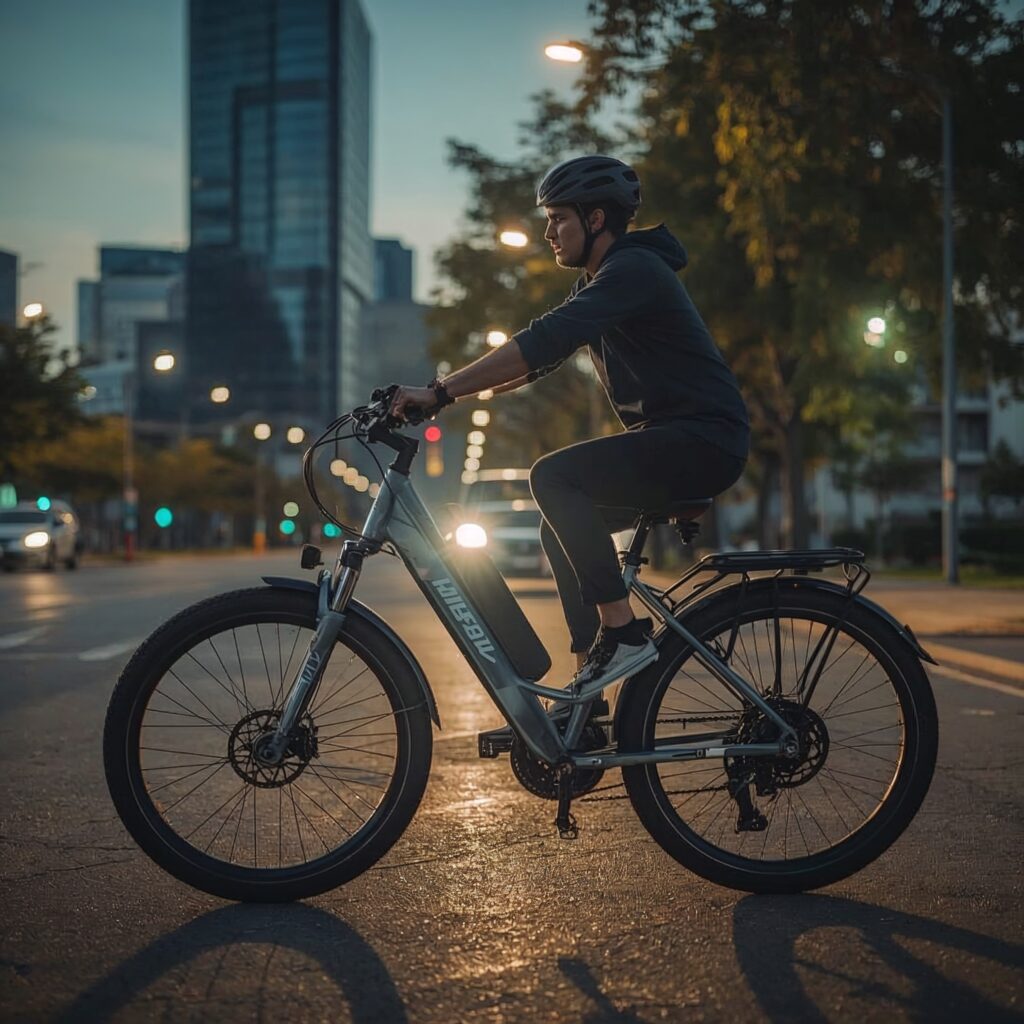
Electric bikes make riding easier, faster, and more practical. They help with hills, commuting, errands, school runs, and short trips that might otherwise require a car.
But an e-bike is not just a regular bicycle with a battery.
It can accelerate faster, weigh more, stop differently, and put you into traffic situations sooner than expected. That is why many electric bike safety mistakes happen even when the rider is not trying to be reckless.
The goal of this guide is simple: help you avoid the most common electric bike safety issues before they turn into crashes, injuries, or battery problems.
You will learn:
- Which unsafe e-bike riding habits cause the most trouble
- How to ride more predictably around cars and pedestrians
- What charging mistakes to avoid
- How to spot battery warning signs
- What to check before every ride
USA safety note: E-bike laws vary by state and local area. PeopleForBikes notes that e-bike laws are different in every state, and its policy work focuses on the three classes of low-speed electric bicycles. Always check your local rules for helmet requirements, sidewalk riding, trail access, age limits, and Class 1, 2, or 3 restrictions.
Unsafe Habit → Safer Fix Table
| Unsafe habit | Why it matters | Safer fix |
|---|---|---|
| Using high assist everywhere | Less reaction time near cars, people, and turns | Match assist level to the area |
| Riding too fast in bike lanes or shared paths | Others may not expect your speed | Slow down before driveways, crossings, and crowds |
| Treating an e-bike like a regular bicycle | Extra weight changes stopping and balance | Practice starts, stops, and turns before traffic |
| Wearing no helmet or a loose helmet | Poor fit reduces protection | Wear a properly fitted bike helmet every ride |
| Riding against traffic | Drivers do not expect you from that direction | Ride with traffic unless local infrastructure says otherwise |
| Skipping lights | Quiet, fast e-bikes can be hard to notice | Use a white front light and red rear light |
| Looking at your phone while riding | E-bike speed leaves less time to react | Set navigation before riding |
| Carrying bags on handlebars | Weight can affect steering | Use panniers, racks, or secured cargo bags |
| Charging overnight or while away | Battery problems may happen when no one is present | Charge while awake and nearby |
| Using a universal charger | A charger may fit but still be incompatible | Use only manufacturer-approved chargers |
Why Electric Bike Safety Mistakes Happen So Easily

Most e-bike mistakes start with one wrong assumption:
“It rides just like a normal bike.”
It does not.
An e-bike still needs basic cycling skills, but the motor changes the timing of the ride. You may reach intersections faster, enter turns with more speed, and need more distance to stop.
E-bikes accelerate faster than many riders expect
Pedal assist can feel smooth, but it can also surprise new riders.
A small push on the pedal may move the bike forward faster than expected, especially in:
- Parking lots
- Driveways
- Narrow bike lanes
- Apartment garages
- Crowded shared paths
- Stop-and-go traffic
This is why beginners should start in a low assist mode. Do not make your first ride a busy commute in high assist.
Extra weight changes braking, turning, and balance
Many e-bikes are heavier than regular bicycles because of the motor, battery, frame, and accessories.
That extra weight affects:
- Braking distance
- Low-speed balance
- Turning
- Hill starts
- Carrying the bike upstairs
- Walking the bike through hallways or garages
- Stopping with cargo or a passenger
A heavier bike is not automatically unsafe. But it requires smoother control.
Road rules still matter
On U.S. roads, bicyclists generally need to follow the same rules and responsibilities as motorists. NHTSA reminds riders to obey traffic signs and signals, ride predictably, travel with the flow of traffic, and avoid distractions.
That means an e-bike rider should not:
- Blow through stop signs
- Ride against traffic
- weave unpredictably
- switch suddenly between road and sidewalk
- assume drivers will always see them
The safest e-bike rider is not just careful. The safest rider is predictable.
Mistake #1: Riding Too Fast for the Road, Bike Lane, or Shared Path

Speed is useful on an e-bike, but it is also one of the easiest ways to create risk.
The biggest mistake is not simply “going fast.” It is going faster than the situation allows.
You may need to slow down around:
- Driveways
- Parked cars
- School zones
- Bus stops
- Crosswalks
- Shared paths
- Parking lots
- Blind corners
- Apartment exits
- Wet pavement
- Crowded bike lanes
Why high assist increases accident risk
High assist can make the bike feel effortless. That is great on a hill, but risky in tight areas.
At higher speed, you have less time to react if:
- A car door opens
- A driver turns across the bike lane
- A child steps into the path
- A dog leash stretches across the trail
- A car backs out of a driveway
- You hit gravel, leaves, or a pothole
NHTSA says bicyclist deaths often involve urban areas, visibility problems, and failure to yield. That matters because many e-bike rides happen exactly in those environments: city streets, intersections, and traffic-heavy areas.
Safer habit: ride at a speed where you can stop in time
Ask yourself:
“If someone steps out right now, can I stop safely?”
If the answer is no, reduce speed.
Use lower assist when riding:
- Near pedestrians
- In narrow lanes
- Around parked cars
- On shared paths
- In rain or darkness
- Near schools or parks
- Through parking lots
- Past driveways and alleys
Speed should match visibility, surface, and traffic — not just the bike’s capability.
Mistake #2: Treating an E-Bike Like a Regular Bicycle

This is one of the most common electric bike safety mistakes because the difference is easy to underestimate.
An e-bike may look familiar, but motor assist changes how the ride feels.
What changes when the bike has a motor?
The motor changes:
- How quickly you start
- How fast you reach traffic
- How much space you need to stop
- How the bike feels in turns
- How quickly small mistakes become serious
A regular bicycle usually builds speed gradually. An e-bike can put you into a busy intersection or tight turn faster than expected.
Common beginner handling mistakes
New riders often make these mistakes:
- Starting in the highest assist level
- Braking too late
- Turning while still accelerating
- Looking down at the display
- Grabbing one brake too hard
- Using throttle near pedestrians
- Riding too close to parked cars
- Forgetting the bike is heavier when stopping
These are not character flaws. They are normal beginner errors.
But they need to be corrected early.
Safer habit: practice before traffic riding
Before riding in traffic, practice in an empty parking lot or quiet street.
Practice:
- Starting smoothly
- Stopping without skidding
- Turning at slow speed
- Looking over your shoulder without swerving
- Braking with both brakes
- Starting on a slight hill
- Riding with one hand briefly for signaling
- Switching assist levels without looking down too long
Do this before your first commute, not after your first close call.
Mistake #3: Wearing No Helmet or Wearing It Incorrectly

A helmet cannot prevent every injury, but it is one of the easiest safety habits to control.
NHTSA says every bike ride begins with putting on a helmet, and proper fit is important so the helmet can protect as intended.
Common e-bike helmet safety mistakes
Common e bike helmet safety mistakes include:
- Wearing no helmet for “short rides”
- Wearing the helmet too far back
- Leaving the chin strap loose
- Using an old cracked helmet
- Wearing a helmet that slides around
- Not replacing a helmet after a crash
- Choosing a helmet only because it looks good
Short rides still include intersections, potholes, driveways, and distracted drivers.
How a helmet should fit
A properly fitted helmet should:
- Sit level on your head
- Cover your forehead
- Rest about two finger-widths above your eyebrows
- Have side straps forming a “V” around each ear
- Have a snug chin strap
- Stay in place when you gently shake your head
If the helmet tilts back like a cap, it is not protecting your forehead properly.
Safer habit: helmet first, every ride
Before you turn on the bike, put on the helmet.
For higher-speed commuting, Class 3-style riding, or busy city routes, consider a quality cycling helmet with strong coverage and replace it after any significant impact.
Mistake #4: Riding Where Drivers Do Not Expect You

Many e-bike crashes happen when a rider appears from a direction or place where a driver is not looking.
This is why predictability matters.
Risky riding patterns
Avoid:
- Riding against traffic
- Swerving between road and sidewalk
- Passing cars suddenly on the wrong side
- Cutting across parking lots diagonally
- Entering crosswalks at high speed
- Riding fast on sidewalks where cars cross driveways
NHTSA recommends riding where you are expected to be seen, traveling in the same direction as traffic, minimizing blind spots, signaling, and being cautious with sidewalk riding because drivers may not expect moving traffic there.
Where extra caution is needed
Be especially careful around:
- Gas station exits
- Grocery store parking lots
- Apartment garages
- School pickup lanes
- Restaurant drive-through exits
- Office park driveways
- Cars turning right on red
- Delivery trucks and buses
These places create crossing paths. You may see the car, but the driver may not see you.
Safer habit: ride predictably
Predictable riding means:
- Hold a steady line
- Ride with traffic
- Signal before turning when safe
- Avoid sudden lane changes
- Slow before crossings
- Make eye contact when possible
- Do not assume a driver has seen you
A simple rule helps:
Do not surprise drivers, pedestrians, or other riders.
Mistake #5: Ignoring Visibility

Visibility is not only a nighttime issue.
You can be hard to see during:
- Rain
- Fog
- Dusk
- Dawn
- Tree shade
- Urban glare
- Heavy traffic
- Dark clothing against dark pavement
E-bikes are often quiet and faster than drivers expect. That combination can make you easy to miss.
Common visibility mistakes
Riders often make these mistakes:
- No front light
- No rear light
- Dead light batteries
- Dark clothing at dusk
- Rear light blocked by a backpack
- Reflectors missing or dirty
- Assuming daylight is enough
NHTSA recommends equipment that helps bicyclists be visible, including bright clothing during the day, reflective gear, and a white front light, red rear light, and reflectors at night or when visibility is poor.
Safer habit: make yourself noticeable early
Use:
- White front light
- Red rear light
- Reflectors
- Bright or reflective clothing
- Reflective ankle bands
- A visible backpack cover
- A bell or voice when passing on paths
Your goal is not just to see the road.
Your goal is to be noticed before someone turns, opens a door, backs out, or steps into your path.
Mistake #6: Getting Distracted While Riding

Distraction becomes more dangerous when the bike is moving faster.
A two-second glance at your phone can carry you a long distance at e-bike speed.
Common distracted riding habits
Unsafe e bike riding habits include:
- Texting while moving
- Watching navigation too closely
- Taking calls one-handed
- Wearing noise-blocking headphones
- Filming while riding
- Adjusting assist settings in traffic
- Looking down at the display too often
NHTSA advises riders not to text, listen to music, or use anything that takes their eyes, ears, or mind away from the road and traffic.
Do not ride impaired
This also includes alcohol, cannabis, or any drug that affects balance, reaction time, or judgment.
CPSC specifically advises micromobility riders not to ride under the influence of alcohol or drugs.
Safer habit: set everything before you move
Before riding:
- Start your navigation
- Choose your assist mode
- Turn on lights
- Secure your phone
- Adjust mirrors if you use them
- Zip pockets and secure bags
While moving, keep your eyes up and both hands ready.
A display glance should be quick. It should not become screen time.
Mistake #7: Carrying Passengers or Cargo the Wrong Way

Cargo changes the way an e-bike handles.
A passenger changes it even more.
This is especially important for delivery riders, parents, students, and commuters carrying groceries or work gear.
How extra weight affects safety
Extra weight can:
- Increase stopping distance
- Make the bike wobble at low speed
- Change turning balance
- Stress brakes and tires
- Make hills harder to control
- Shift suddenly if the load is loose
A loaded e-bike needs slower turns and more stopping space.
Common cargo mistakes
Avoid:
- Hanging bags from handlebars
- Carrying heavy weight on one side only
- Wearing a loose backpack that shifts
- Letting straps hang near wheels
- Carrying a passenger on a bike not designed for one
- Using child seats not approved for the bike
- Exceeding the total weight limit
CPSC advises riders to review manufacturer safety information, identify weight and age limits, and keep items off handlebars.
Safer habit: use the right carrying setup
Use:
- Panniers
- Rated rear racks
- Proper cargo baskets
- Manufacturer-approved passenger kits
- Correct child seats
- Secure straps away from wheels
- Lower assist when heavily loaded
Never guess with passenger safety. If the bike is not rated for a passenger, do not carry one.
Mistake #8: Making Electric Bike Charging Mistakes

Electric bike charging mistakes can create serious safety concerns, especially when charging happens inside homes, apartments, garages, or shared storage rooms.
The main rule is simple:
Charge in a way that lets you notice a problem early.
Charging overnight or while away
Charging overnight is convenient, but it is not the safest habit.
CPSC says to follow manufacturer charging instructions, unplug when charging is complete, always be present when charging micromobility products, and never charge them while sleeping or when away from home.
Avoid charging:
- While asleep
- While nobody is home
- Near an exit door
- On a bed or couch
- Under clothing or clutter
- Near curtains or paper
- In extreme heat
- In a hallway that blocks escape
Apartment and garage charging tips
For apartment charging:
- Keep the bike or battery away from your main exit.
- Charge on a stable surface.
- Keep the area clear of flammable clutter.
- Do not run cords where people can trip.
- Ask your building about battery charging rules if you use shared storage.
For garage charging:
- Avoid charging near gasoline, paint, cardboard, or chemicals.
- Keep the charger dry.
- Do not use damaged outlets or extension cords.
- Unplug when finished.
Safer habit: charge while awake and nearby
A safer charging routine:
- Check the battery and charger for damage.
- Use the approved charger.
- Place the bike or battery in a clear, stable area.
- Stay nearby and awake.
- Unplug when full.
- Let the battery cool if it feels warm.
- Stop using the charger if it smells, sparks, frays, or overheats.
Mistake #9: Using Universal, Mismatched, or Damaged Chargers

A charger that fits into the port is not automatically safe.
This is one of the most important electric bike charging mistakes to avoid.
CPSC warns consumers not to use chargers marketed as “universal” or generally suitable for micromobility devices unless they have been tested and approved to work safely with that specific device. The agency says an incompatible charger can cause the battery to ignite and result in a serious fire.
Charger mistakes to avoid
Do not use:
- A random universal charger
- A charger from another e-bike
- A charger with a damaged cord
- A charger that gets unusually hot
- A charger that smells strange
- A charger that sparks
- A charger bought only because the plug fits
- A charger with unclear voltage or compatibility
Safer habit: use only approved charging equipment
Use the charger supplied by the manufacturer or a replacement charger confirmed compatible by the manufacturer.
If you lose the original charger, contact the e-bike brand or battery manufacturer. Do not guess.
Mistake #10: Ignoring Electric Bike Battery Safety Problems

Battery warning signs should never be ignored.
A questionable battery is not something to “test one more time.”
Battery warning signs
Stop using the battery if you notice:
- Swelling
- Bulging
- Cracks
- Leaking
- Smoke
- Hissing
- Popping sounds
- Burn marks
- Melted plastic
- Unusual smell
- Excessive heat
- Water damage
- Damage after a crash
- Battery no longer locks securely
What to do if the battery looks dangerous
If the battery is hot, swollen, smoky, or smells unusual:
- Stop using it.
- Do not charge it again.
- Move away from it if there is smoke, heat, or popping.
- Call emergency services if there is fire, smoke, or immediate danger.
- Contact the manufacturer for next steps.
- Follow local hazardous-waste disposal rules.
CPSC advises using only approved replacement batteries, never using modified or reworked battery packs, and never throwing lithium batteries into regular trash or general recycling. Instead, they should go to a local battery recycler or hazardous-waste collection center.
Be careful with cheap replacement batteries
Cheap or unknown batteries may have:
- Poor cell quality
- Weak battery management systems
- Bad wiring
- Incorrect voltage
- Unknown repair history
- Reused or damaged cells
- No clear testing or certification information
A low price is not worth a fire risk.
Mistake #11: Skipping the Pre-Ride Safety Check

A small problem on a regular bike can become a bigger problem on an e-bike because of speed, weight, and traffic exposure.
CPSC recommends checking for damage before riding, including handlebars, brakes, throttle, bell, lights, tires, cables, and frame.
Why pre-ride checks matter
A soft tire can make turning unstable.
A weak brake can become dangerous downhill.
A loose battery can disconnect or rattle.
A dead rear light can make you invisible at dusk.
The check does not need to be complicated. It just needs to be consistent.
60-second e-bike safety check
0–10 seconds: Helmet
- Helmet level
- Chin strap snug
- No visible cracks
10–20 seconds: Tires
- Tires feel firm
- No obvious cuts or flats
- Wheels spin normally
20–30 seconds: Brakes
- Squeeze both brakes
- Bike should stop firmly
- No weak or grinding feel
30–40 seconds: Lights and visibility
- Front light works
- Rear light works
- Reflectors visible
- Bright or reflective gear ready if needed
40–50 seconds: Battery and controls
- Battery locked in place
- No swelling, cracks, smell, smoke, or heat
- Display turns on normally
- Assist level set low for starting
50–60 seconds: Route and awareness
- Phone mounted or stored
- Route planned
- Speed mode matches the area
- Look around before entering traffic
This one-minute habit can prevent many avoidable problems.
How to Avoid E-Bike Accidents in Everyday USA Riding

Knowing the mistakes is useful. Knowing what to do in real situations is better.
Here is how to avoid e bike accidents in common U.S. riding environments.
In city traffic
City streets create many conflict points.
Safer habits:
- Ride with traffic.
- Use bike lanes when available.
- Watch for turning cars.
- Stay out of the door zone when possible.
- Do not pass large trucks or buses on the inside at intersections.
- Slow near stopped traffic.
- Use lights during the day.
- Assume drivers may underestimate your speed.
On shared paths
Shared paths are not race lanes.
Slow down around:
- Walkers
- Kids
- Dogs
- Strollers
- Joggers
- Blind corners
- Trail entrances
- Crowded park areas
Use a bell or calm voice before passing. Pass with space. Do not rely on people hearing you at the last second.
Near schools, parks, and parking lots
These areas are unpredictable.
Expect:
- Kids running
- Drivers backing out
- People walking between parked cars
- Pets crossing the path
- Car doors opening
- Drivers focused on parking, not bike traffic
Use low assist. Cover your brakes. Slow before the conflict point.
In rain, darkness, or poor visibility
Bad conditions require more space and less speed.
Safer habits:
- Brake earlier.
- Turn gently.
- Avoid sharp swerves.
- Watch painted road markings.
- Avoid deep puddles if you cannot see the bottom.
- Use lights and reflective gear.
- Give cars extra space.
- Dry the bike according to manufacturer guidance after wet rides.
Do not ride like it is a dry sunny afternoon when the road is wet and dark.
The E-Bike Safety Triangle: Control + Visibility + Battery Care

Most electric bike safety concerns fit into three simple categories.
1. Control
Control means you can start, stop, turn, and react safely.
Improve control by:
- Starting in low assist
- Practicing braking
- Slowing before turns
- Keeping both hands ready
- Checking tires and brakes
- Loading cargo correctly
2. Visibility
Visibility means others can notice you early enough to react.
Improve visibility by:
- Using lights
- Wearing reflective gear
- Riding predictably
- Avoiding blind spots
- Signaling early
- Riding with traffic
3. Battery care
Battery care means charging, storing, and replacing batteries safely.
Improve battery safety by:
- Using approved chargers
- Staying present while charging
- Unplugging when full
- Avoiding damaged batteries
- Never using modified battery packs
- Following hazardous-waste disposal rules
Remember this:
Safe e-bike riding comes down to control, visibility, and battery care.
FAQs About Electric Bike Safety Mistakes

What is the most common electric bike safety mistake?
One of the most common mistakes is riding too fast for the situation.
This often happens in bike lanes, shared paths, school zones, parking lots, or near driveways. The safer habit is to match your speed to visibility, traffic, surface conditions, and stopping distance.
Are e-bikes more dangerous than regular bikes?
E-bikes are not automatically dangerous, but they can create more risk when riders ignore speed, weight, braking distance, and motor assist.
The bike may accelerate faster and weigh more than a regular bicycle, so riders need better control habits.
Should I wear a helmet on an electric bike?
Yes. A properly fitted helmet is strongly recommended for every e-bike ride. Some states or cities may require helmets based on age, e-bike class, or location, so check your local rules.
Even when not legally required, wearing a helmet is a smart safety habit.
Is it safe to charge an e-bike overnight?
It is safer not to. CPSC advises riders to be present while charging micromobility products and not to charge them while sleeping or away from home.
Charge while awake and nearby, then unplug when full.
Can I use a universal charger for my e-bike?
Avoid universal chargers unless they have been tested and approved for your specific device. CPSC warns that a charger may fit but still be incompatible, and an incompatible charger can cause a serious fire.
Use the charger provided or recommended by the manufacturer.
How can beginners avoid e-bike accidents?
Beginners should:
- Start in low assist
- Practice away from traffic
- Wear a helmet
- Use lights
- Ride predictably
- Avoid phone use
- Slow near intersections and driveways
- Check brakes and tires before riding
- Learn local e-bike rules
Do not make your first e-bike ride a high-speed traffic ride.
What should I do if my e-bike battery gets hot or swollen?
Stop using it immediately. Do not charge it again.
If there is smoke, fire, popping, or a strong smell, move away and call emergency services. For disposal, follow manufacturer guidance and local hazardous-waste rules. Do not place lithium batteries in regular trash or general recycling.
Quick E-Bike Safety Checklist Before Every Ride

Before you ride, check:
- Helmet fitted correctly
- Brakes working
- Tires firm
- Lights working
- Reflectors visible
- Battery locked in place
- Battery not hot, swollen, cracked, smoky, or unusual-smelling
- Charger unplugged and stored
- Assist level suitable for the area
- Phone stored or mounted
- Cargo secured
- Route planned with safer roads, bike lanes, or paths
Avoid these major electric bike safety mistakes:
- Riding too fast for the area
- Starting in high assist as a beginner
- Treating the e-bike like a regular bicycle
- Wearing no helmet or wearing it incorrectly
- Riding where drivers do not expect you
- Skipping lights and reflective gear
- Looking at your phone while riding
- Carrying cargo or passengers incorrectly
- Charging overnight or while away
- Using universal chargers
- Ignoring battery warning signs
- Skipping pre-ride checks
Pingback: Electric Bike Battery Range Explained: Real Miles, 48V Batteries, and Range Tips - electricscootercar.com
Pingback: Electric Bike Battery Safety: Charging, Storage, and Fire Prevention Tips - electricscootercar.com
Pingback: Are Electric Bikes Safe? Real Risks, Helmet Safety, and Smart Riding Tips - electricscootercar.com
Comments are closed.