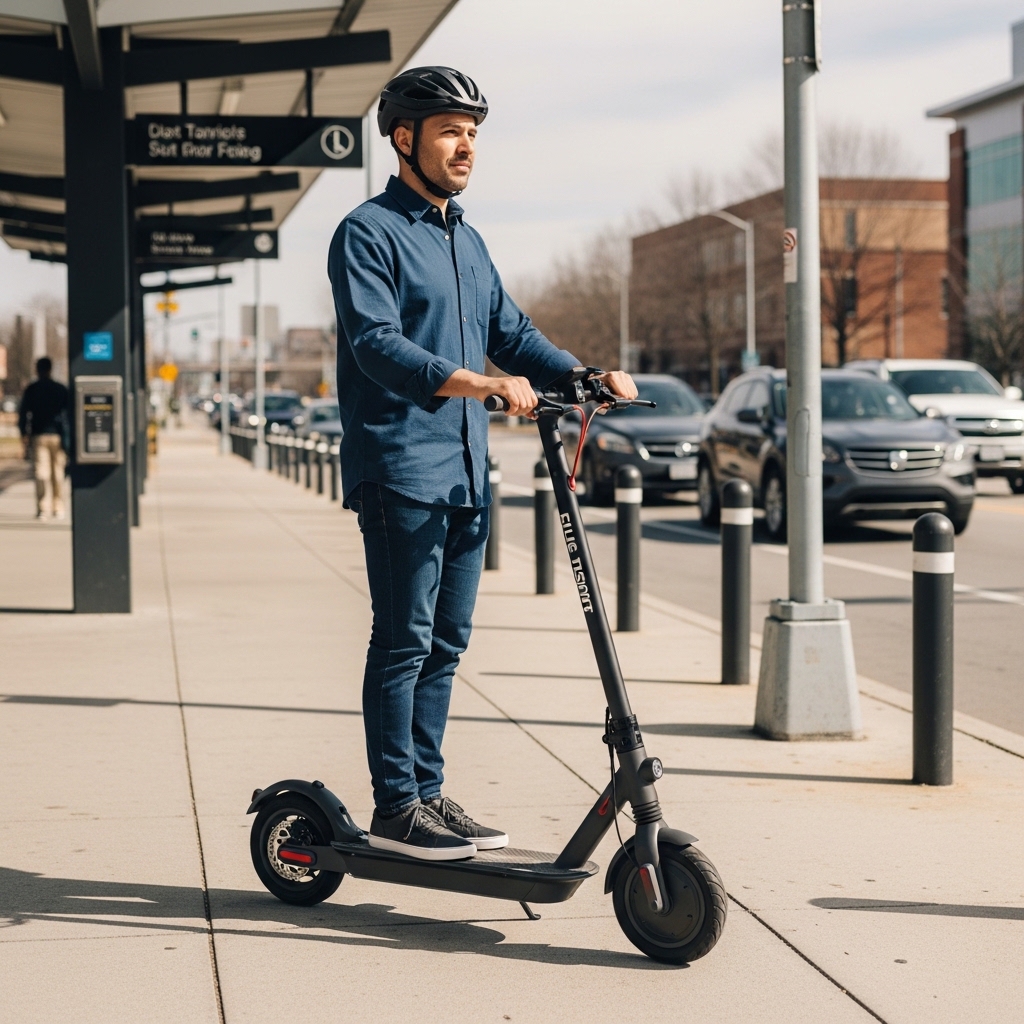
Electric scooters offer a convenient way to travel short distances without depending on a car for every trip. From daily office commutes to college campuses and public transportation connections, they can make local travel simpler, more affordable, and easier to manage.
But are electric scooters actually worth buying in the United States?
The biggest benefits of electric scooters are low electricity costs, convenient parking, compact storage, easy short-distance commuting, and zero tailpipe emissions while riding. However, their practicality depends on road conditions, local laws, weather, battery range, and rider safety.
A scooter that works perfectly for a two-mile city commute may be completely unsuitable for a ten-mile journey along busy suburban roads.
This guide explains the real advantages and disadvantages of electric scooters, ownership costs, safety considerations, and how to decide whether one makes sense for your daily routine.
Quick Answer: Are Electric Scooters Worth It in the USA?

Electric scooters are worth considering when your regular journeys are short, reasonably safe, and legally permitted. They are particularly useful when parking is inconvenient or when you need to connect to a train, bus, or college campus.
| Your situation | Is an electric scooter suitable? | Main consideration |
|---|---|---|
| 1–3-mile city commute | Often yes | Safe routes and local regulations |
| Commuting to a train or bus station | Often yes | Portability and transit restrictions |
| College campus transportation | Often yes | Campus riding policies |
| Short neighborhood errands | Often yes | Storage and road conditions |
| Long suburban commute | Usually not ideal | Distance and high-speed traffic |
| Regular riding in snow or ice | Not recommended | Traction and braking safety |
| Traveling on highways | No | Legal and safety restrictions |
The important distinction is that electric scooters are short-distance transportation tools, not universal replacements for cars or motorcycles.
What Is an Electric Scooter?
An electric scooter is a battery-powered personal transportation device that usually features a standing deck, handlebars, an electric motor, a throttle, and brakes.
Unlike a conventional kick scooter, its motor provides propulsion. Unlike an electric bicycle, it generally does not require pedaling.
Most commuter electric scooters use a rechargeable lithium-ion battery and an electric hub motor.
The basic operation is straightforward: the battery supplies electricity, a controller regulates power delivery, and the motor moves the wheel.
For commuters, the technology itself matters less than how reliably it handles everyday journeys.
Battery capacity, braking performance, tire quality, range, and weather resistance have a greater impact on daily usability than impressive-looking speed claims.
If you want to understand how these characteristics affect daily riding, read our electric scooter performance guide.
7 Major Benefits of Electric Scooters

1. Lower Running Costs for Short-Distance Travel
One of the biggest benefits of electric scooters is their relatively low electricity consumption.
Electric scooters do not need gasoline. Instead, their rechargeable batteries use a comparatively small amount of electricity.
Consider a simple example.
Suppose an electric scooter has a 500Wh battery. That battery stores 0.5 kilowatt-hours of energy.
If recharging consumes approximately 0.6 kWh from the wall after charging losses, and your electricity rate is $0.20 per kWh, the charging cost would be:
0.6 kWh × $0.20 = $0.12 per full recharge
If that scooter provides 15 miles of actual riding range, its electricity cost would be approximately 0.8 cents per mile.
These are illustrative assumptions, not guaranteed performance figures or nationwide averages.
Your real charging cost will depend on battery capacity, electricity rates, charger efficiency, and riding conditions.
Electric scooters can also reduce spending on parking or short rideshare trips, provided they genuinely replace those expenses.
However, electricity is only one part of ownership cost. Tires, brakes, batteries, accessories, and repairs must also be considered.
For a detailed calculation, see our electric scooter charging cost guide.
2. Easier Parking and Compact Storage
Finding parking can be inconvenient, particularly in busy urban areas.
A foldable electric scooter may eliminate the need for a conventional parking space when it can legally and safely be stored at your destination.
Many models can fit into apartments, office storage areas, or other compact spaces.
This makes them appealing to people who live in smaller homes or have limited parking facilities.
However, portability varies significantly between models.
Some scooters are heavy enough that carrying them upstairs or onto public transportation becomes inconvenient.
Before purchasing, check the scooter’s weight, folded dimensions, and carrying mechanism.
Also confirm that your workplace, apartment building, or campus allows scooter storage.
3. Convenient First- and Last-Mile Commuting
Electric scooters can be especially useful for completing the beginning or end of a journey involving public transportation.
Imagine living two miles from a train station.
Walking might be inconvenient when you are running late, while driving could involve parking expenses or additional congestion.
A scooter may provide a practical connection between your home and the station.
The same principle applies when your workplace is some distance from a transit stop.
Electric scooters can complement buses and trains rather than replace them.
This use is supported by the continued adoption of shared micromobility services. According to the National Conference of State Legislatures, shared electric scooters accounted for approximately 65 million trips in the United States in 2023.
That figure represents shared services, not privately owned scooter trips.
Before relying on an electric scooter for public transportation connections, verify your transit operator’s rules concerning folded scooters, battery-powered devices, and onboard storage.
For one example of transit restrictions, see BART’s rules for folding electric scooters before traveling.
4. Convenient Transportation for Short Local Trips
Not every journey requires a car.
Electric scooters can make certain short errands more convenient, including traveling to nearby shops, visiting local facilities, or moving between campus buildings.
Their main advantage is reducing some of the inconvenience associated with short journeys.
For example, a person traveling two miles may find a scooter more practical than driving, searching for parking, and walking from a distant parking area.
However, actual travel time depends on traffic signals, intersections, speed limits, and permitted riding locations.
Electric scooters should not be treated as a shortcut around normal traffic rules.
For short-distance commuting, a predictable and safe journey is more valuable than maximum speed.
5. Zero Tailpipe Emissions While Riding
Electric scooters produce no tailpipe emissions during operation because they use electricity rather than burning gasoline.
This can help reduce direct local exhaust emissions when scooter trips replace gasoline-powered vehicle journeys.
However, an electric scooter is not automatically environmentally harmless.
Manufacturing the scooter, producing its battery, generating electricity, and disposing of components all contribute to its environmental footprint.
The U.S. Department of Energy explains that assessing electric transportation requires considering both operating emissions and wider lifecycle impacts. See its guide to electric vehicle emissions.
The environmental benefit also depends on the transportation method being replaced.
Replacing a short car trip may create a different environmental outcome from replacing walking or an existing public transportation journey.
Therefore, a more accurate advantage is that electric scooters can support lower-impact local transportation when used in appropriate circumstances.
6. Simpler Routine Maintenance Than Gasoline Vehicles
Electric scooters avoid several maintenance requirements associated with gasoline-powered vehicles.
They do not need engine oil changes, spark plugs, or gasoline-system servicing.
That can make routine ownership simpler.
However, electric scooters are not maintenance-free.
Their tires, brakes, batteries, folding mechanisms, and electrical components still require attention.
Common maintenance tasks include checking tire pressure, inspecting brakes, tightening appropriate fasteners, cleaning the scooter, and checking for visible damage.
Owners should also watch for unusual battery behavior or changes in range.
Regular maintenance is important for both safety and long-term ownership costs.
Our electric scooter maintenance cost guide explains common repairs and expenses.
7. Flexible Transportation for Students and Urban Commuters
Electric scooters can be useful for people whose daily routines involve short, repeated journeys.
College students may use them to travel between permitted campus locations.
Office workers may find them useful for commuting from nearby residential areas.
People who combine walking, public transportation, and short local journeys may also appreciate their flexibility.
Electric scooters can require less physical exertion than walking or cycling, although they still demand balance, coordination, and attention.
This can make them convenient for some riders, but not suitable for everyone.
Their strongest advantage is flexibility: they can provide another transportation option without requiring a full-size vehicle for every local journey.
Electric Scooter Pros and Cons: Complete Comparison

Although electric scooters have useful advantages, buyers should consider their limitations before spending money.
| Benefit | Practical advantage | Main disadvantage |
|---|---|---|
| Low electricity consumption | Inexpensive charging | Repairs and replacement batteries can be costly |
| Compact design | Convenient storage | Some scooters are heavy |
| Short-distance commuting | Useful for suitable urban routes | Limited range |
| Easy parking | Less need for conventional parking | Theft and storage restrictions |
| No tailpipe emissions | Cleaner operation at the point of use | Manufacturing and electricity still have environmental impacts |
| Simple motor system | Fewer gasoline-engine maintenance tasks | Battery and electronics require care |
| Portable mobility | Useful for transit connections | Transit operators may restrict scooters |
For commuters, the practical question is whether the advantages outweigh the disadvantages on the routes they actually travel.
How Much Does It Cost to Own an Electric Scooter in the USA?

An electric scooter’s purchase price does not represent its total ownership cost.
A realistic budget should account for the scooter, protective equipment, electricity, maintenance, and possible repairs.
Example: First-Year Electric Scooter Ownership Cost
Consider the following hypothetical commuting scenario:
| Expense | Example cost |
|---|---|
| Electric scooter purchase | $600 |
| Helmet and basic security accessories | $75 |
| Electricity over the year | $10 |
| Maintenance and minor repairs | $100 |
| Total first-year expense | $785 |
Suppose the rider travels four miles per commuting day, five days per week, for 48 weeks.
That equals 960 miles annually.
Under these assumptions, the first-year ownership cost would be approximately $0.82 per mile, before resale value, unexpected failures, or other expenses.
This calculation is only an example. Actual prices and costs vary significantly.
The cost per mile may decline over multiple years if the scooter remains reliable, because the original purchase expense is spread across more journeys.
Conversely, a battery replacement or major repair may increase ownership costs.
To understand that risk, see our electric scooter battery life guide.
When Does an Electric Scooter Actually Save Money?
A scooter may provide meaningful savings when it replaces repeated paid transportation trips.
For example, replacing some rideshare journeys or paid parking can reduce transportation expenses.
But buying a scooter does not automatically save money if it is only replacing walking.
Likewise, keeping a car while occasionally riding a scooter does not eliminate the car’s insurance, registration, depreciation, or other fixed expenses.
The most realistic comparison is between the scooter’s full ownership cost and the specific transportation spending it can replace.
What Are the Disadvantages of Electric Scooters?

1. Safety Risks on Busy or Poorly Maintained Roads
Electric scooters have smaller wheels than most bicycles and motorcycles.
This can make potholes, loose gravel, uneven pavement, and other road hazards particularly troublesome.
Riders are also more exposed during collisions than occupants of enclosed vehicles.
According to the U.S. Consumer Product Safety Commission’s April 2026 micromobility report:
- Approximately 380,000 e-scooter-related emergency department visits were estimated from 2017 through 2024.
- The agency was aware of 206 e-scooter-associated fatalities during that period.
- Motor vehicle crashes and control-related problems were major hazards associated with fatalities.
These totals cover multiple years and do not represent the probability that an individual rider will be injured. Reported fatalities may also change as additional information becomes available.
They nevertheless demonstrate why route conditions, braking, visibility, and responsible riding matter.
The CPSC micromobility safety guidance recommends wearing a helmet, checking equipment before riding, following local laws, avoiding distractions, and taking precautions around other vehicles.
2. Limited Battery Range
Electric scooter range varies considerably.
The distance advertised by a manufacturer may be measured under favorable conditions that differ from normal commuting.
Real-world range can be affected by rider weight, hills, speed, wind, temperature, tire pressure, and battery condition.
A scooter that performs well on flat ground may consume substantially more energy when climbing hills.
For this reason, buyers should not select a scooter whose maximum advertised range only just covers their commute.
Choose a model with enough independently demonstrated range to complete your journey while retaining a reasonable battery reserve.
Our electric scooter range guide explains these factors in greater detail.
3. Weather Can Restrict Daily Use
Rain, snow, ice, and strong winds can make scooter commuting uncomfortable or unsafe.
Wet pavement can affect traction and braking. Snow and ice are particularly hazardous for small wheels.
Water exposure can also damage components if the scooter is not designed to handle the conditions encountered.
Even models with an advertised water-resistance rating have specific limitations.
Check the manufacturer’s instructions before riding in wet weather and avoid riding in conditions that prevent safe control.
If your commute regularly involves severe weather, an electric scooter may be better suited as an occasional transportation option rather than your only means of travel.
4. Theft and Secure Storage
Electric scooters can be attractive theft targets, particularly when left unattended.
A folding mechanism makes a scooter portable, but portability also means it may be easier for someone else to move.
Choose secure storage wherever possible.
When outdoor parking is unavoidable, use an appropriate lock and follow local parking requirements.
Some property insurance policies may exclude or limit coverage for electric scooters, so verify your actual protection before assuming theft or damage is covered.
You can learn more about possible coverage in our electric scooter insurance guide.
5. Battery Charging and Fire Safety
Most modern commuter scooters use rechargeable lithium-ion batteries.
These batteries are practical because they can store substantial energy in a relatively compact package.
However, damaged batteries, unsuitable chargers, and unsafe modifications can create serious hazards.
The CPSC has specifically warned against using unapproved universal chargers with micromobility devices.
According to its charger safety warning, a charger may physically fit a device while still being electrically incompatible.
Important charging precautions include using the manufacturer-approved charger, avoiding unattended charging, following manufacturer instructions, and stopping use when a battery shows signs of damage.
If the battery stops accepting a charge, start with a battery-not-charging safety checklist rather than forcing a charge or opening the battery pack.
Never charge a scooter while sleeping.
For covered stand-up personal e-mobility devices, independent certification to an applicable electrical safety standard, such as ANSI/CAN/UL 2272, can provide evidence that the electrical system was evaluated against specified requirements.
See UL Solutions’ personal e-mobility certification information for details.
Certification is not a guarantee against every failure or accident.
6. Local Legal Restrictions
Electric scooter laws vary across the United States.
Regulations can address minimum rider age, permitted roads, speed limits, helmet requirements, and sidewalk use.
A scooter that is permitted on one city’s streets may face different restrictions in another.
New York City’s electric scooter rules illustrate how riding locations and speed requirements can differ.
Therefore, buyers must check current rules for their specific location and device classification.
Are Electric Scooters Legal on U.S. Roads?

Electric scooters are permitted in many U.S. jurisdictions, but there is no single nationwide rule governing every aspect of their operation.
The National Conference of State Legislatures’ electric scooter law report documents differences in state rules covering roadway access, rider ages, and operating speeds.
City ordinances, campus regulations, and park restrictions may introduce additional requirements.
Before riding, verify the following:
| Legal question | Why it matters |
|---|---|
| Is this scooter legally classified as an electric scooter? | Faster or differently designed devices may fall under other rules |
| Is the rider old enough? | Minimum-age requirements vary |
| Is a license required? | Requirements depend on the jurisdiction and device classification |
| Can it be used on the intended road? | Some roads are restricted |
| Is sidewalk riding permitted? | Sidewalk restrictions vary |
| What speed limit applies? | State and local restrictions may differ |
| Are helmets required? | Legal requirements vary by location and age |
Our electric scooter road-use guide and electric scooter license guide provide additional information.
Always confirm requirements through current official state and local sources.
Electric Scooter vs. Car vs. E-Bike: Which Is Better?

The best transportation choice depends on journey distance, safety, weather, budget, and convenience.
| Factor | Electric scooter | Car | Electric bike |
|---|---|---|---|
| Short local trips | Often convenient | Convenient but parking may be difficult | Often convenient |
| Long-distance transportation | Usually limited | Generally suitable | Depends on range and route |
| Parking and storage | Compact | Requires more space | Larger than most folding scooters |
| Weather protection | Very limited | Usually strongest | Limited |
| Cargo capacity | Very limited | Usually strongest | Varies by model |
| Physical activity | Low to moderate effort | Usually little | Can provide meaningful exercise |
| Maintenance needs | Tires, brakes, battery, electronics | More vehicle systems | Bicycle and electrical components |
| Road suitability | Highly route-dependent | Broad road access | Depends on bicycle access rules |
For very short urban trips, an electric scooter may be convenient.
For longer journeys, carrying cargo, or traveling in poor weather, a car may be more practical.
An electric bicycle may be a stronger choice when the rider wants larger wheels, seated riding, and pedal assistance.
No option is automatically best for every commuter.
Who Should Buy an Electric Scooter?

Office Commuters With Short Routes
An electric scooter may work well for someone traveling a few miles on suitable streets.
It can be particularly useful when workplace storage is available and parking a car is inconvenient.
However, check whether the route has appropriate bike lanes or legal low-speed riding areas.
College Students
Students may benefit from compact transportation between campus buildings and nearby residences.
But campus rules can restrict riding, charging, and indoor storage.
Always check university policy before purchasing.
Public Transportation Users
A foldable scooter can potentially help bridge the distance between a station and a final destination.
Its usefulness depends on weight, folding convenience, battery range, and transit rules.
Short-Distance Errand Riders
For suitable neighborhood journeys, a scooter may offer a convenient alternative to driving.
This is particularly relevant when destinations are close together and secure storage is available.
Who Should Avoid Relying on an Electric Scooter?
Electric scooters are not ideal for every situation.
Someone who regularly travels long distances on fast roads may find them impractical or unsafe.
Likewise, a rider who must travel through snow, ice, or heavily damaged pavement should consider alternative transportation.
Scooters can also be inconvenient when there is no secure storage, when the rider cannot comfortably balance or stand, or when the device must be carried frequently but is too heavy.
The most important rule is simple: choose a scooter only when your actual route and daily conditions support safe, legal, and practical use.
How to Choose the Right Electric Scooter for Commuting
Before purchasing an electric scooter, evaluate more than its advertised speed and price.
1. Check Real-World Battery Range
Calculate the distance of your usual round trip.
Then compare that distance with reliable real-world range information rather than relying only on manufacturer claims.
Allow room for hills, wind, cold temperatures, and battery aging.
2. Prioritize Braking Performance
Good brakes are essential.
Look for a braking system that provides predictable stopping and is appropriate for the scooter’s speed and weight.
Electronic braking can be useful, but understand the model’s complete braking design and follow the manufacturer’s maintenance requirements.
3. Evaluate Tires and Ride Stability
Tire size, grip, and construction influence comfort and control.
Small solid tires may reduce puncture concerns but can feel harsh on rough roads.
Pneumatic tires may improve comfort and grip but require pressure checks and can suffer punctures.
Choose based on actual road conditions.
4. Consider Weight and Foldability
If you need to carry the scooter onto transit or upstairs, portability becomes important.
Check the full scooter weight and practice operating the folding mechanism before relying on it daily.
5. Inspect Lighting and Visibility Features
A commuter scooter should have suitable lighting and reflectors for the circumstances in which it will be used.
Additional visibility equipment may improve conspicuity, but it does not replace careful riding.
6. Review Battery and Charger Quality
Choose a manufacturer that provides clear battery specifications, compatible chargers, safety instructions, and replacement-part support.
Avoid unsafe battery modifications or unapproved chargers.
7. Check Warranty and Repair Availability
A low purchase price may be less attractive if replacement batteries, tires, or brakes are difficult to obtain.
Review warranty coverage, exclusions, service availability, and expected maintenance requirements.
Our electric scooter warranty guide explains what buyers should investigate before purchasing.
8. Confirm Local Legality
Finally, verify that the scooter’s classification, speed capabilities, and intended use are compatible with your local regulations.
A technically impressive scooter offers little commuting value if it cannot legally be ridden on your required route.
Common Mistakes to Avoid When Buying an Electric Scooter
Buying Based Only on Top Speed
High speed does not automatically mean better commuting performance.
For normal urban travel, braking, stability, battery range, and legal compatibility are often more important.
Trusting Advertised Range Without Checking Conditions
A manufacturer’s range figure may not reflect hills, temperature, rider weight, and typical commuting speeds.
Use practical performance expectations rather than optimistic specifications.
Ignoring Maintenance Costs
Battery replacement, brake servicing, and tire repairs can increase ownership costs.
Budget for wear and unexpected problems before buying.
Choosing a Scooter Before Checking Local Laws
This can result in purchasing a device that cannot legally be used on the intended route.
Check regulations first.
Using Incompatible Chargers
A charger should never be selected only because its connector fits.
Follow the manufacturer’s compatibility requirements.
For a green or flashing charger light that does not match the battery status, see the electric scooter charging-light troubleshooting guide.
Ignoring Warning Signs
Unusual heat, battery swelling, charging abnormalities, loose steering components, or unreliable brakes should not be ignored.
Stop using an unsafe scooter and seek qualified inspection or service.
If the display reports an error, consult the electric scooter error-code reference and check the exact model before replacing parts.
Frequently Asked Questions About Electric Scooter Benefits
1. What are the main benefits of electric scooters?
The main benefits include inexpensive electricity consumption, convenient parking, compact storage, flexible short-distance transportation, fewer gasoline-engine maintenance requirements, and zero tailpipe emissions while riding.
These advantages are strongest when the scooter is used on suitable routes.
2. Are electric scooters worth buying in the United States?
They can be worth buying for short commutes and local journeys when safe, legal routes and secure storage are available.
Their value decreases when travel distances are long, roads are unsuitable, or weather frequently prevents riding.
3. Are electric scooters cheaper than cars?
Electric scooters generally use less electricity than the energy required to operate a conventional car and can involve substantially lower purchase costs.
However, savings depend on which car-related expenses are actually eliminated.
Keeping a car while occasionally using a scooter will not remove most fixed vehicle ownership costs.
4. How far can an electric scooter travel on one charge?
Range depends on the model, battery capacity, rider weight, speed, terrain, temperature, and battery condition.
Real-world range may be considerably lower than the manufacturer’s maximum advertised figure.
5. Are electric scooters safe for beginners?
Beginners can use suitable electric scooters, but safety depends on appropriate equipment, practice, road conditions, visibility, and riding behavior.
New riders should practice braking and control in a low-risk area before entering traffic.
6. Can electric scooters be used in the rain?
That depends on the model’s design, manufacturer instructions, and actual conditions.
Even where limited wet-weather use is permitted, reduced traction and braking performance can create additional risks.
Avoid snow, ice, deep water, and conditions that prevent safe control.
7. Do you need a driver’s license to ride an electric scooter?
Requirements vary depending on state and local law and how the device is classified.
Check official regulations before riding rather than assuming a license is never required.
8. Can electric scooters replace cars?
They may replace some short car journeys but are not suitable substitutes for all travel.
Cars remain more practical for many long journeys, passenger transportation, substantial cargo, and severe weather.
9. What is the biggest disadvantage of an electric scooter?
There is no single disadvantage for every rider.
For some, it is limited range. For others, road safety, weather exposure, theft, storage restrictions, or local regulations may be more important.
10. How can I make an electric scooter last longer?
Follow the manufacturer’s maintenance instructions, check tires and brakes regularly, use the approved charger, store the scooter appropriately, and address mechanical or electrical problems early.
Battery care is especially important for long-term performance.
Final Verdict: Are Electric Scooters a Good Choice for U.S. Commuters?
Electric scooters can provide real transportation benefits, particularly for short journeys in areas where suitable riding routes are available.
Their biggest strengths are low electricity consumption, compact storage, easy parking, and convenient first- and last-mile travel.
However, they also have important limitations.
Battery range, traffic exposure, weather, maintenance, theft risk, and local regulations can all affect whether an electric scooter is practical.
For someone with a short, repeatable commute on suitable streets, an electric scooter may be a worthwhile transportation investment.
For someone traveling long distances on high-speed roads or through difficult weather, another transportation option will often make more sense.
The best electric scooter is not necessarily the fastest or most expensive model. It is the one that safely and reliably fits your actual journey, budget, and local rules.
Before making a purchase, verify your route, estimate realistic ownership costs, review safety features, and check local legal requirements.