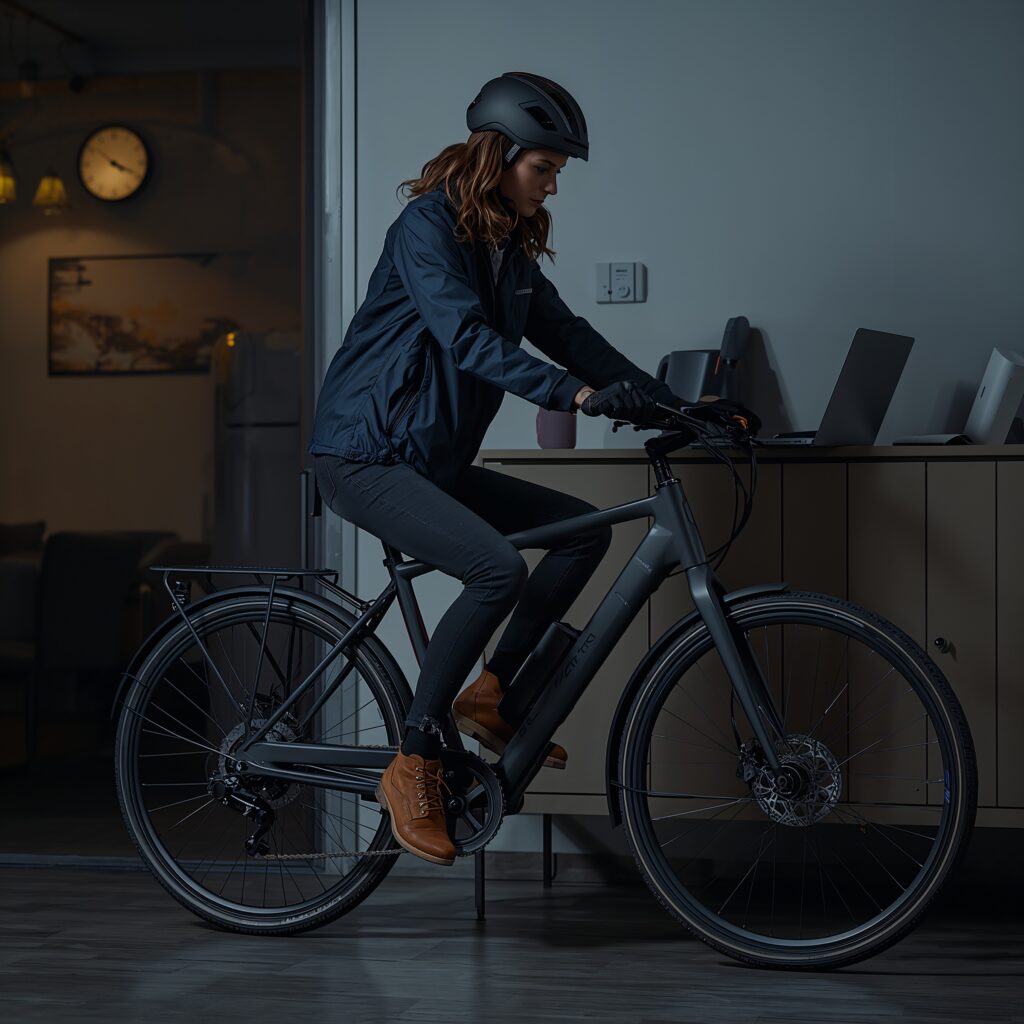
Electric bike battery charging is simple once you know the basics, but it is not something to treat casually.
A good charging routine helps your e-bike battery last longer, gives you more reliable range, and reduces safety risks. That matters whether you ride a few miles through a neighborhood, commute across town, or use your e-bike for weekend trails.
Most modern e-bikes use lithium-ion batteries. They are lightweight, practical, and efficient, but they still need the right charger, the right conditions, and basic care.
This guide explains how to charge an electric bike battery safely, how long charging usually takes, what charger lights mean, and what to do when something seems wrong.
Jump to Charging Answers
- Understanding your e-bike battery
- How to charge the battery on an electric bike
- What charger lights mean
- Charging time and best practices
- Can you charge without the original charger?
- Is overnight charging safe?
- Troubleshooting charging issues
- Battery health while charging
- FAQs
Understanding Your E-Bike Battery

Lithium-Ion vs Lead-Acid Batteries
Most e-bikes sold in the U.S. today use lithium-ion batteries. These are common because they are lighter, charge more efficiently, and support better riding range than older battery types.
Some older or very budget e-bikes may still use lead-acid batteries. These are heavier, usually take longer to charge, and are less common on modern commuter and recreational e-bikes.
For most riders, the main rule is simple:
Use the charger and charging instructions made for your specific e-bike battery.
Do not assume every e-bike battery charges the same way.
Why Battery Health Matters When Charging
Battery health affects how far your e-bike can go, how fast it charges, and how reliable it feels during rides.
A healthy battery usually charges predictably and gives consistent range. A worn, damaged, or poorly maintained battery may:
- take longer to charge
- lose charge faster
- show confusing charger light behavior
- shut off under load
- get unusually warm
- deliver less range than expected
Battery health also matters for safety. The U.S. Consumer Product Safety Commission advises riders to use the supplied charger, follow manufacturer instructions, unplug when charging is done, and use only approved replacement battery packs formicromobility products.
How to Charge the Battery on an Electric Bike

Step-by-Step Charging Process
If you are wondering, “how do you charge the battery on an electric bike,” the basic process is usually similar across most models.
- Turn the e-bike off.
Do not charge while the bike is powered on unless your manual specifically says it is allowed. - Let the battery cool if needed.
After a long ride, hill climb, or hot-weather commute, give the battery time to cool closer to room temperature. - Charge in a safe area.
Use a dry, open space away from beds, couches, paper, curtains, gasoline, or clutter. - Connect the charger according to your manual.
Some brands recommend connecting the charger to the battery first. Others may recommend plugging into the wall first. Follow your specific instructions. - Plug into a wall outlet.
Avoid overloaded power strips, damaged outlets, and long extension cords. FDNY recommends plugging lithium-ion battery chargers directly into a wall outlet and charging batteries away from anything flammable. - Check the e-bike battery charger light.
Most chargers use red, green, or blinking lights, but the meaning depends on the charger brand. - Unplug when charging is complete.
Do not leave the battery connected for days. Unplug once the battery is full. - Reinstall the battery securely.
If your battery is removable, make sure it locks firmly into place before riding.
For removable batteries, charging indoors can be convenient. Just make sure the setup is dry, uncluttered, and away from exits or flammable materials.
Safe Charging Setup Before You Plug In
Before connecting the charger, set up the charging area correctly.
| Check | Safe Setup |
|---|---|
| Location | Dry, open, and away from clutter |
| Surface | Hard floor or stable non-flammable surface |
| Nearby items | Keep away from beds, curtains, paper, clothing, fuel, and boxes |
| Outlet | Use a normal wall outlet if possible |
| Battery condition | Do not charge if hot, wet, swollen, leaking, cracked, or making noise |
| Supervision | Stay nearby and unplug when charging is complete |
What Charger Lights Usually Mean
Most e-bike chargers use a simple light system, but there is no universal standard.
| Charger Light | Common Meaning | What You Should Do |
|---|---|---|
| Solid red | Battery is charging | Let it continue charging and keep the area clear |
| Solid green | Battery is full, nearly full, or charger is in standby | Unplug if charging is complete |
| Flashing red | Possible heat issue, connection problem, charger fault, or battery error | Stop charging, unplug, let the battery cool, and check the manual |
| Flashing green | Battery may be balancing, nearly full, or idle | Check your charger manual because meanings vary by brand |
| Flashing red and green | Possible loose connection, incompatible charger, charger fault, or battery issue | Stop charging until you confirm the cause |
| No light | No power, bad outlet, loose cable, failed charger, or battery not connected | Test the wall outlet, inspect the charger cable, and contact the brand if the issue continues |
If your electric bike battery charger is flashing red and green, do not keep guessing. Unplug the charger, check that the battery is seated correctly, inspect the charging port, and review your brand’s manual.
Do not keep retrying the charger for hours. If the battery smells strange, leaks, swells, changes color, makes odd noises, or feels unusually hot, stop using it. FDNY recommends discontinuing use immediately if a lithium-ion battery shows warning signs such as odor, shape or color change, leaking, or odd noises.
Can You Charge an E-Bike Battery Without the Original Charger?

This is one of the most important safety questions.
Some riders search for how to charge electric bike battery without charger, but the safest answer is:
Do not improvise with random chargers, laptop chargers, DIY wiring, or mismatched voltage adapters.
An e-bike battery charger must match the battery’s voltage, connector, charging current, polarity, and battery management system requirements. A charger that physically fits is not automatically safe.
The safest options are:
- the original charger that came with your e-bike
- a manufacturer-approved replacement charger
- a compatible charger confirmed by the e-bike brand or battery maker
The CPSC advises using only the charger provided with or recommended by the micromobility product manufacturer. UL 2849 also evaluates the e-bike electrical drive train, battery system, and charger system together for electrical and fire safety certification.
If you lost your charger, contact the bike brand or an authorized dealer. Avoid cheap “universal” chargers unless the manufacturer confirms compatibility.
Electric Bike Battery Charging Time and Best Practices

How Long Charging Usually Takes
Electric bike battery charging time depends on:
- battery size
- charger output
- how empty the battery is
- battery temperature
- battery age
- whether the charger slows near full charge
As a general rule, many e-bike batteries take about 3 to 7 hours to charge from low to full.
Trek says e-bike batteries commonly take about 3 to 5 hours, depending on the battery’s starting charge and charger used. Bosch lists charging examples that vary widely by battery size and charger type, with some larger battery and lower-output charger combinations taking much longer.
A practical way to think about it:
- Short top-off after a commute: 1–3 hours
- Half-empty battery: 2–4 hours
- Nearly empty battery: 3–7+ hours
- Large cargo bike battery or dual battery: longer
For a typical U.S. rider doing a 5–15 mile suburban commute, you may not need a full charge every day. A partial top-off is often enough.
How Much Does It Cost to Charge an Electric Bike Battery?
Charging an electric bike battery is usually inexpensive because most e-bike batteries are much smaller than electric car batteries.
Use this simple formula:
Battery Wh ÷ 1000 × local electricity rate = estimated cost per full charge
| Battery Size | Energy Used | Example at $0.16/kWh |
|---|---|---|
| 300Wh | 0.3 kWh | About $0.05 |
| 500Wh | 0.5 kWh | About $0.08 |
| 750Wh | 0.75 kWh | About $0.12 |
| 1000Wh | 1.0 kWh | About $0.16 |
Example: A 500Wh battery uses about 0.5 kWh from empty to full. If electricity costs $0.16 per kWh, one full charge costs about $0.08 before charger losses.
For a deeper breakdown by battery size and U.S. electricity cost, read our guide on the cost to charge an electric bike.
Is Overnight Charging Safe?
Charging electric bike battery overnight is common, but it is not the safest habit.
Many modern chargers are designed to reduce or stop charging when the battery is full. Still, battery and fire safety agencies recommend charging while you are awake and nearby.
The CPSC says users should always be present while charging micromobility products, never charge while sleeping, follow manufacturer instructions, and unplug when charging is complete. The CPSC also warns not to charge these products while sleeping or away from home.
A safer routine:
- Charge after dinner while you are awake.
- Place the battery in a clear, dry area.
- Keep it away from fabric, paper, and clutter.
- Do not block exits.
- Unplug it before bed.
If you often need the bike fully charged in the morning, charge earlier in the evening instead of leaving it plugged in all night.
Partial Charges vs Full Charges
You do not need to drain most lithium-ion e-bike batteries before charging.
In fact, frequent deep discharges can be harder on the battery over time. For daily use, it is usually fine to charge from 40% to 80%, 50% to 100%, or whatever fits your riding needs.
Simple rule:
- Charge to full when you need maximum range.
- Partial charge when you only need a short ride.
- Avoid leaving the battery completely empty for long periods.
- Avoid storing the battery at 100% for weeks if you are not riding.
For normal commuting, topping off after a few rides is usually better than running the battery down to zero every time.
Troubleshooting Common Charging Issues

Red, Green, or Flashing Charger Lights
An e-bike battery charger light can tell you a lot, but only if you know what your specific charger means.
Common examples:
Solid red light
Usually means the battery is charging.
Solid green light
Usually means the battery is full, the charger is connected but not charging, or the charger is in standby.
No light
Could mean the charger is not receiving power, the outlet is bad, the charger failed, or the battery is not connected properly.
Flashing red light
Often points to an error, heat issue, bad connection, or battery fault.
Flashing red and green light
This can mean different things by brand. It may be a charger fault, incompatible charger, loose connection, battery management issue, or specific brand-coded warning.
What to do:
- Unplug the charger.
- Check the wall outlet.
- Check the charger cable and connector.
- Inspect the battery charging port.
- Let the battery return to room temperature.
- Try again only if everything looks normal.
- Stop if the flashing continues.
If the charger keeps flashing red and green, contact the manufacturer or a qualified e-bike shop.
Red, Green, or Flashing Charger Lights
If the charger light looks unusual, use the charger-light table above first. Then follow this quick check:
- Unplug the charger from the battery.
- Check whether the wall outlet works.
- Inspect the charger cable for cuts, heat marks, or loose plugs.
- Look inside the charging port for dirt, water, bent pins, or burn marks.
- Let the battery return to room temperature.
- Try again only if the battery, charger, and port look normal.
- Stop if the flashing continues.
If the light keeps flashing red, flashing red and green, or showing no light with a working outlet, contact the e-bike brand or a qualified e-bike shop. Do not keep retrying for hours.
Battery Not Charging or Charging Slowly
If your battery is not charging, start with the simple checks.
Look for:
- loose charger connection
- dirty or damaged charging port
- dead wall outlet
- damaged charger cable
- battery not fully seated
- battery too hot or too cold
- blown fuse, if your battery uses one
- old or deeply discharged battery
Slow charging is not always a problem. Many chargers slow down near the end of the charge cycle to protect the battery.
Charging may be abnormal if:
- the battery never reaches full
- the charger stays unusually hot
- charging takes much longer than usual
- the battery range suddenly drops
- the charger light shows an error
- the battery shuts off quickly after charging
If your e-bike is under warranty, do not open the battery case. Contact the brand or dealer first.
What to Do If the Battery Gets Hot
Some warmth during charging can be normal. Hot is different.
Stop charging if the battery:
- feels too hot to touch comfortably
- smells chemical or burnt
- makes hissing, popping, or cracking sounds
- changes shape
- leaks
- shows melted plastic
- has water inside or near the charging port
Unplug it only if it is safe to do so. Move away from the area and call emergency services if there are signs of smoke, fire, or active failure.
Do not put a damaged lithium-ion battery in the trash or regular recycling. EPA guidance notes that used lithium-ion batteries can still hold enough energy to injure people or start fires, especially if damaged or mishandled.
For a damaged battery, contact the e-bike manufacturer, local waste authority, or a qualified battery recycling location for safe handling instructions.
How to Maintain Battery Health While Charging

Temperature and Storage Tips
Temperature has a big effect on charging battery and battery life.
Best practice:
- Charge at room temperature when possible.
- Avoid charging in freezing conditions.
- Avoid charging in direct summer sun.
- Do not charge in a hot garage after the battery has been sitting in a car.
- Keep the battery dry.
Bosch recommends charging e-bike batteries between 32°F and 104°F, ideally at room temperature, in a dry environment without direct sunlight. Bosch also notes that lithium-ion batteries can be charged for short periods without needing to be fully drained first.
For U.S. riders, this matters in common situations:
- Phoenix summer garage: let the battery cool indoors before charging.
- Minnesota winter commute: bring the battery inside before charging.
- Florida apartment balcony: avoid rain, humidity, and direct sun.
- Trail riding after mud or rain: dry the charging area before plugging in.
Water and electricity do not mix. Never charge a wet battery or use a wet charging port.
Avoiding Deep Discharges
Try not to run your battery down to 0% often.
A deep discharge once in a while usually is not a disaster, but making it a habit can shorten battery life. It can also make some batteries harder to wake up if they sit empty too long.
Better habits:
- Recharge before the battery is completely empty.
- Do not store an empty battery.
- Top off before longer rides.
- Keep some reservecostfor hills, headwinds, and cold weather.
If your display says 10–20%, treat that as your reminder to charge soon.
Long-Term or Seasonal Storage
If you will not ride for a few weeks or months, do not store the battery completely full or completely empty.
A good storage range for many lithium-ion e-bike batteries is around 30% to 60% charge. Bosch recommends 30–60% charge for longer storage, at room temperature, in a dry room, away from flammable or combustible objects, and near a working smoke detector.
For winter storage:
- Clean and dry the battery.
- Charge it to around half.
- Store it indoors in a dry place.
- Keep it away from heaters and direct sunlight.
- Check the charge every month or two.
- Do not leave it on the charger all season.
If the battery is removable, storing the battery indoors is usually better than leaving it on a bike in a freezing shed or hot garage.
FAQs

How long can I leave my e-bike charging?
Ideally, unplug it once it is full.
Most modern chargers are designed to manage charging, but you should not leave an e-bike battery plugged in for days. For better safety, charge while you are awake and nearby, then unplug when the charger shows full.
Can I charge a partially discharged battery?
Yes. Most lithium-ion e-bike batteries can be charged before they are empty.
You can charge after a short commute, after a weekend trail ride, or whenever you need more range for the next trip. You do not need to drain the battery first.
Is it safe to charge in hot or cold weather?
It is safer to charge near room temperature.
Avoid charging a battery that is freezing cold, overheated, wet, or sitting in direct sunlight. Let it warm up or cool down indoors before plugging it in.
What does it mean if my e-bike charger flashes red and green?
It depends on the charger brand.
It may mean a connection issue, charger fault, battery fault, standby mode, or incompatible charger. Unplug it, check the manual, inspect the charger and port, and contact the manufacturer if the flashing continues.
Can I use a universal charger for my e-bike battery?
Only if the e-bike or battery manufacturer confirms it is compatible.
The voltage, current, connector, polarity, and battery management system requirements must match. A charger that “fits” can still be unsafe.
Quick Summary / Checklist
Use this routine for safer electric bike battery charging:
- Use the original or manufacturer-approved charger.
- Charge in a dry, open area.
- Keep the battery away from flammable materials.
- Plug into a wall outlet, not an overloaded power strip.
- Do not charge while sleeping or away from home.
- Do not charge a wet, damaged, frozen, or overheated battery.
- Watch the charger light during charging.
- Unplug when the battery is full.
- Avoid running the battery to 0% often.
- Do partial charges when full range is not needed.
- Store long-term at about 30–60% charge.
- Do not leave the battery on the charger all season.
- Do not throw damaged lithium-ion batteries in the trash.
- Contact the manufacturer if lights flash strangely or charging takes much longer than normal.
Pingback: How to Improve E-Bike Range: 15 Ways to Ride Farther - electricscootercar.com
Pingback: Electric Bike Parts List: Diagram, Names & Safety Checks - electricscootercar.com
Pingback: Electric Bike Throttle Explained: How It Works, Legal Basics & Troubleshooting - electricscootercar.com
Pingback: What Is an Electric Bike? How It Works, Classes & Range - electricscootercar.com
Pingback: Are Electric Bikes Eco-Friendly? When They Are—and What Changes the Answer - electricscootercar.com
Pingback: SEO title: E-Bike Water Damage: What to Do Before You Ride or Charge Again - electricscootercar.com
Pingback: SEO title: E-Bike Display Not Working? Diagnose the Fault Before Replacing the Screen - electricscootercar.com
Comments are closed.