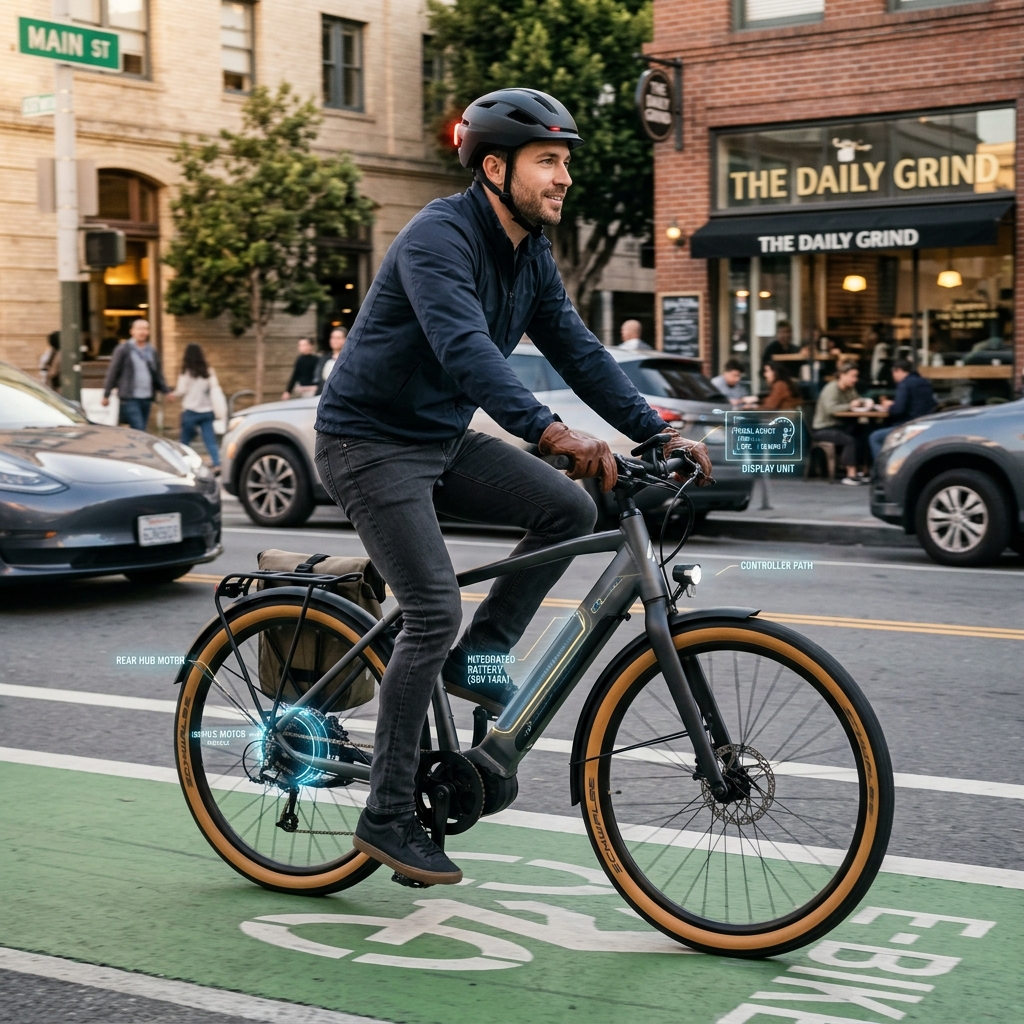
An electric bike motor gives extra power while you ride. It does not usually replace pedalling completely. Instead, it helps you start faster, climb hills more easily, carry weight, and ride longer with less effort.
| Quick Question | Simple Answer |
|---|---|
| Does every e-bike have a motor? | Yes. Without a motor, it is a regular bicycle. |
| Best motor for flat city riding? | Rear hub motor. |
| Best motor for hills? | Mid-drive motor or high-torque rear hub motor. |
| What matters more: watts or torque? | Torque matters more for hills and heavy loads. |
| Can motor problems be unsafe? | Yes. Stop riding if you smell burning, see smoke, or notice melted wiring. |
Does an Electric Bike Have a Motor?

Yes, every electric bike has a motor. Without a motor, it is just a regular bicycle.
The motor is what separates an e-bike from a traditional bike. It does not usually replace pedaling completely. Instead, it gives extra power when you pedal, use the throttle, or both, depending on the e-bike class and design.
Most e-bikes in the USA fall into one of these general categories:
- Class 1: Pedal assist only, up to 20 mph
- Class 2: Throttle-assisted, usually up to 20 mph
- Class 3: Pedal assist up to 28 mph, depending on state rules
That means the motor’s role depends on the bike. A commuter e-bike may use a smooth rear hub motor for easy city riding. A mountain e-bike may use a mid-drive motor for better climbing and control.
The key idea is simple: the motor helps you ride with less effort, but you still need to understand how it behaves.
How an Electric Bike Motor Works

Electric bike motors take safetyenergy from the battery and turn it into mechanical power that helps move the bike.
The motor does not work alone. It is part of a full drive system that controls when power is delivered, how strongly it is delivered, and how the bike responds while you ride.
Basic Components of an Electric Bike Motor System
The main parts include:
- Motor: Creates power to help move the bike
- Battery: Stores the energy the motor uses
- Controller: Manages how much power goes from the battery to the motor
- Sensors: Detect pedaling, speed, or pedal pressure
- Display or control pad: Lets you choose assist levels and monitor speed or battery
When you select a higher assist level, the controller allows more power to flow to the motor. When you lower the assist level, the motor uses less power and the battery lasts longer.
Types of Motors Used in E-Bikes: Hub vs Mid-Drive
Most e-bikes use either a hub motor or a mid-drive motor.
Hub Motor
A hub motor sits inside the front or rear wheel hub. Rear hub motors are more common than front hub motors on many modern e-bikes.
Hub motors are popular because they are simple, quiet, and often more affordable. Since the motor drives the wheel directly, it usually puts less stress on the chain and gears than a mid-drive system.
Hub motors work well for:
- City commuting
- Flat neighborhoods
- Bike paths
- Casual riding
- Riders who want simple operation
A rear hub motor can feel like the bike is gently pushing you forward from the back wheel. For many beginners, this feels easy and predictable.
Mid-Drive Motor
A mid-drive motor sits near the pedals, around the center of the bike frame. It sends power through the bike’s chain and gears.
Mid-drive motors are common on higher-performance commuter bikes, cargo bikes, and electric mountain bikes.
They are useful for:
- Hill climbing
- Heavier riders or cargo
- Trail riding
- Longer mixed-terrain rides
- Riders who want a more natural pedal feel
Because the motor works through the bike’s gears, a mid-drive can feel smoother and more efficient on hills. But it can also put more wear on the chain, cassette, and drivetrain if the bike is shifted poorly or not maintained well.
How the Motor Powers Your Ride
The motor adds assistance based on your bike’s setup.
Some e-bikes use a cadence sensor, which detects that you are pedaling. These bikes often feel more like an on/off assist system.
Others use a torque sensor, which measures how hard you press on the pedals. These usually feel more natural because the motor responds to your effort.
For example:
- On a flat bike lane in Austin or Phoenix, a lower assist level may be enough.
- On a steep San Francisco hill, the motor needs more power.
- On a suburban trail with loose gravel, smooth power delivery can help you stay controlled.
The motor is not just about speed. It affects comfort, range, handling, and how confident the bike feels.
Hub Motor vs Mid-Drive Motor: Quick Comparison
| Feature | Hub Motor | Mid-Drive Motor |
|---|---|---|
| Motor location | Inside the front or rear wheel hub | Near the pedals at the centre of the frame |
| Best for | Flat roads, city commuting, casual riding | Hills, cargo, trails, heavier riders |
| Ride feel | Feels like the bike is being pushed forward | Feels more like stronger pedalling |
| Hill climbing | Good on mild hills, weaker on long steep climbs | Better because it uses the bike’s gears |
| Maintenance | Usually simpler and cheaper | More drivetrain wear on chain and gears |
| Battery use | Efficient on flat roads | Efficient on hills when shifted correctly |
| Cost | Usually more affordable | Usually more expensive |
| Beginner-friendly? | Very beginner-friendly | Good, but shifting matters more |
| Best choice | Budget commuters and flat-road riders | Hilly areas, cargo bikes, eMTBs, long mixed routes |
Electric Bike Motor and Battery Interaction

The electric bike motor battery relationship is one of the most important things to understand. The motor uses the battery’s stored energy. The harder the motor works, the faster the battery drains.
A more powerful motor can help with speed, hills, and cargo, but it usually demands more energy. That is why two riders with the same e-bike can get very different range results.
How the Motor Affects Battery Life
Your motor affects battery life through power demand.
The battery drains faster when you:
- Ride in high assist mode
- Use the throttle often
- Climb long hills
- Carry heavy cargo
- Ride into strong wind
- Start and stop frequently in traffic
- Use underinflated tires
- Ride at higher speeds
A rider commuting five flat miles in Chicago may use much less battery than someone climbing hills in Seattle with a loaded backpack.
The battery may be the same size, but the motor workload is different.
Estimating Range Based on Motor Type and Usage
E-bike range estimates are not exact. A bike advertised for “up to 60 miles” may only reach that number in ideal conditions: light rider, low assist, flat terrain, good tire pressure, and moderate speed.
In real life, range depends on:
- Battery capacity
- Motor efficiency
- Assist level
- Rider weight
- Terrain
- Tire type
- Temperature
- Wind
- Stop-and-go riding
Hub motors can be very efficient for flat roads and city rides. Mid-drive motors can be more efficient on hills because they use the bike’s gears better.
A practical way to estimate range is to test your own route. Ride your normal commute once in low assist, once in medium assist, and check how much battery you use each time.
Tips for Efficient Power Use
Use these habits to get more from your battery and motor:
- Start in a lower gear before climbing hills
- Use lower assist on flat roads
- Save high assist for hills, traffic starts, or heavy loads
- Keep tires inflated to the recommended pressure
- Avoid holding full throttle for long periods
- Shift smoothly on mid-drive bikes
- Keep your chain clean and lubricated
- Do not overload the bike beyond its rated capacity
Small habits matter. A motor that does not have to fight poor tire pressure, bad shifting, or extra weight will usually run cooler and more efficiently.
Battery Safety Matters Too
Because the motor depends on the battery, battery care is also motor-system care.
Follow these basic safety habits:
- Use the charger recommended by the bike or battery manufacturer
- Do not charge a damaged, swollen, or unusually hot battery
- Avoid charging directly after a hard ride if the battery feels hot
- Charge on a dry, stable surface away from flammable clutter
- Do not store the battery in a hot car or freezing garage for long periods
- Stop using the bike if you smell burning or see melted connectors
A weak battery can make a good motor feel bad. A damaged battery can create a serious safety risk.
Understanding Electric Bike Motor Specifications

Electric bike motor specifications can look confusing, but most riders only need to understand a few key terms.
The most common specs are watts, torque, and sometimes RPM.
Common Metrics: Watts, Torque, and RPM
Watts
Watts describe motor power output. In simple terms, higher watts usually mean the motor can do more work.
Many USA e-bikes use motors rated between 250W and 750W. For everyday riders:
- 250W–350W: Good for lighter riders, flat roads, and casual commuting
- 500W: Common for city and suburban riders who want stronger acceleration
- 750W: Useful for heavier loads, hills, cargo bikes, and stronger throttle response
One important detail: not all watt ratings are listed the same way.
Some brands show nominal watts, which means the motor’s steady rated output. Others highlight peak watts, which means a short burst of higher power. Peak watt numbers can sound impressive, but they do not always tell you how the bike will perform during a long climb or daily commute.
More watts are not always better. A powerful motor can drain the battery faster and may not be legal on every path or trail.
Torque
Torque is the twisting force that helps the bike accelerate and climb hills. It is usually measured in Newton-meters, shown as Nm.
Higher torque helps with:
- Steep hills
- Quick starts
- Cargo
- Heavier riders
- Trail riding
If you live somewhere flat, torque may not matter as much. If you ride in hilly neighborhoods, torque matters a lot.
RPM
RPM means revolutions per minute. It describes how fast the motor spins. Most beginners do not need to focus heavily on RPM unless comparing technical motor designs.
For normal buying or maintenance decisions, watts and torque are usually more useful.
What Specs Mean for Speed and Performance
Motor specs affect how the e-bike feels, but they do not tell the whole story.
A 750W motor does not automatically mean the bike will be better than a 500W motor. Controller tuning, battery voltage, bike weight, gearing, tires, brakes, and sensor quality all matter.
For example:
- A well-designed 500W commuter e-bike may feel smoother than a cheap 750W bike.
- A mid-drive motor with moderate wattage may climb better than a hub motor with higher wattage.
- A torque sensor can make a lower-powered bike feel more responsive and natural.
Look at the whole system, not just the biggest number on the spec sheet.
Choosing Specs Based on Riding Needs
For urban commuting, focus on smooth assist, reliable braking, good range, and enough power for traffic starts. A rear hub motor in the 500W range may be enough for many riders.
For hilly neighborhoods, torque matters more. A mid-drive motor or stronger rear hub motor may make the ride easier.
For cargo bikes, look for strong torque, good battery capacity, and quality brakes. Carrying kids, groceries, or work gear puts extra load on the motor.
For trail riding, mid-drive motors are often preferred because they handle climbs and shifting better. Always check whether e-bikes are allowed on the specific trail before riding.
For casual weekend rides, comfort and predictable assist may matter more than maximum power.
Electric Bike Motor Specs: What They Mean in Real Life
| Spec | What It Means | What to Look For |
|---|---|---|
| 250W–350W | Light to moderate assist | Good for lighter riders, flat roads, bike paths, and low-speed commuting |
| 500W | Strong everyday assist | Good for most city and suburban riders |
| 750W | Stronger acceleration and hill help | Useful for heavier riders, cargo, hills, and throttle use where legal |
| 40–50 Nm torque | Basic pulling force | Fine for flat city riding |
| 60–70 Nm torque | Stronger climbing help | Better for rolling hills and mixed routes |
| 80–90 Nm torque | High hill-climbing support | Useful for steep urban hills |
| 100+ Nm torque | Very strong pulling force | Best for cargo bikes, heavy loads, and demanding hills |
| Torque sensor | Measures pedal pressure | Feels smoother and more natural |
| Cadence sensor | Detects pedal movement | Often cheaper, but can feel more on/off |
Simple rule
Do not judge an e-bike motor by watts alone. A well-tuned 500W motor with good torque and a quality controller can feel better than a cheap 750W motor with poor tuning.
Common Electric Bike Motor Problems

Most e-bike motors are designed to be reliable, but problems can happen. The earlier you notice signs of trouble, the easier it is to avoid bigger repairs.
Signs of Motor Wear or Malfunction
Watch for these warning signs:
- Motor cuts in and out
- Sudden loss of power
- Grinding, clicking, or rough noises
- Error codes on the display
- Weak assist even with a charged battery
- Jerky acceleration
- Burning smell
- Motor feels unusually hot
- Bike struggles more than normal on familiar hills
- Throttle or pedal assist stops responding
One small issue does not always mean the motor is failing. Sometimes the problem is a loose connector, low battery, sensor issue, brake cutoff issue, or controller fault.
Typical Causes of Motor Failure
Common electric bike motor problems often come from stress, moisture, heat, impact, or electrical issues.
Typical causes include:
- Overheating from long climbs or heavy throttle use
- Water entering electrical parts
- Damaged wiring or loose connectors
- Worn bearings
- Controller failure
- Sensor problems
- Poor drivetrain maintenance on mid-drive bikes
- Using incompatible batteries or chargers
- Overloading the bike beyond its rated limit
Avoid pressure washing an e-bike. High-pressure water can force moisture into seals, bearings, connectors, and motor areas.
Simple Troubleshooting Steps
Before assuming the motor is dead, try this basic checklist:
- Check the battery charge
Make sure the battery is charged, locked in place, and seated correctly. - Restart the system
Turn the bike off, wait a few seconds, and turn it back on. - Inspect the display
Look for error codes or warning icons. - Check visible cables
Look for loose, bent, wet, or damaged connectors. - Test different assist levels
See whether the issue happens in all modes or only one mode. - Check the brake sensors
Some e-bikes cut motor power when the brake lever is slightly engaged. - Inspect the chain and drivetrain
On mid-drive bikes, a dirty or worn drivetrain can make the motor feel rough. - Stop riding if there is heat, smoke, or burning smell
Do not keep testing the bike if something smells electrical or overheated.
Do not open a sealed motor, bypass safety sensors, or splice electrical wiring unless you are trained to work on e-bike systems. If the problem continues, take the bike to a qualified e-bike mechanic.
How Long Does an Electric Bike Motor Last?

Many riders ask: how long does an electric bike motor last?
The honest answer is: it depends on motor quality, riding style, maintenance, weather exposure, load, and terrain.
A quality electric bike motor can last for years under normal use. Many riders will need battery, brake, tire, chain, or drivetrain service before they need major motor repair.
But there is no single mileage number that applies to every e-bike. A flat-road commuter who rides gently in dry weather may get much longer motor life than a rider who climbs steep hills daily with heavy cargo in wet conditions.
What Affects Motor Lifespan?
Your motor will usually last longer if you:
- Ride within the bike’s weight limit
- Avoid constant full-power riding
- Keep the bike clean and dry
- Store the bike away from extreme heat and cold
- Keep tires properly inflated
- Maintain the chain and gears
- Use the correct charger and battery
- Get regular service checks
- Avoid deep water and pressure washing
Motors are tough, but they are not indestructible. Heat, water, impact, and electrical abuse are some of the biggest enemies.
Routine Maintenance for Safety and Performance
Most riders do not need to open or service the motor internally. In fact, opening the motor yourself can void warranties or damage sealed parts.
Instead, focus on routine care around the motor system:
- Wipe the bike down after wet rides
- Keep electrical contacts clean and dry
- Check for loose cables
- Listen for new noises
- Keep the drivetrain clean
- Update firmware if your system supports it
- Schedule periodic inspections
- Follow the manufacturer’s service guidance
If your e-bike is new, consider an early checkup after the first few weeks of riding. Cables can settle, bolts can loosen slightly, and small setup issues are easier to fix early.
When to Seek Professional Repair
Visit a professional e-bike repair shop if:
- The motor makes grinding or knocking sounds
- Error codes keep returning
- Assist cuts out repeatedly
- The motor overheats often
- Power feels weak with a healthy battery
- The bike was submerged or heavily soaked
- Wiring is damaged
- The bike has been crashed
- You smell burning or see smoke
Do not ignore electrical smells, swelling batteries, melted connectors, or repeated system shutdowns. Those are safety issues, not just performance issues.
Safety Tips for Riding With an Electric Bike Motor

An e-bike motor makes riding easier, but it also adds speed, weight, and responsibility.
Avoiding Motor Overheating
Motor overheating usually happens when the motor works too hard for too long.
Common situations include:
- Long steep climbs
- Carrying heavy cargo
- Riding in high assist nonstop
- Using throttle heavily at low speeds
- Riding in very hot weather
- Underinflated tires
- Dragging brakes
To reduce overheating risk:
- Use lower gears on climbs
- Pedal along with the motor
- Take breaks on long hills
- Lower assist when possible
- Keep the bike within its rated weight limit
- Stop if the motor feels unusually hot or power drops suddenly
If the bike reduces power automatically, it may be protecting itself from heat.
Safe Riding With a Powered Motor
Motor assist can surprise new riders. The bike may accelerate faster than expected, especially in high assist or throttle mode.
Practice in a quiet parking lot before riding in traffic.
Get comfortable with:
- Starting smoothly
- Braking from higher speeds
- Turning with motor assist
- Switching assist levels
- Riding without assist
- Emergency stopping
- Balancing the heavier bike at low speed
Always ride within local rules. E-bike access can vary by state, city, park, and trail system, so check signs and local regulations before riding on shared paths or natural-surface trails.
Handling Emergency Stops or Motor Failure
If the motor cuts out while riding, stay calm. Your e-bike is still a bicycle, just heavier.
Do this:
- Keep both hands on the bars.
- Stop pedaling hard.
- Brake smoothly.
- Move to a safe shoulder, sidewalk edge, or parking area.
- Turn the system off and inspect the display, battery, and cables.
- Do not continue if the bike shows electrical warnings, smoke, burning smell, or major power faults.
If you ride in traffic, remember that drivers may not expect your speed. Use lights, signal early, and leave extra braking space.
FAQs

FAQs About Electric Bike Motors
Does an electric bike have a motor?
Yes. Every electric bike has a motor. Without a motor, it is a regular bicycle. The motor gives extra assistance when you pedal, use the throttle, or both, depending on the e-bike class and design.
How does an electric bike motor work?
An electric bike motor uses power from the battery. The controller manages how much power goes to the motor, and sensors tell the system when you are pedalling or how hard you are pushing.
Which is better: hub motor or mid-drive motor?
A hub motor is better for simple city riding, flat roads, and lower budgets. A mid-drive motor is usually better for hills, cargo, trail riding, and riders who want a more natural pedal feel.
What does torque mean on an electric bike motor?
Torque is the twisting force that helps the bike accelerate and climb hills. Higher torque is useful for steep roads, heavier riders, cargo bikes, and stop-and-go traffic.
Why does my electric bike motor cut out?
Common causes include low battery, loose connectors, brake sensor problems, controller faults, overheating, or display error codes. If the problem repeats, get the bike checked by a qualified e-bike mechanic.
How long does an electric bike motor last?
A quality e-bike motor can last for years, but lifespan depends on motor quality, rider weight, hills, weather exposure, maintenance, and how hard the motor is used.
Can I ride if the motor smells hot or electrical?
No. Stop riding if you smell burning, see smoke, notice melted wiring, or feel severe overheating. Do not keep testing the bike.
Does every electric bike have a motor?
Yes. An electric bike must have a motor. The motor is what provides electric assistance while you pedal or use the throttle, depending on the bike type.
Can I replace my electric bike motor myself?
Sometimes, but it is not recommended for most beginners. E-bike motors are connected to the battery, controller, sensors, display, and wiring system. Replacing one incorrectly can cause performance issues, error codes, or safety problems.
For simple hub motor wheel swaps, experienced DIY riders may be able to do it. For mid-drive motors or warranty-covered systems, use a qualified e-bike shop.
How does motor type affect ride feel?
A hub motor often feels like the bike is pushing or pulling you from the wheel. It is simple and easy for commuting.
A mid-drive motor feels more like stronger pedaling because it works through the bike’s gears. It is often better for hills, trails, and heavier loads.
Is a higher-watt motor always better?
No. Higher wattage can help with acceleration, hills, and cargo, but it can also drain the battery faster and may not be allowed on every path or trail. A well-designed lower-watt motor can feel better than a poorly tuned higher-watt motor.
Why does my e-bike motor cut out?
Common causes include low battery, loose connectors, brake sensor issues, overheating, controller faults, or display error codes. If restarting the bike and checking cables does not fix it, have a professional inspect it.
Can rain damage an electric bike motor?
Most quality e-bikes can handle normal rain and wet roads, but they are not meant for deep water or pressure washing. After wet rides, wipe the bike down and let it dry in a safe, ventilated area.
What is more important: motor or battery?
Both matter. The motor determines how the bike delivers power. The battery determines how much energy is available. A strong motor with a weak battery may feel powerful but have poor range.
Quick Summary / Checklist
Use this quick checklist to understand and care for your electric bike motor.
Before Buying or Comparing Motors
- Choose a hub motor for simple commuting and casual riding
- Choose a mid-drive for hills, cargo, trails, or natural pedal feel
- Look beyond watts; check torque, battery size, brakes, and sensor type
- Understand the difference between nominal watts and peak watts
- Make sure the bike fits your local riding rules
For Better Battery Range
- Use lower assist on flat roads
- Save high assist for hills and traffic starts
- Keep tires properly inflated
- Shift correctly on mid-drive bikes
- Avoid long full-throttle riding
For Motor Health
- Avoid overheating
- Keep the bike clean and dry
- Do not pressure wash the motor area
- Watch for error codes, strange sounds, and power loss
- Use the correct charger and battery
- Get professional service when problems repeat
Stop Riding Immediately If You Notice
- Burning smell
- Smoke
- Melted wiring
- Severe overheating
- Repeated power shutdowns
- Battery swelling or damage