Article Review Info
Written by: James Smith
Content Experience: 15 years of electric scooter content research
Last Updated: June 2026
Blog Upgraded: 26 June 2026
Reviewed for: Accuracy, safety, readability, and helpful advice
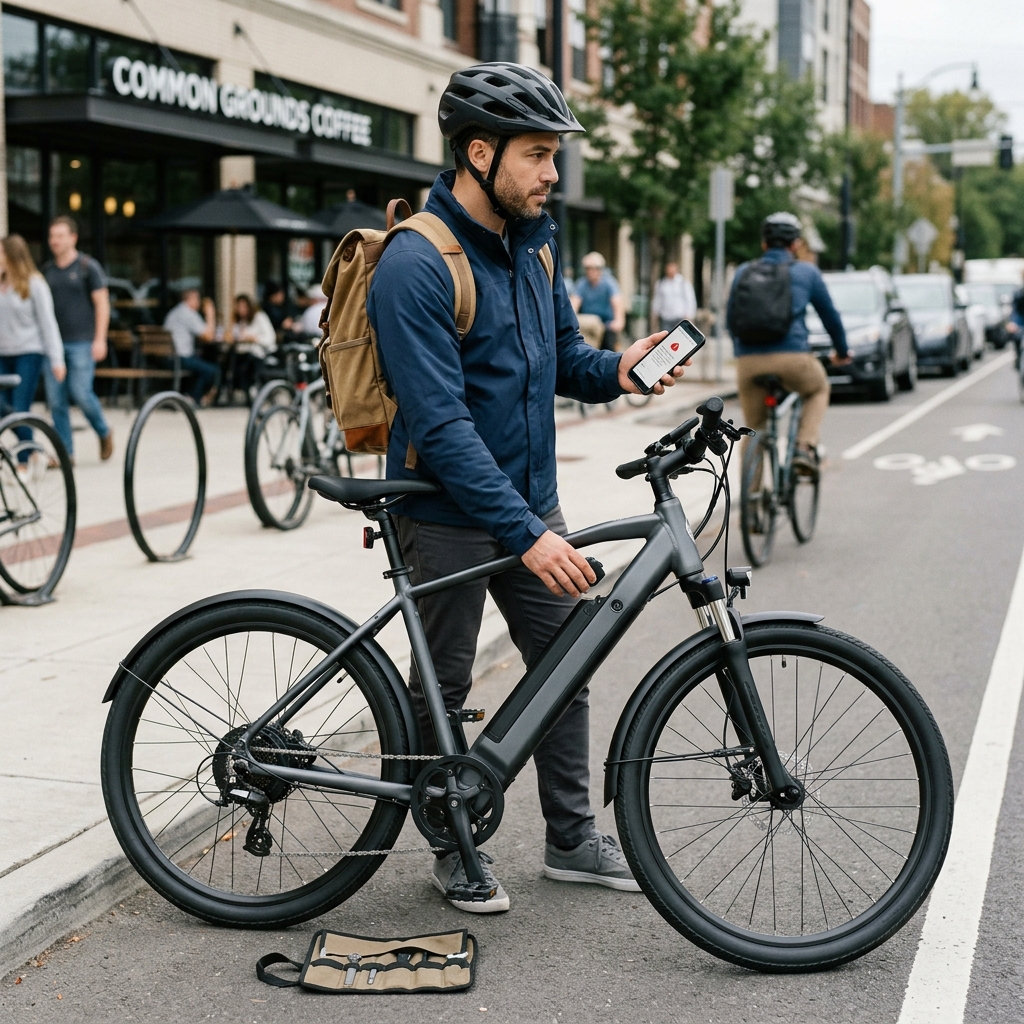
When your electric bike stops working, the worst thing you can do is start replacing parts at random.
A dead display does not always mean a dead battery. A motor that will not spin does not always mean the motor is bad. A throttle problem can actually be a brake sensor issue. And a bike that cuts out on hills may have a weak battery connection, not a failed controller.
This electric bike troubleshooting guide helps you narrow the problem down safely, step by step.
You will learn what to check first, what each symptom usually means, and when to stop DIY testing before you damage the bike or create a safety risk.
Safety first: The U.S. Consumer Product Safety Commission advises riders to check micromobility devices for damage before riding, including brakes, throttle, tires, cables, lights, and frame. It also warns users to follow manufacturer charging instructions, stay present while charging, avoid charging while sleeping, and use only the charger provided or recommended by the manufacturer.
Quick Symptom Guide: What Is Your E-Bike Doing?
Start here before touching wires or ordering parts.
| Symptom | Most Likely Areas to Check First |
|---|---|
| Bike is completely dead | Battery, charger, battery seating, fuse, main power switch, display cable |
| Display turns on but motor does not run | Brake sensor, throttle, pedal-assist sensor, motor cable, controller |
| Bike cuts out while riding | Loose battery connection, weak battery, overheating, wiring, controller protection |
| Throttle does not work | Throttle setting, throttle connector, brake cutoff sensor, damaged throttle |
| Pedal assist does not work | Pedal-assist sensor, magnet ring, torque sensor, display setting |
| Display flickers or shuts off | Battery connection, display cable, controller power wiring |
| Motor jerks, clicks, or grinds | Motor cable, hall sensor issue, controller issue, internal motor damage |
| Battery will not charge | Charger, outlet, charge port, battery management system, damaged battery |
This simple step prevents the most common mistake: assuming the most expensive part failed first.
Before You Troubleshoot: Basic Safety Rules

Electric bikes use lithium-ion battery systems, controllers, sensors, and motor wiring. That does not mean every issue is dangerous, but it does mean you should troubleshoot carefully.
Before checking connectors or wiring:
- Turn the bike off.
- Remove the battery if it is removable.
- Do not unplug or reconnect major cables while the bike is powered on.
- Keep metal tools away from battery terminals.
- Do not test a bike indoors if the throttle or motor is behaving unpredictably.
- Do not charge a battery that is hot, swollen, cracked, leaking, smoking, or smells burnt.
Stop immediately if you notice:
- Smoke
- Sparks
- Burnt plastic smell
- Melted wires
- Swollen battery case
- Battery getting unusually hot
- Charger overheating
- Motor engaging by itself
- Throttle sticking
- Brakes not cutting motor power
CPSC’s 2017–2024 micromobility hazard report found that fire hazards were identified in many investigated e-bike incidents, including fires during charging and some involving aftermarket battery packs or chargers.
That does not mean you should panic. It means battery and charger problems deserve serious attention.
How to Diagnose an Electric Bike That Won’t Start

If your e-bike is completely dead, focus on power first.
Do not start with the motor. The motor cannot do anything if the battery, display, fuse, or controller is not receiving power.
1. Check the Battery Charge
Ask these questions:
- Does the battery indicator show any charge?
- Does the bike turn on with the battery button?
- Does the display light up at all?
- Did the battery recently run completely empty?
- Was the bike stored for weeks or months?
If the battery is removable, take it off the bike and check the indicator directly on the pack, if it has one.
A battery can look installed but still not make full contact with the bike. Remove it, inspect the rails, then reinstall it firmly until it locks.
2. Check the Charger
A charging issue may look like a bike issue.
Check:
- Does the charger light turn on?
- Does the charger light change when plugged into the battery?
- Is the outlet working?
- Is the charger cable damaged?
- Is the charger the original or manufacturer-approved one?
- Is the charging port clean and dry?
Do not use a random charger because the plug fits. Voltage, current, polarity, and battery management compatibility matter.
UL 2849 evaluates e-bike electrical safety as a system, including the electrical drivetrain, battery system, and charger system combination. That is why mixing unknown batteries and chargers can be risky.
3. Check Battery Seating and Lock Position
Many “dead e-bike” problems happen after bumps, potholes, curb drops, or car-rack transport.
Look for:
- Battery not fully clicked in
- Battery lock not fully turned
- Dirty battery contacts
- Loose battery rail
- Bent battery terminal
- Moisture around the battery cradle
If you ride in U.S. city conditions, rough pavement and potholes can shake a battery loose. If you ride suburban trails or gravel paths, vibration can do the same thing over time.
4. Check the Power Button, Main Switch, and Fuse
Some e-bikes have more than one power control.
Check:
- Battery power switch
- Frame power button
- Display power button
- Key switch
- Main fuse, if accessible
If a fuse is blown, replace it only with the exact rating recommended by the manufacturer.
Do not install a larger fuse to “fix” the problem. A fuse is a safety device. If it blows again, something else may be wrong.
5. Check the Display Cable
If the battery is charged but the display stays black, inspect the display cable.
Look for:
- Loose connector
- Bent pins
- Damaged cable near the handlebar
- Moisture inside the connector
- Cable pulled tight when turning the bars
Many display connectors have alignment arrows. Match them carefully. Do not force the plug.
Electric Bike Battery Troubleshooting

Battery issues are among the most common reasons an e-bike stops working, loses range, or cuts out under load.
But battery problems are not always obvious. A battery may show charge on the indicator but still fail when the motor demands more power.
Common Battery Problem Signs
Your battery may be the issue if:
- The bike will not turn on.
- The display turns on, then shuts off.
- The motor cuts out on hills.
- Range suddenly drops.
- The battery drains much faster than normal.
- The charger stays green even when the battery seems empty.
- The bike works briefly, then dies under throttle.
- The battery only works after being removed and reinstalled.
A weak or aging battery often fails under load first. That means the bike may work on flat streets but shut down when climbing a hill, carrying cargo, or accelerating from a stop.
Battery Cuts Out While Riding
If the bike cuts out while riding, think about when it happens.
Cuts out on hills:
Likely battery voltage sag, weak cells, loose battery connection, or overheating.
Cuts out over bumps:
Likely loose battery seating, loose connector, or wiring movement.
Cuts out after several miles:
Possible overheating, low battery, controller protection, or aging battery.
Cuts out only when using throttle:
Battery may not handle sudden current demand, or the throttle/controller system may be at fault.
Charging Problems: What to Check
If the battery will not charge:
- Try another wall outlet.
- Check the charger light.
- Inspect the charger cable.
- Inspect the battery charge port.
- Confirm the battery is at room temperature.
- Confirm you are using the correct charger.
- Check the manual for battery reset instructions.
Cold weather can temporarily reduce battery performance. A battery stored in a cold garage may not charge or perform normally until it warms up.
Heat is also a problem. If the bike sat in direct summer sun or inside a hot car, let the battery cool before charging.
When Not to Use the Battery
Do not ride or charge the battery if you see:
- Swelling
- Cracks
- Melted plastic
- Burn marks
- Liquid leakage
- Strong chemical smell
- Hissing
- Smoke
- Extreme heat
Move the battery away from flammable materials only if it is safe to do so. If there is smoke, fire, or active overheating, leave the area and call emergency services.
Do not open an e-bike battery pack unless you are trained to work on lithium-ion battery systems.
Electric Bike Throttle Problems

Electric bike throttle problems can feel confusing because the throttle is only one part of the motor control system.
A throttle may fail because of the throttle itself, but it can also be blocked by a brake sensor, display setting, loose connector, or controller issue.
Throttle Does Nothing
If the display turns on but the throttle does nothing, check:
- Is throttle mode enabled?
- Is assist level set to zero?
- Are the brake levers fully released?
- Is the throttle connector loose?
- Is the throttle cable damaged?
- Does pedal assist still work?
- Is there an error code?
Many e-bikes disable motor power when a brake lever is pulled. If the brake lever is slightly stuck, the bike may think you are braking.
Try gently pushing each brake lever forward to make sure it fully returns.
Throttle Works Sometimes
Intermittent throttle response often points to a loose wire or sensor interruption.
Check whether the throttle cuts out when:
- Turning the handlebar
- Going over bumps
- Pulling a brake lever
- Riding in rain
- Pressing the throttle hard
- Climbing hills
If turning the handlebar causes the bike to cut out, inspect the cable routing near the stem and handlebar.
Throttle Surges or Sticks
Do not ride if the throttle sticks, surges, or does not return smoothly.
This is not a minor problem. It can cause sudden acceleration in traffic, on sidewalks, near pedestrians, or on shared-use paths.
Stop using the bike until the throttle and brake cutoff system are checked.
E-Bike Motor Troubleshooting

Motors usually fail less often than batteries, connectors, sensors, and controllers.
So before blaming the motor, check power, display, brake sensors, throttle, pedal assist, and motor cable connections.
Signs of Possible Motor Problems
The motor may need inspection if:
- It grinds loudly.
- It clicks repeatedly under power.
- It jerks instead of spinning smoothly.
- It gets unusually hot.
- It works only at certain speeds.
- It stops after climbing hills.
- The wheel locks or resists turning.
- The motor cable is damaged near the axle.
Hub Motor Checks
For rear hub motors, inspect the cable where it exits the axle.
This area is vulnerable during:
- Rear tire changes
- Bike falls
- Loose axle nuts
- Car-rack transport
- Cable snagging
- Riding through debris
Look for crushed insulation, exposed wires, or a connector that is not fully seated.
If the motor cable has arrows on the plug, align them carefully before reconnecting.
Mid-Drive Motor Checks
For mid-drive e-bikes, pay attention to how the issue feels.
A mid-drive problem may show up as:
- Grinding near the crank
- Assist cutting out under hard pedaling
- Error code during climbs
- Chain or drivetrain noise mistaken for motor noise
- Motor stopping when shifting under load
Not every mid-drive noise is electrical. Sometimes the real issue is a worn chain, bent chainring, loose crank arm, or shifting under too much load.
If the motor locks, smells burnt, or makes harsh grinding sounds, stop riding.
Pedal Assist Problems

Pedal assist depends on sensors. If those sensors are misaligned or disconnected, the bike may power on but provide no assist when you pedal.
Pedal Assist Does Not Work
Check:
- Is assist level set above zero?
- Is pedal assist disabled in settings?
- Is the cadence sensor connected?
- Is the magnet ring aligned?
- Is the torque sensor showing an error?
- Are brake sensors blocking motor power?
On many cadence-sensor e-bikes, there is a magnet ring near the crank. If the ring shifts too far from the sensor, pedal assist may stop working.
Pedal Assist Starts Late or Feels Jerky
This can happen when:
- Cadence sensor alignment is poor
- Magnet ring is loose
- Sensor is dirty
- Controller signal is interrupted
- Chain or drivetrain movement is uneven
- Battery voltage drops under load
If the bike lurches forward unexpectedly, stop and inspect it before riding near traffic or pedestrians.
Display and Electronics Troubleshooting

The display is not just a screen. On many e-bikes, it acts like the control panel for assist level, throttle settings, speed readings, battery display, and error codes.
If the display fails, the whole bike may appear dead.
How to Troubleshoot Electric Bike Display Problems
If the display does not turn on:
- Confirm the battery has charge.
- Reseat the battery.
- Hold the power button longer.
- Check the display connector.
- Inspect handlebar wiring.
- Look for bent pins.
- Dry the connector if moisture is present.
- Try the battery’s own power button, if available.
If the display turns on but shows an error, take a photo of the code.
Do not guess what the code means. Error codes vary by brand and system.
Check the manual or contact the manufacturer with:
- Bike model
- Display model
- Error code
- When the error appears
- Whether the motor still runs
Display Flickers While Riding
A flickering display usually means power or signal interruption.
Common causes include:
- Loose battery
- Dirty battery contacts
- Loose display connector
- Damaged handlebar cable
- Weak battery under load
- Controller wiring issue
If the display flickers when you hit bumps, check battery seating and cable connections first.
Electric Bike Controller Troubleshooting

The controller is the “traffic manager” of the e-bike electrical system. It receives signals from the battery, display, throttle, brake sensors, pedal-assist sensor, and motor.
But the controller should not be the first part you blame.
Many controller-like problems are actually caused by loose connectors, brake sensors, bad batteries, or damaged motor cables.
Check These Before Blaming the Controller
Before doing deeper electric bike controller troubleshooting, confirm:
- Battery is charged.
- Battery is fully seated.
- Display turns on.
- Brake levers are fully released.
- Throttle connector is secure.
- Pedal-assist sensor is aligned.
- Motor cable is fully connected.
- No connectors are wet, burnt, or melted.
- No wires are crushed, cut, or stretched.
Signs the Controller May Be the Problem
The controller may be faulty if:
- Battery and display work, but motor never receives power.
- Fuse blows repeatedly.
- Motor jerks heavily with all cables connected correctly.
- There is a burnt smell near the controller.
- A connector near the controller is melted.
- Error codes point to controller, phase wire, or hall sensor faults.
- The issue started after water exposure or overheating.
Do not open the controller unless you are trained. Many controllers are sealed, and opening them can damage the unit or void support.
Be Careful With Replacement Controllers
A replacement controller must match the bike’s electrical system.
It may need to match:
- Battery voltage
- Motor type
- Current rating
- Display communication protocol
- Throttle type
- Brake sensor type
- Pedal-assist sensor type
- Connector style
A random controller from an online marketplace can create new errors or unsafe behavior.
E-Bike Works, Then Stops: Common Real-World Scenarios

Sometimes the bike is not fully dead. It works in certain conditions and fails in others.
These patterns tell you a lot.
Scenario 1: City Commuter Bike Dies Over Potholes
Likely causes:
- Battery not locked fully
- Loose battery rail
- Loose display connector
- Controller plug vibration
- Damaged wire near the handlebar
What to do:
- Reseat the battery.
- Check battery lock.
- Inspect handlebar cables.
- Check connectors after powering off.
Scenario 2: Suburban Trail Ride Cuts Out on Hills
Likely causes:
- Weak battery under load
- Battery voltage sag
- Controller overheating
- Motor overheating
- Loose battery connection
What to do:
- Let the bike cool.
- Check battery charge.
- Try a flat-road test.
- Avoid repeated hill testing if the motor or controller smells hot.
Scenario 3: Bike Turns On, But Throttle and Pedal Assist Both Fail
Likely causes:
- Brake cutoff sensor active
- Motor cable disconnected
- Controller not sending output
- Error code blocking assist
What to do:
- Check both brake levers.
- Look for a brake light stuck on.
- Inspect motor cable.
- Record the display error code.
Scenario 4: Pedal Assist Works, Throttle Does Not
Likely causes:
- Throttle disabled in settings
- Loose throttle connector
- Damaged throttle
- Brake sensor issue
- Controller throttle input problem
What to do:
- Check display settings.
- Inspect throttle cable.
- Test in a safe open area only.
Scenario 5: Throttle Works, Pedal Assist Does Not
Likely causes:
- Pedal-assist sensor misaligned
- Magnet ring moved
- Torque sensor issue
- Assist setting disabled
What to do:
- Check assist level.
- Inspect crank sensor area.
- Look for loose or dirty sensor parts.
When It Is Safe to DIY and When to Stop

Some e-bike troubleshooting is reasonable for beginners. Some is not.
Usually Safe for Basic DIY
You can usually check:
- Battery seating
- Charger light
- Display settings
- Loose external connectors
- Brake lever return
- Tire pressure
- Visible cable damage
- Basic error codes
- Pedal-assist magnet alignment
Only do this with the bike powered off, and remove the battery when inspecting wiring.
Better for a Mechanic or Manufacturer
Get help if the issue involves:
- Battery damage
- Melted wires
- Burnt smell
- Repeated fuse failure
- Motor grinding
- Locked wheel
- Controller replacement
- Internal battery testing
- Water inside electronics
- Unknown error codes
- Sudden acceleration
- Brake cutoff failure
A regular bike shop may handle tires, brakes, chains, spokes, and mechanical adjustments. But not every shop services batteries, controllers, motors, and displays.
Call first and ask if they work on your e-bike brand and electrical system.
USA Safety and Legal Notes Riders Should Know

This guide is not legal advice, but USA riders should understand two basics.
First, e-bike rules vary by state, city, trail system, and public land agency. Many places use the Class 1, Class 2, and Class 3 system for low-speed electric bicycles. PeopleForBikes notes that its policy work focuses on the three-class system for low-speed e-bikes and distinguishes those bikes from devices that exceed class speed or power limits.
Second, do not “troubleshoot” by bypassing safety features or speed limits.
Avoid:
- Disabling brake cutoff sensors
- Using higher-voltage not designed for the bike
- Installing oversized fuses
- Removing speed limits to test power
- Using mismatched chargers
- Ignoring repeated error codes
These shortcuts can make the bike unsafe, illegal in some locations, or harder to repair later.
Step-by-Step Electric Bike Troubleshooting Checklist

Use this quick checklist when your e-bike is not working.
Step 1: Make the Bike Safe
- Move away from traffic.
- Turn the bike off.
- Remove the battery if checking wiring.
- Do not charge a damaged battery.
- Do not test a sticky throttle indoors.
Step 2: Identify the Main Symptom
Choose one:
- Completely dead
- Display on, no motor
- Throttle not working
- Pedal assist not working
- Cuts out while riding
- Display error code
- Motor noise or jerking
- Battery not charging
Step 3: Check Power
- Battery charged?
- Charger light working?
- Battery seated correctly?
- Battery lock engaged?
- Charging port clean and dry?
- Main switch on?
Step 4: Check Display
- Display turns on?
- Assist level above zero?
- Error code showing?
- Display cable secure?
- Settings changed accidentally?
Step 5: Check Brake Sensors
- Brake levers fully released?
- Brake light stuck on?
- Motor cuts off when braking?
- Sensor cable loose?
Step 6: Check Throttle and Pedal Assist
- Throttle enabled?
- Throttle cable secure?
- Throttle returns smoothly?
- Pedal-assist sensor aligned?
- Magnet ring in place?
Step 7: Check Motor Cable
- Rear hub motor cable secure?
- Cable damaged near axle?
- Mid-drive area making unusual noise?
- Motor hot or burnt-smelling?
Step 8: Check Controller Area
- Loose connectors?
- Moisture?
- Melted plugs?
- Repeated fuse failure?
- Burnt smell?
Step 9: Decide Whether to Stop
Stop DIY testing if the issue involves battery damage, smoke, sparks, melted wiring, sudden acceleration, brake failure, locked motor, repeated fuse blowing, or recurring major error codes.
Frequently Asked Questions

Why is my electric bike not working?
The most common causes are a discharged battery, loose battery connection, faulty charger, display cable issue, brake cutoff sensor, throttle problem, pedal-assist sensor misalignment, loose motor cable, blown fuse, or controller fault.
Start with the battery, charger, display, and visible connectors before assuming the motor or controller has failed.
How do I know if it is the battery, motor, or controller?
A battery problem often causes no power, poor range, sudden shutdowns, or cutouts under load.
A motor problem often causes grinding, jerking, clicking, overheating, or no assist even though power reaches the system.
A controller problem is more likely when the battery and display work, sensors are connected, wiring looks good, but the motor still receives no usable power.
Can I ride with minor electrical issues?
Only if the issue does not affect braking, acceleration, battery safety, steering, lights, or motor control.
Do not ride if the throttle sticks, motor surges, battery gets hot, display cuts out, wiring is damaged, brakes do not cut motor power, or error codes keep returning.
Why does my e-bike cut out when I use the throttle?
Throttle cutouts often happen because the battery voltage drops under sudden load, the battery connection is loose, the throttle connector is damaged, or the controller is entering protection mode.
Check the battery and connections first.
Why does my e-bike cut out on hills?
Hills require more current. If the battery is weak, old, cold, poorly connected, or low on charge, the bike may shut down under load.
Controller or motor overheating can also cause cutouts on long climbs.
Why does my display turn on but the motor does not work?
Common causes include a stuck brake cutoff sensor, loose motor cable, disabled throttle, pedal-assist sensor issue, controller fault, or active error code.
Check the brake levers and motor cable before assuming the motor is dead.
Should I replace the controller myself?
Only if you know the correct voltage, current rating, connector type, display protocol, throttle type, and sensor compatibility.
Wrong controllers can cause new errors, poor performance, or unsafe motor behavior.
Quick Final Summary

For safe electric bike troubleshooting, use this order:
- Battery
- Charger
- Battery seating
- Display
- Brake sensors
- Throttle
- Pedal assist
- Motor cable
- Controller
- Mechanic or manufacturer support
Most e-bike problems are easier to diagnose when you follow the symptom instead of guessing the part.
The safest rule is simple:
Power first. Signals second. Motor output third. Stop immediately if battery, braking, throttle, or wiring safety is questionable.
Pingback: How Does an Electric Bike Motor Work? Hub vs Mid-Drive Explained - electricscootercar.com
Pingback: How to Improve E-Bike Range: 15 Ways to Ride Farther - electricscootercar.com
Pingback: Electric Bike Repair & Maintenance Guide: Motor Problems, Costs & Safe Fixes - electricscootercar.com
Pingback: How Fast Do Electric Bikes Go? 20 vs 28 MPH - electricscootercar.com
Pingback: Electric Bike Components: Every Major Part Explained - electricscootercar.com
Pingback: Why Is My Electric Bike Slow? Diagnose It by Symptom - electricscootercar.com
Pingback: E-Bike Display Not Working? Diagnose the Fault Before Replacing the Screen - electricscootercar.com
Pingback: SEO title: E-Bike Suspension: Do You Need It? Types, Travel & Setup - electricscootercar.com
Pingback: E-Bike Sensor Troubleshooting: Find the Fault Before Replacing Parts - electricscootercar.com
Pingback: E-Bike Charging Port Not Working? Diagnose the Fault Safely - electricscootercar.com
Comments are closed.