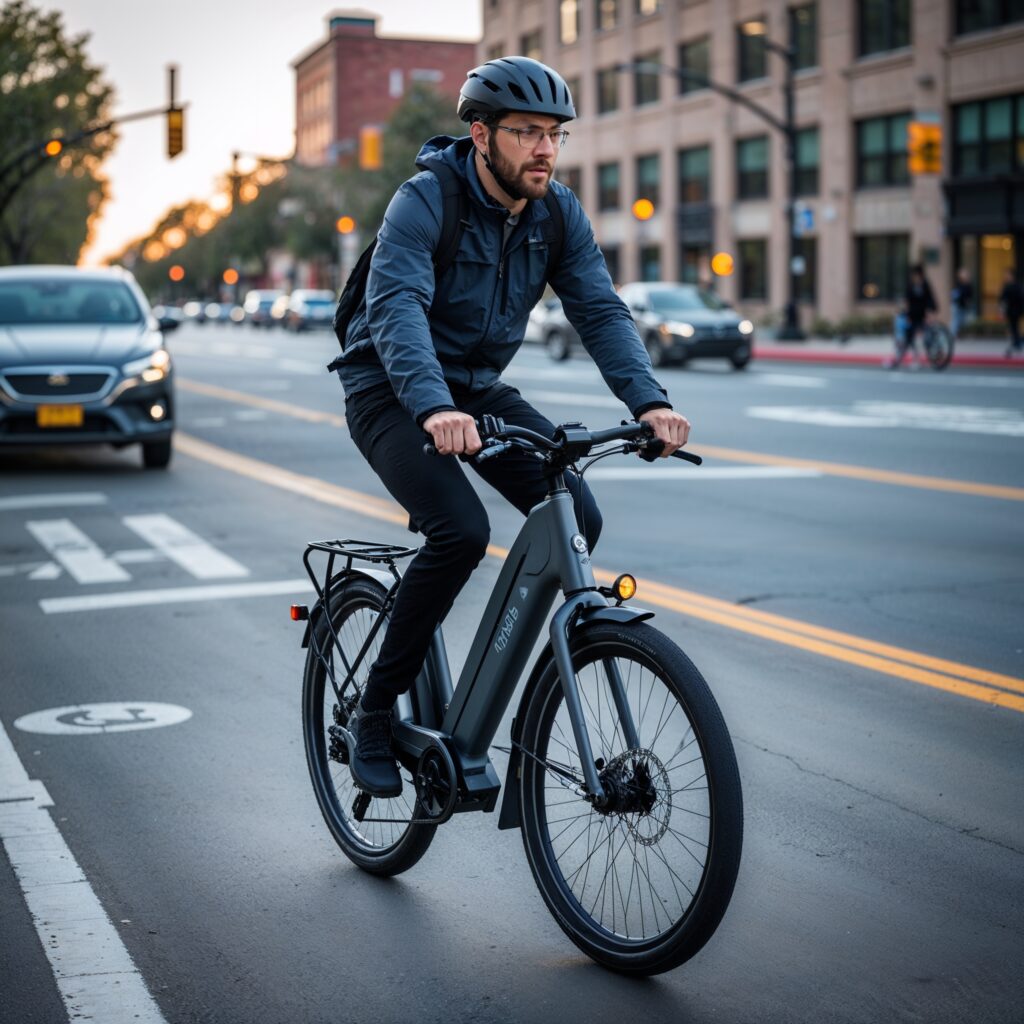
Electric bike top speed can be confusing because there is a big difference between what an e-bike can physically do and what it is legally allowed to do on public roads, bike lanes, and trails.
In the USA, most street-legal e-bikes are built around three common assisted speed limits: 20 mph or 28 mph, depending on the bike class. Some high-powered electric bikes can go faster, but once an e-bike reaches 40 mph or 50 mph, it may no longer be treated like a regular bicycle under many state or local rules.
This guide explains electric bike top speed in simple terms, including legal classes, real-world speed limits, mph-to-km/h comparisons, safety risks, and when it makes sense to slow down.
How Fast Can Electric Bikes Go in the USA?

For most riders, the practical answer is:
A typical legal e-bike in the USA tops out around 20 mph or 28 mph with motor assistance.
Class 1 and Class 2 e-bikes usually stop motor assistance at 20 mph. Class 3 e-bikes usually assist up to 28 mph while pedaling. Many states use this three-class system to define e-bikes by speed and assist type.
That does not mean the bike physically cannot roll faster downhill or with strong pedaling. It means the motor assistance is supposed to stop helping at the class limit.
Legal Speed Limits for E-Bikes: Class 1, Class 2, Class 3
In the USA, e-bike speed is usually explained through three classes.
| E-Bike Class | Motor Help Type | Assisted Speed Limit | Approx. Speed in km/h | Common Use |
|---|---|---|---|---|
| Class 1 | Pedal assist only | 20 mph | 32 km/h | Bike lanes, paths, commuting |
| Class 2 | Throttle and/or pedal assist | 20 mph | 32 km/h | Casual riding, errands, stop-and-go use |
| Class 3 | Usually pedal assist | 28 mph | 45 km/h | Faster commuting, road riding |
One important detail: federal product rules and state road-use rules are not exactly the same.
Under federal consumer product rules, a low-speed electric bicycle generally has fully operable pedals, a motor under 750 watts, and a motor-only speed under 20 mph on level ground with a 170-pound rider.
State and local rules decide where and how e-bikes can be used. That includes bike lane access, trail access, helmet rules, age rules, Class 3 restrictions, and whether certain throttle setups are allowed.
Typical Top Speeds by Motor Power and Bike Class

Motor wattage can affect acceleration, hill climbing, and how well the bike maintains speed. But wattage alone does not determine legal top speed.
A simple way to think about it:
| E-Bike Type | Common Motor Power | Typical Assisted Top Speed |
|---|---|---|
| Light commuter e-bike | 250W–500W | Around 20 mph |
| Standard Class 1 or 2 e-bike | 500W–750W | 20 mph |
| Class 3 commuter e-bike | 500W–750W | 28 mph |
| High-powered off-road or non-class e-bike | 1000W+ | Often 30+ mph, but may not be street-legal as a bicycle |
A stronger motor does not automatically make an e-bike legal at higher speed. If a bike exceeds class limits, it may be treated more like a moped, motor-driven cycle, or motorcycle depending on local law.
Real-World Top Speed vs Manufacturer Claims

Manufacturer claims are often based on ideal conditions: smooth pavement, full battery, lighter rider, no strong headwind, and properly inflated tires.
In real riding, your electric bike max speed may be lower because of:
- rider weight
- hills
- low battery
- tire pressure
- wind
- cargo load
- rough pavement
- speed limiter settings
- motor temperature and controller limits
For example, a Class 3 e-bike advertised for 28 mph may cruise comfortably around 24–28 mph on flat suburban streets, but it may slow down on steep hills, rough pavement, or into strong wind.
What Affects an E-Bike’s Maximum Speed?

Rider Weight and Load
A heavier rider or loaded cargo rack makes the motor work harder. This may not matter much on flat roads, but it becomes noticeable when accelerating, climbing hills, or riding into wind.
If you carry groceries, delivery bags, a child seat, or panniers, expect slower acceleration and shorter battery range at higher speeds.
Terrain and Road Conditions
Flat pavement is where most e-bikes reach their best top speed.
On real USA roads, conditions vary:
- Bike lanes: Often good for steady 15–20 mph riding, but parked cars, debris, turning vehicles, and intersections require caution.
- Suburban streets: A Class 3 e-bike may feel useful when riding with traffic flow on lower-speed roads.
- Shared paths: Even if your e-bike can go faster, slower speeds are safer around walkers, pets, kids, and other cyclists.
- Hills: Speed can drop quickly uphill, especially on lower-wattage motors or low battery.
Top speed matters less than control, visibility, and stopping distance.
Battery Health and Charge Level
A fresh, fully charged battery usually delivers stronger performance than a low or aging battery.
As the battery drains, some e-bikes reduce power output to protect the battery and controller. This can make the bike feel slower near the end of a ride.
For better performance and safer battery use:
- start longer rides with a full charge
- keep tires properly inflated
- avoid storing the battery fully drained
- use only the charger recommended by the manufacturer
- do not use modified, damaged, or swollen battery packs
- unplug the charger when charging is complete
- avoid charging while sleeping or away from home
CPSC warns that lithium-ion battery fires can happen during charging and recommends following manufacturer instructions, using the correct charger, and being present while charging micromobility products.
Wind and Weather Effects
Wind can make a surprisingly big difference.
A strong headwind can reduce your electric bike top speed and drain the battery faster. Rain, wet leaves, gravel, and poor visibility also make high-speed riding riskier.
At 25–28 mph, small surface problems feel bigger. A pothole, wet painted line, or loose gravel patch can become a serious hazard.
Safety and Regulations at Higher Speeds

Helmet and Protective Gear Recommendations
A helmet is important at any e-bike speed, but it becomes even more important as speed increases.
For higher-speed e-bike riding, consider:
- certified helmet
- eye protection
- gloves
- reflective jacket or vest
- bright front and rear lights
- closed-toe shoes
- properly maintained brakes
CPSC recommends wearing a bicycle helmet when riding micromobility devices and using lights, reflectors, bells, horns, and predictable riding behavior.
For faster e-bikes, helmet choice matters. The American College of Surgeons has also called for stronger e-bike safety measures, including helmet use and speed-appropriate protection.
State and Local E-Bike Speed Rules
There is no single USA rule that answers every local situation.
Before riding near top speed, check:
- your state e-bike class rules
- city or county bike lane rules
- trail and park restrictions
- helmet age requirements
- Class 3 access limits
- throttle rules
- whether modified e-bikes are prohibited
A Class 3 e-bike may be fine on some streets but restricted on certain shared-use paths or trails.
Why Speed Increases Crash Risk
Higher speed reduces reaction time and increases stopping distance.
At 28 mph, you reach intersections, driveways, and crosswalks much faster than drivers or pedestrians may expect. E-bikes are also quiet, which means people may not notice you approaching.
Speed is especially risky near:
- intersections
- school zones
- parked cars
- driveways
- shared paths
- crowded bike lanes
- wet or uneven pavement
- night riding conditions
The safest riders do not ride at top speed everywhere. They adjust speed based on surroundings.
Practical Tips for Riding Near Top Speed

Maintain Stability and Control
Before riding close to your electric bike max speed, make sure the bike feels stable.
Check:
- tire pressure
- brake response
- handlebar tightness
- wheel alignment
- suspension condition
- battery mount security
- lights and reflectors
Keep both hands on the bars, look farther ahead, and avoid sudden steering inputs. At higher speeds, small movements matter more.
Save Battery at Higher Speeds
Riding near top speed drains the battery faster because wind resistance increases sharply as speed rises.
To conserve battery:
- use pedal assist instead of full throttle when possible
- cruise slightly below top speed
- avoid hard acceleration after every stop
- lower assist level on flat roads
- keep tires inflated
- reduce unnecessary cargo weight
For many riders, cruising at 17–22 mph gives a better balance of speed, comfort, and range than constantly pushing the bike to its limit.
Know When to Reduce Speed
Slow down when:
- approaching intersections
- passing pedestrians
- riding near parked cars
- entering bike paths
- riding downhill
- visibility is poor
- pavement is wet
- your battery is low
- traffic is unpredictable
A good rule: ride at a speed where you can stop smoothly if someone steps, turns, or opens a car door unexpectedly.
Quick Reference Table: Electric Bike Speeds by Class
| Class | Motor Assistance | Top Assisted Speed | Approx. km/h | Best For |
|---|---|---|---|---|
| Class 1 | Pedal assist | 20 mph | 32 km/h | Bike paths, fitness, commuting |
| Class 2 | Throttle and/or assist | 20 mph | 32 km/h | Casual riders, errands, easy starts |
| Class 3 | Usually pedal assist | 28 mph | 45 km/h | Faster commuting, road riding |
Simple takeaway: For normal legal e-bikes in the USA, expect 20 mph for Class 1 and Class 2, and 28 mph for Class 3.
FAQs About Electric Bike Top Speed

What is the top speed of an electric bike?
Most legal e-bikes in the USA assist up to 20 mph or 28 mph, depending on class. Class 1 and Class 2 usually assist up to 20 mph. Class 3 usually assists up to 28 mph.
Some high-powered models can go faster, but they may not be legally treated as standard e-bikes on public roads, bike lanes, or trails.
Can an e-bike go 40 mph?
Yes, some high-powered or modified e-bikes can reach 40 mph.
But a 40 mph e-bike is usually outside normal Class 1, Class 2, and Class 3 limits. At that speed, it may be treated more like a moped, motor-driven cycle, or motorcycle depending on state and local law.
Do not assume a 40 mph e-bike is legal in bike lanes or on shared-use paths.
Can e-bikes go 50 mph?
Some electric bikes marketed online can reach 50 mph, but they are generally not typical street-legal e-bikes under the common USA three-class system.
If a bike can assist to 50 mph, check the law carefully before using it on public streets, bike lanes, or trails. It may require registration, licensing, insurance, or motorcycle-level safety equipment.
What is electric bike top speed in mph and km/h?
Here are the common conversions:
| Speed in mph | Speed in km/h |
|---|---|
| 20 mph | about 32 km/h |
| 28 mph | about 45 km/h |
| 40 mph | about 64 km/h |
| 50 mph | about 80 km/h |
How do I measure my e-bike’s top speed accurately?
Use a GPS-based cycling app, bike computer, or GPS speedometer. Built-in displays can be useful, but they may be slightly off if wheel size settings are incorrect.
For a fair test:
- use flat pavement
- ride with a full battery
- check tire pressure
- avoid strong wind
- test in a safe, legal area
- do not test top speed around traffic or pedestrians
Is the fastest electric bike top speed always better?
No. Faster is not always better.
For commuting, a stable Class 2 or Class 3 e-bike is usually more practical than chasing extreme top speed. Braking, frame quality, tire grip, local legality, and rider control matter more than a high number on a spec sheet.
Quick Summary / Checklist
- Most legal USA e-bikes assist up to 20 mph or 28 mph.
- Class 1: pedal assist, up to 20 mph.
- Class 2: throttle and/or pedal assist, up to 20 mph.
- Class 3: usually pedal assist, up to 28 mph.
- 20 mph is about 32 km/h.
- 28 mph is about 45 km/h.
- E-bikes that go 40 mph or 50 mph may not be legal as regular bicycles.
- Top speed depends on rider weight, terrain, battery level, wind, tires, and motor setup.
- Wear a helmet, use lights, and slow down near intersections, pedestrians, and poor road conditions.
- Check state and local rules before riding at higher speeds.
Pingback: Electric Bike Battery Range Explained: Real Miles, 48V Batteries, and Range Tips - electricscootercar.com
Pingback: Electric Bike Battery Problems: Safe Troubleshooting Guide for USA Riders - electricscootercar.com
Pingback: Electric Bike Motors Explained: Types, Specs, Problems & Safety Tips - electricscootercar.com
Pingback: What Is RPM on an E-Bike? Motor vs Wheel vs Cadence Explained - electricscootercar.com
Pingback: SEO title: Electric Bike Lifecycle Impact: What Actually Changes the Result - electricscootercar.com
Pingback: Electric Bike Import Rules USA (2026): CPSC, Customs & Duties - electricscootercar.com
Pingback: Electric Bike Speed Limits in the USA: 20 vs 28 MPH, Classes & Local Rules - electricscootercar.com
Pingback: SEO Title: Electric Bike Tire Types: Choose the Right Size, Tread & Fit - electricscootercar.com
Pingback: Do Electric Bikes Need a License? 2026 U.S. Rules by State - electricscootercar.com
Comments are closed.